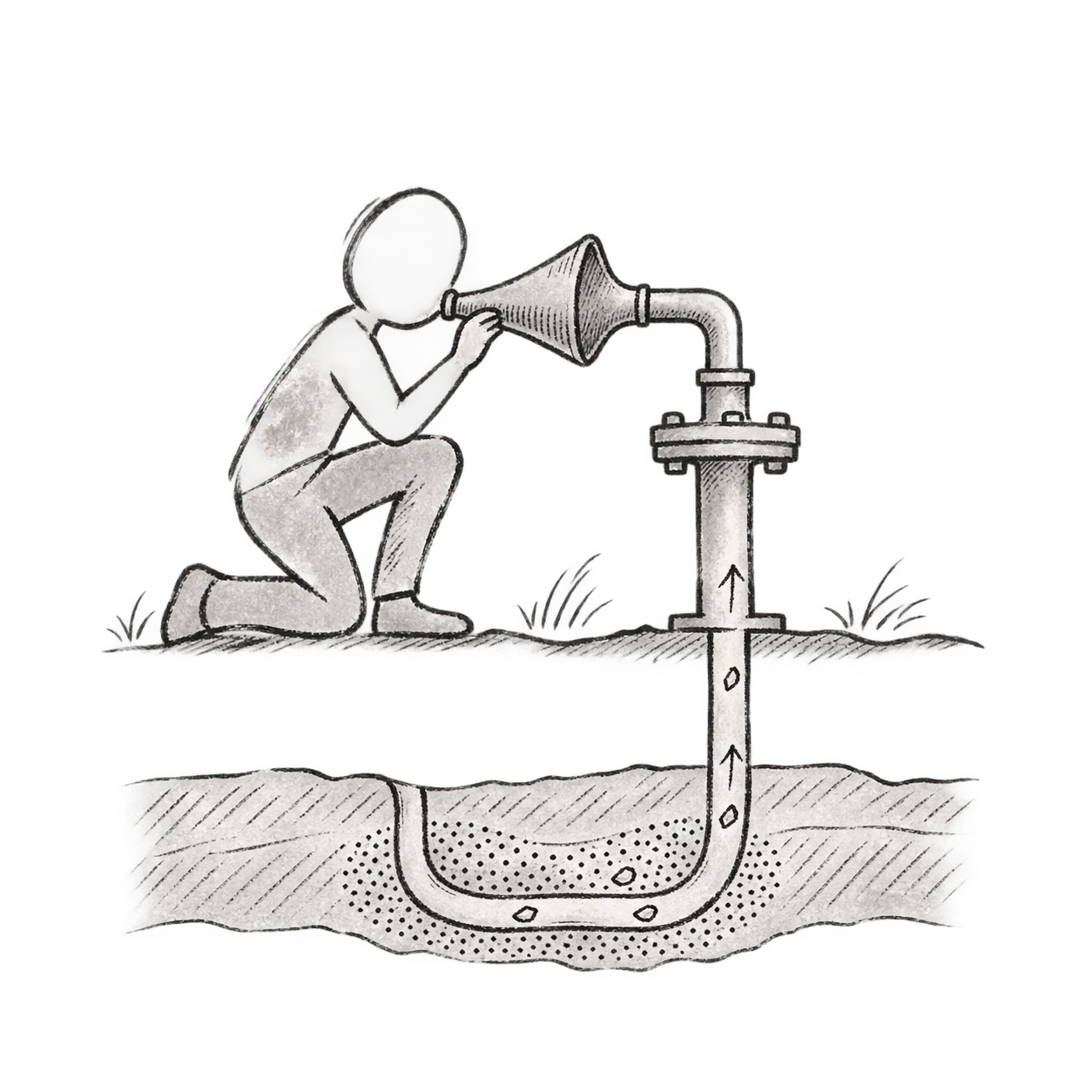
Amir Adnani runs one of the few companies in North America that actually pulls uranium out of the ground. Uranium is the fuel that nuclear power plants run on. He founded the company in Vancouver at twenty-seven, long before anyone in Washington was asking where that fuel would come from. Today he leads or chairs a small family of companies in uranium and gold, and he sits on the board of the nuclear industry's main international body. For two decades he has argued that the West would one day need its own uranium again. That idea has only recently become fashionable. What caught our attention is how he got there: through a craft that had very little to do with rocks.
Explaining things before digging them
Amir's first substantial company was a communications firm. In 2004 he and his brother Arash started Blender Media in Vancouver. The firm helped public companies explain themselves to investors, and many of its clients were the small mining exploration outfits the city is famous for. It is worth pausing on what that job teaches a person in his mid-twenties. You learn how to make a company understandable to strangers. You learn which stories travel and which ones stall. You sit close enough to a hundred ventures to notice what the good ones have in common.
Within a year he had switched sides, going from helping companies tell their stories to running one of his own. Uranium Energy Corp was founded in January 2005 with Amir as president and chief executive. He chose a commodity whose biggest problem wasn't geology but public perception. In 2005 uranium still carried the weight of the Chernobyl and Three Mile Island nuclear accidents. Western mines had been closing for years. The United States, the biggest consumer of uranium on earth, imported nearly all of it. When people are wary of what you sell, explaining it is part of the job of selling it. Amir has spent twenty years at conference podiums, on business television and in briefings in Washington, and that makes more sense once you know where his craft began. By the time he founded the company he already had the skill. What he went looking for was the subject that needed it most.
Twenty years of being early
Twenty years of being early
In 2005 a 27-year-old in Vancouver started a uranium company while Western mines were closing. How the wait was spent is the story.
The unloved fuel
Uranium carried decades of stigma, and over the following years most Western mine development drifted toward state-backed producers in Kazakhstan, Russia and elsewhere. Amir chose it anyway, and chose the United States, the world's largest consumer of uranium with almost no domestic production, as the place to build.
Five years to first uranium
The company went from a concept to producing uranium in South Texas inside its first five years, using recovery wells rather than open pits, with a former U.S. Energy Secretary as chairman and veterans of the industry running the ground.
Keeping things alive
When mining made no sense, production at the South Texas mine was put on hold while permits were kept current. Through the lean decade the company spent more than half a billion dollars acquiring plants in Wyoming and a large position in Saskatchewan's Athabasca Basin.
Washington calls
By late 2022, with energy security suddenly urgent, his team was in meetings at the White House and the Department of Energy, and support for domestic nuclear fuel had become bipartisan. The assets for that moment had been assembled years earlier.
Hiring his elders at twenty-seven
A young founder in a politically sensitive industry has a credibility problem, and the way Amir solved it still shapes his company. Soon after founding it he persuaded Spencer Abraham, who had been U.S. Secretary of Energy until 2005, to chair the board. The executives who followed had spent forty-year careers in one particular specialty: getting uranium out of the ground through wells in Wyoming and Texas. Look at the senior team today and it reads like the institutional memory of American uranium mining. It was gathered under one roof by someone who had none of that memory when he started.
It takes a specific kind of confidence to hire people who have run the operations you hope one day to own, and then stay in the top job for twenty years while they work for you. The reward was speed. The company went from an idea to producing uranium in South Texas within five years. In mining that is fast, and it tends to happen only when the people handling the permits and the drilling have done it before.
The quiet kind of mine
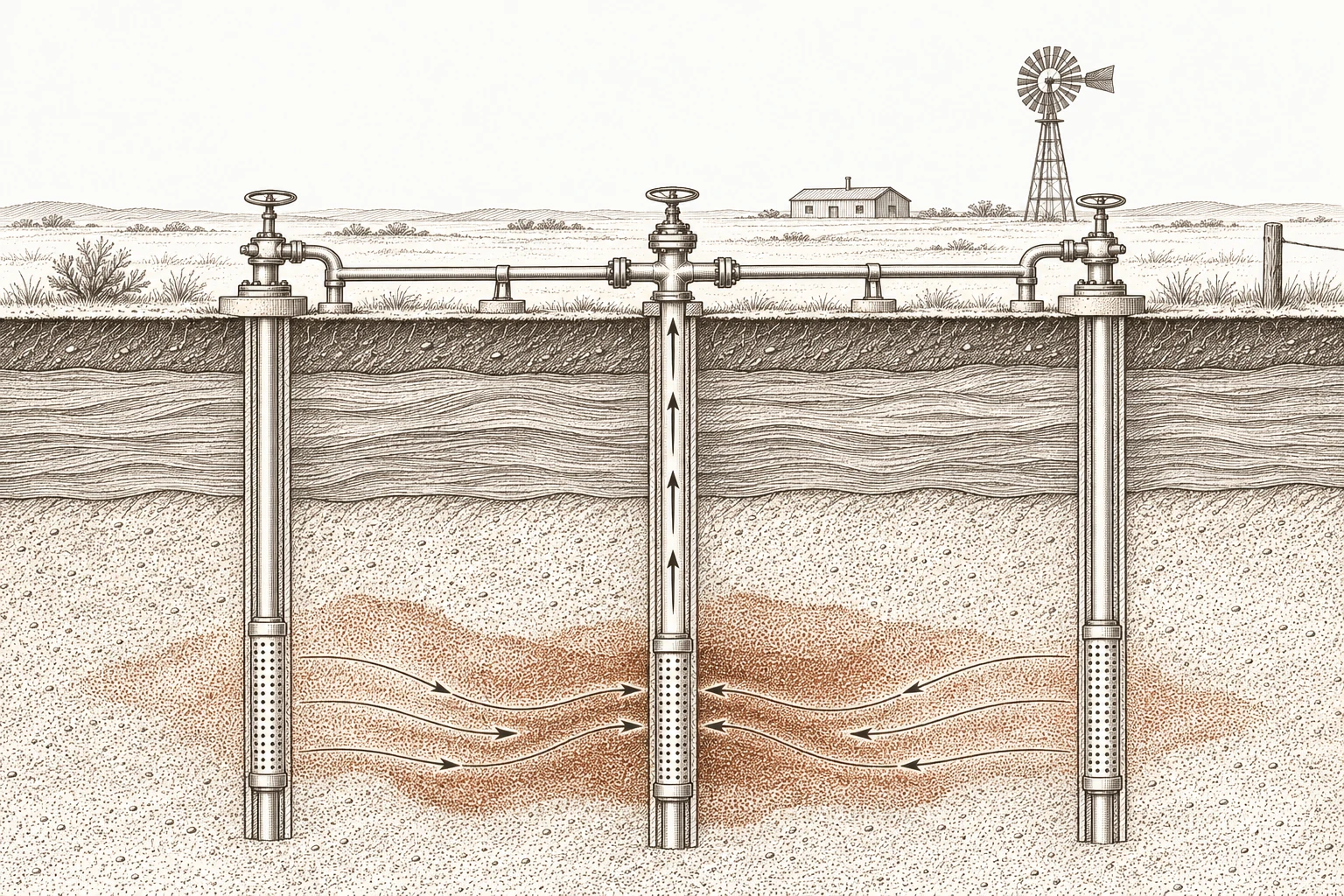
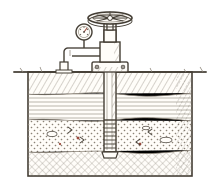
It helps to know how this kind of mining works. The uranium Amir's company produces in the United States comes from a method called in-situ recovery, which means mining the ore where it lies. Wells are drilled down into a layer of sandstone that holds uranium. A solution is pumped through the rock to dissolve the uranium, and the liquid is pumped back up and processed. There is no open pit and no pile of waste rock. From the surface it looks like a field of wellheads in ranch country. It is the low-impact end of a heavy industry, and Amir bet on it early.
Then came the long middle. For most of the 2010s the uranium price was low and the West let its uranium industry wind down. Mines shut and almost no new ones were developed. Amir's response was the opposite of dramatic. When the price didn't cover the cost of mining, his company paused production instead of mining at a loss. It kept its permits alive, which mattered because in this industry they can take years to get. And it bought processing plants and deposits from companies that were leaving the business. Eventually governments rediscovered nuclear power as a way to cut carbon emissions and stop depending on other countries for energy. By then the assets were already in place. There is a lesson in that for anyone building ahead of their moment: the skill is deciding what to keep alive through a winter, and keeping it alive without losing your conviction.
Building the instrument as well as the mine
- A firm for making companies understoodBlender Media, VancouverVancouver's small public companies needed to be legible to investors. Before mining, Amir's business was explaining other people's businesses.[1] [2]
- A Western producer when the West had stoppedUranium Energy Corp, TexasMine development was leaving North America. He built a company that reached production in the United States within five years and kept its licences through the lean decade.[4] [6] [1]
- A royalty company for a metal that had noneUranium Royalty CorpRoyalty companies were an old idea in gold and absent in uranium. He created the first publicly listed one and later repeated the structure for gold.[1] [4]

The second thing that sets Amir apart is that he thinks about how companies are put together and paid for, not just what they dig up. In 2009 he founded a gold company, which became GoldMining Inc. and has gathered deposits across the Americas. Then he began building ways to finance this kind of business. The key piece was the royalty company. A royalty company pays money up front to a mine that someone else runs. In return it gets a share of that mine's future output or revenue, and miners get cash without having to take on debt or sell more shares. The idea is old in gold. It did not exist in uranium at all until the end of the 2010s, when Uranium Royalty Corp, which Amir chairs, came along. Gold Royalty followed in 2020, and a carbon version after that. The usual path ends once the mine is built. Amir builds the mine and then the vehicle that can pay for the next one. Each new company is a tool he noticed was missing.
Vancouver, after Iran
Amir was born in Iran, and his family moved to British Columbia in 1993, when he was a teenager. He went to the University of British Columbia, earned a science degree, and started his first venture the year he graduated. He has never really left the city. Vancouver is the world capital of small resource companies, and there is something fitting about an immigrant kid landing there and, within a decade, running one of the most ambitious of them. It is also hard to miss that he was born in a country where uranium is a geopolitical flashpoint, because of the long international dispute over Iran's nuclear programme. In the West he built a career arguing that uranium is an ordinary, essential fuel for clean electricity. We won't claim one explains the other. We will say that the long view seems to come naturally to people who have watched a place change.
His civic life points the same way as his business life: toward connecting a world he knows with a need he can see. He has served on the board of the STAND Foundation, which funds training and scholarships for young adults in Vancouver who have had fewer chances. He also helped fund a housing project for Union Gospel Mission in the Downtown Eastside, the city's poorest neighbourhood. With his brother he helped set up a way for the city's mining companies to sponsor men going through the mission's recovery program, turning an industry into a donor base. He gave six years to UBC's alumni board. He is married with three children.
The nuclear industry is having the moment Amir spent twenty years preparing for, and his companies now hold a good share of the West's remaining know-how in producing nuclear fuel. What we'd watch is what he builds next with the same method: find the piece that is missing, hire the people who know more than you, explain it patiently, and wait.