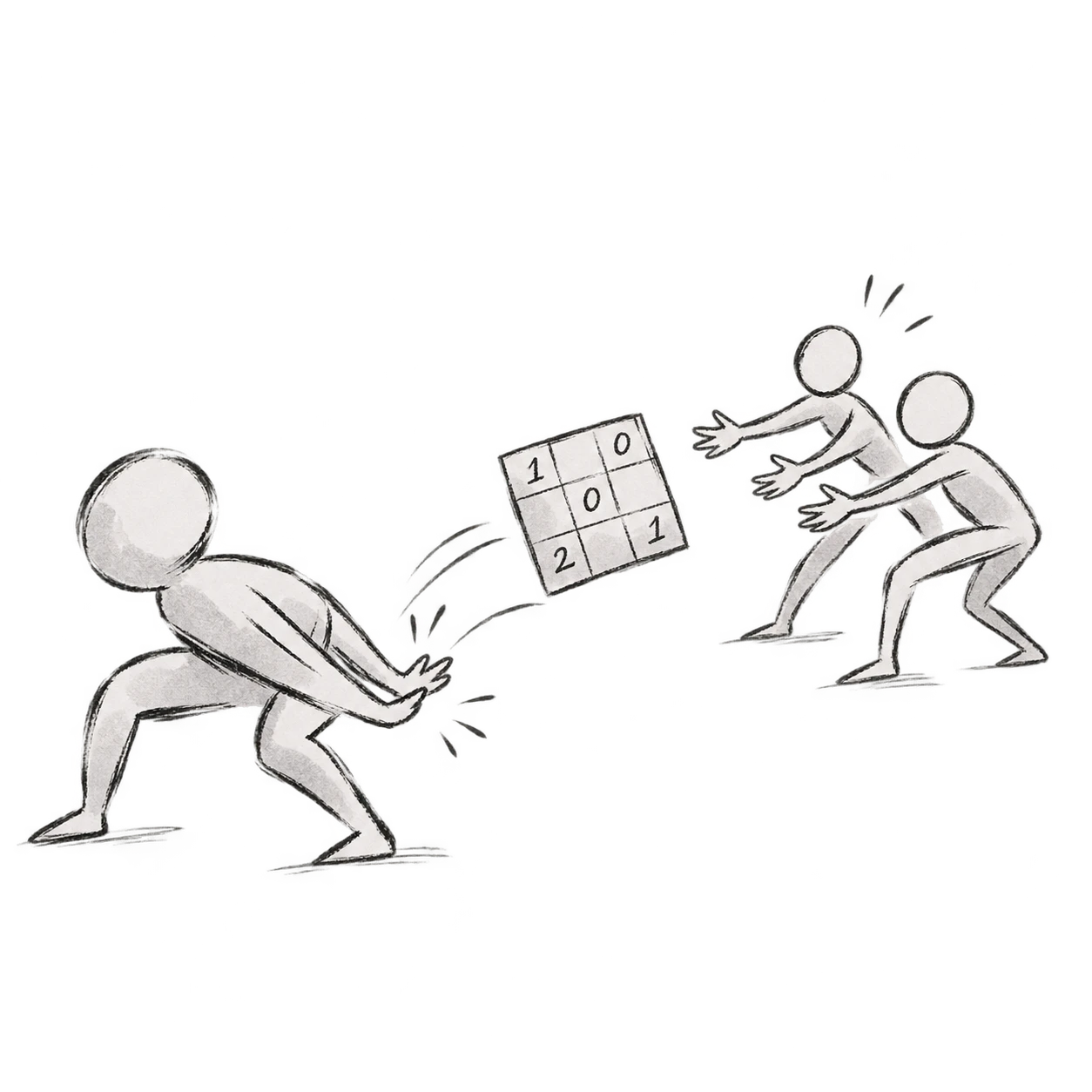
John Urschel holds a named professorship in the mathematics department at MIT, where he works on linear algebra: the branch of mathematics that sits underneath nearly every large computation, from weather forecasts to the training of AI models. For three seasons before that he was an offensive lineman for the Baltimore Ravens. The pairing is what gets him invited onto television. What made us look closer is what he has chosen to do now that football is behind him and mathematics is the only career he has.
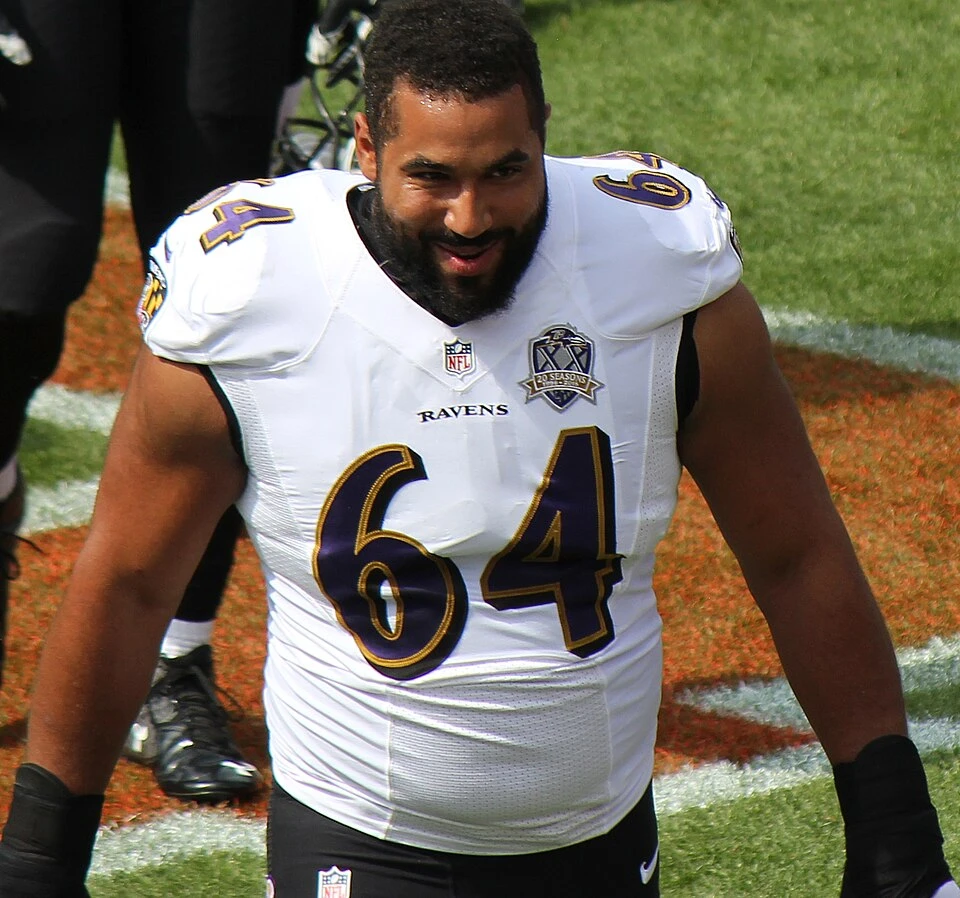
Photo credit
The oldest hammer in the box
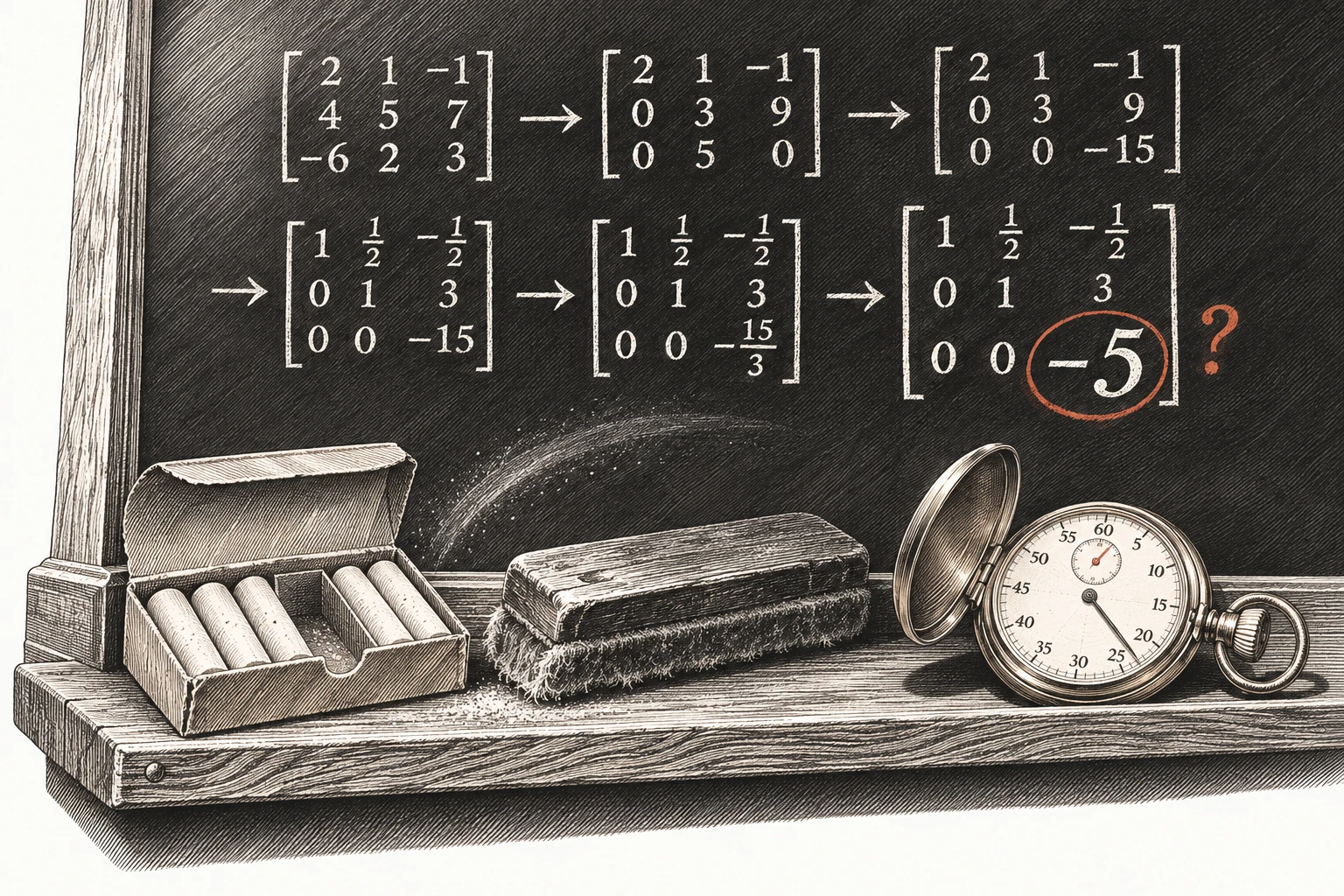
If you solved simultaneous equations at school by getting rid of one unknown at a time, you have used Gaussian elimination. It is the first real algorithm in every linear algebra textbook, and computers run the same procedure billions of times a day. There is a catch, though. A computer keeps only a fixed number of digits for each number, so it rounds slightly at every step. As the method works through a problem, the numbers it creates along the way can grow much larger than the ones it started with. When they balloon, the small rounding errors balloon with them, and the final answer can come out wrong. Mathematicians call this measure of how large things get the "growth factor."
The surprising part is that, more than sixty years after the dawn of computing, nobody can say exactly how large that growth can get. The question was posed in the 1960s and is still open.
This is where John has put the centre of his working life since joining the MIT faculty in 2023. He has written a run of papers on that growth, some with senior colleagues and some with undergraduates, and a 2026 preprint on what happens when the starting numbers are random rather than carefully chosen. Applied mathematics in this decade is drawn to problems in machine learning. Against that background, picking a sixty-year-old question about the first chapter of the textbook is a statement of taste. It belongs to someone who suspects the deepest things are hiding in plain sight, underneath tools everyone uses without looking at them closely.
The same instinct runs back through his earlier work. Again and again he took a technique people already trusted, such as a standard method for analysing large matrices or a popular model in machine learning, and asked when, exactly, that trust is justified. It is a useful habit for anyone, in any field: find the thing your profession takes for granted and ask why it works.
The route nobody takes
The route nobody takes
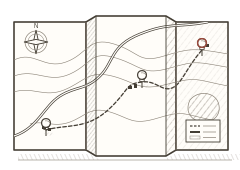
How a Penn State lineman became an MIT mathematics professor by the least conventional path the department had seen. Three turns on the map, each one an institution bending its rules.
Two degrees in four years, in pads
He finished a mathematics degree in three years and a master's in the fourth, while earning a starting place and all-conference honours on the offensive line. He also taught two undergraduate courses of his own before leaving.
The habit visible here is front-loading: doing the hardest, most important thing first, every day, so that nothing has to be traded away later.
One application, a January start
After his rookie season he applied to exactly one doctoral programme, past its deadline. MIT's mathematics department, which does not take part-time students, let him begin mid-year in January 2016 and treated the case as a risk worth taking.
Penn State is not a usual feeder for MIT's mathematics PhD, and he was out of school and employed full time. He aimed narrowly and did not hedge.
Hired home
After the PhD came a Junior Fellowship at Harvard's Society of Fellows and a membership at the Institute for Advanced Study in Princeton, two of the most selective postdoctoral homes in American academia.
Then MIT hired him back, into a named career-development professorship. Mathematics departments rarely appoint their own doctoral graduates, which makes the return its own kind of verdict.
The invisible position
An offensive lineman is noticed only when something goes wrong. The quarterback gets the headlines. The centre, the position John was drafted to play and the player who starts each play by passing the ball back to the quarterback, gets a mention only when that handoff is fumbled or a defender breaks through. Numerical linear algebra, the field that works out how to make these calculations reliable on real computers, occupies the same place in science. It is the plumbing inside every simulation and every data model, and the public hears about it only when a calculation returns nonsense.
Being drawn to both suggests a consistent temperament. John appears comfortable doing load-bearing work that most of the people who benefit from it never see, and he seems to choose the foundational over the fashionable as a matter of course. One of the courses he has chosen to teach at MIT is the department's big introductory linear algebra class, taken by a large share of the whole institute, rather than only small advanced seminars in his specialty. Readers who have ever felt that their own work is essential and unglamorous will recognise the type, and may take some encouragement from where it can lead.
Problems handed down
The most telling page on his department website may be the list of students. Below the postdoc (a researcher in the training years after a PhD) and three doctoral students sit eleven undergraduates. Several of them have already gone on to doctoral programmes at Princeton, Berkeley, Harvard and Copenhagen. More unusual is where else those names appear: on his papers. Undergraduates share authorship with him in real journals, including on the growth-factor work itself. Supervising a student project is routine. Making second- and third-year students co-authors on the central problem of your own research is a deliberate choice about who gets credit and who gets the confidence that comes with it.

John knows what that kind of early trust does, because he received it. At Penn State a professor handed him a live research problem while he was still an undergraduate, and it became his first published paper. By his fourth year he was teaching a course of his own while also starting every game on the football team's offensive line. He now passes on the same trust to many students at once, and there is a generosity to the pattern that is easy to miss if you only read the headlines.
- A research problem, as an undergraduatePenn StateA professor who noticed him in a real analysis class began sending him problems and reading to do. The result was his first published paper, on instabilities in a three-body orbital problem, written before he had finished his degree.[1] [3]

- His own chalkboardPenn StateAs a master's student and a starting lineman, he taught trigonometry and then vector calculus as the instructor of record, and found that he liked the front of the room as much as the research.[1] [3]
- Undergraduates on the bylineMITHis recent papers, including the central growth-factor work, list undergraduate co-authors beside senior colleagues. Several of those students have since gone on to doctoral programmes at Princeton, Berkeley, Harvard and Copenhagen.[1]

Spending the spotlight
John is probably the most recognisable working mathematician in America, and he knows the recognition came from outside mathematics. What interests us is where he directs it. His public work, by his own listing, has three parts. There is a children's book prize that rewards books helping kids see mathematics in the world around them. There is a seat on the board of the National Museum of Mathematics in New York. And there is a lecturing role in a two-week MIT summer programme for promising teenagers from under-resourced communities.
All three aim at the same thing: young children, and the general public's relationship with numbers, long before anyone decides whether they are "a maths person". Together they read as a conviction that numeracy should be treated the way literacy is, as a basic skill every citizen needs rather than a specialist's hobby. A former professional athlete with a camera-ready story could spend that attention on himself. He has put it into institutions that will outlast his own fame.
The next chapter
He is in his fourth year on the MIT faculty. He has already won the field's main prizes for early-career researchers, and the obvious next milestone is tenure, the permanent post that universities grant after several years. The more interesting question is which old, trusted tool he examines next. He was born in Winnipeg, raised in Buffalo, and shaped by a Pennsylvania football programme and a Massachusetts mathematics department. Throughout, he has arrived by unusual routes and then settled into the foundations. We expect the next few years to look like the last few: a hard question everyone else walked past, a group of very young co-authors, and a growing number of children who met mathematics through a book he helped pick.