Jimmy DiResta is a New York maker. For forty years he has built things out of metal, wood, plastic, leather and whatever else came within reach, and for more than a decade he has filmed himself doing it without saying a word. Along the way he has sold a toy that gurgles, hosted television with his brother, co-written a workshop manual, and starred in a Netflix show where he builds the impossible inventions children dream up. What caught our attention is how much of that career rests on one uncommon belief: that a well-made thing can explain itself.

Photo credit
Jimmy DiResta in Brooklyn. Credit: Jimmydiresta.
The displayed photo adaptation is also licensed under CC BY-SA 3.0.
Displayed in black and white; edges cropped.
The story told without a word
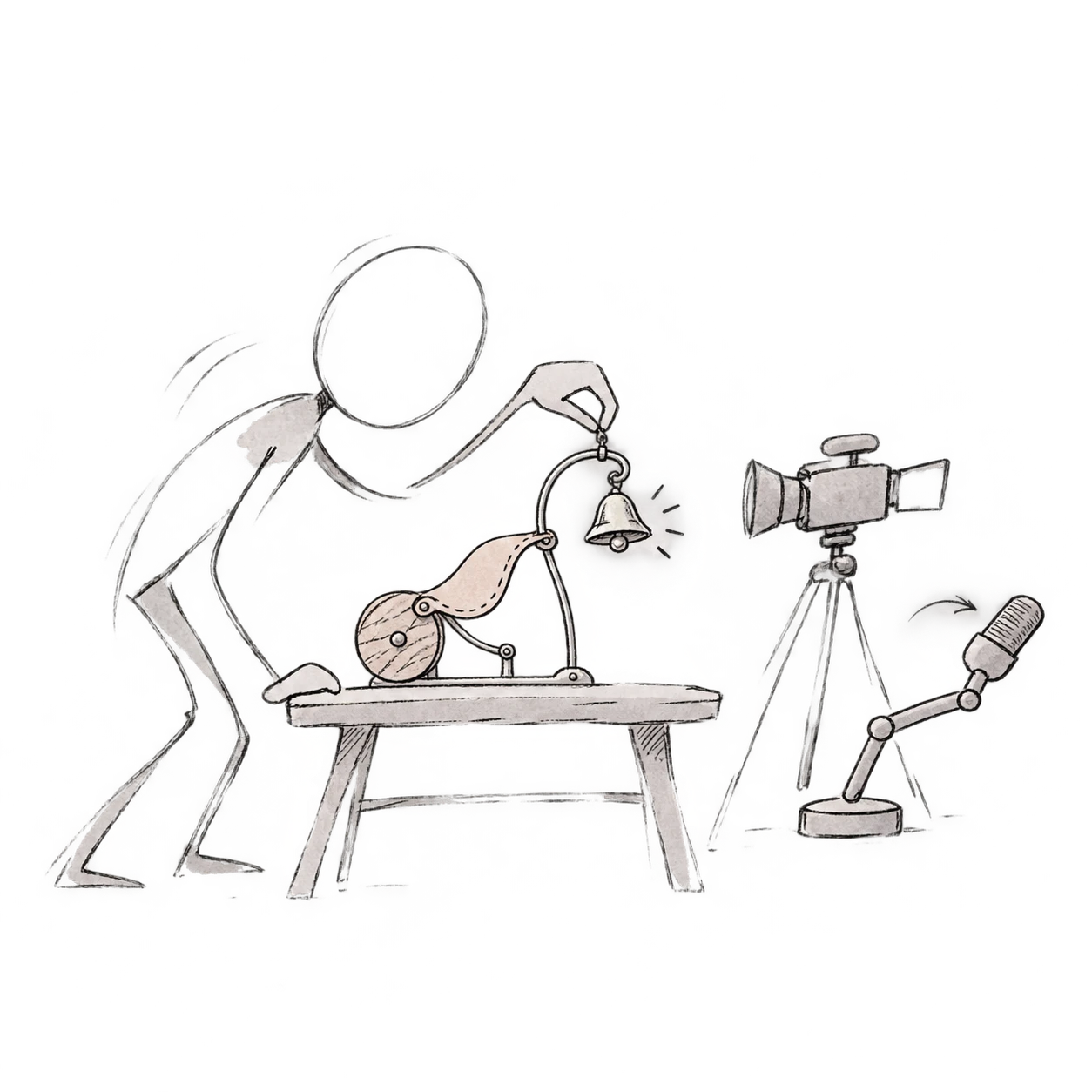
Most build videos on YouTube talk. A voice tells you what the tool is, what the cut is for and what to watch out for. Jimmy's long-running build videos mostly don't. Hours of work are cut down to a few minutes of sawing, welding, stitching and fitting, and viewers follow the logic with their own eyes. That takes confidence, because the editing has to tell the whole story. The steps have to come in an order that makes sense, the camera has to be where his hands are, and he can't talk his way past a mistake.
It also says something about how he sees his audience. A silent video treats the viewer as a fellow maker, someone who can read a process the way a musician reads a score. That respect is probably one reason the people who follow his work call themselves a community rather than a fanbase. When you watch Jimmy, he shows you something and trusts you to keep up.
The surprise is that the quiet man of YouTube is one of the most talkative people in the maker world once you switch to audio. Since 2014 he has co-hosted the Making It podcast with two other YouTube builders, Bob Clagett and David Picciuto. The show started when the three of them kept leaving comments on each other's videos and realised they had more to say. The podcast is where the thinking happens. They talk about where ideas come from, what a creative routine looks like and what to do when a project stalls. So the two formats do different jobs. Video is for the work. Conversation is for the why. Plenty of creators never work out a split that tidy.
The toy that was a design lesson
The toy that was a design lesson
In the 1990s, long before YouTube, Jimmy ran an East Village toy company. Its best-known product was deliberately disgusting. It was also a small masterclass in how he thinks about objects.
Start with what delights
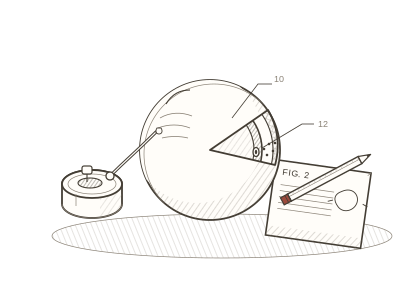
Gurglin' Gutz was a squeezable rubber human organ. The 1996 patent behind it makes the case plainly: children are drawn to gross things the way they are drawn to scary stories, and a toy can meet them there. The starting point was not a material or a technique. It was a feeling someone would have holding the thing.
Then make it actually work
The joke needed engineering. A hollow core, a single small vent and a charge of oil inside a sealed skin: squeeze it and air and oil are forced out with a gurgle, let go and they are sucked back in with another. It had to survive being thrown, and it had to be cheap to make in quantity. Whimsy, built to a specification.
The habit never left
Thirty years on, the same instinct shows in how he sells a knife: packaged in letterpress so that opening the box is part of the object. Jimmy designs the experience of a thing, not just the thing. The gross toy was the first public proof.
Everything is material
Jimmy studied at the School of Visual Arts in Manhattan, graduated in 1990, and later taught there. That art-school background matters, because his instincts are a designer's rather than a tradesman's. A furniture maker tends to think in wood, and a welder thinks in steel. Jimmy's 2016 book, published by Make:, is subtitled as a guide to working with metal, wood, plastic and leather, and that breadth is the point. For him the question is never which specialty he belongs to. It is what the object needs, and which material or tool will get it there.
That is harder than it sounds online, where workshop channels usually earn their reputation by doing one thing extremely well. Jimmy's range earns a different kind of respect. His shop has held a CNC router, a computer-controlled cutting machine, next to a restored letterpress, the old-fashioned kind of printing press that stamps inked type onto paper. It has also held hand tools for punching leather next to a plasma cutter, which slices through metal with a jet of superheated gas. His projects have included signs, knives, tote bags, tool racks and an ice pick he calls the most useful object in the building. You could call that being a generalist, but it looks more like a refusal to let the tool decide what gets made.
- Toys from found objectsEast Village, New YorkHis toy company was written up for products that began as found objects: things other people had finished with, reimagined as something to play with.[5]
- Scouring the city with JohnTrash to Cash and Dirty MoneyTwo television shows with his brother were built on the same instinct at city scale: hunting dumpsters and flea markets for castoffs worth transforming.[5]
- A press restored, printing againThe upstate shopToday the salvage instinct runs the other way: an antique letterpress he brought back to working order prints the signed posters he sells.[3] [8]
Jimmy can make anything
For most of the 2000s, Jimmy's public life ran through television, usually alongside his brother John, a former police officer who became a comedian. Their HGTV show, Hammered, summed up the double act in its tagline: Jimmy could make anything, and John could make anything funny. Later, on Discovery's Dirty Money, the two of them combed New York for discarded objects they could rework and sell.
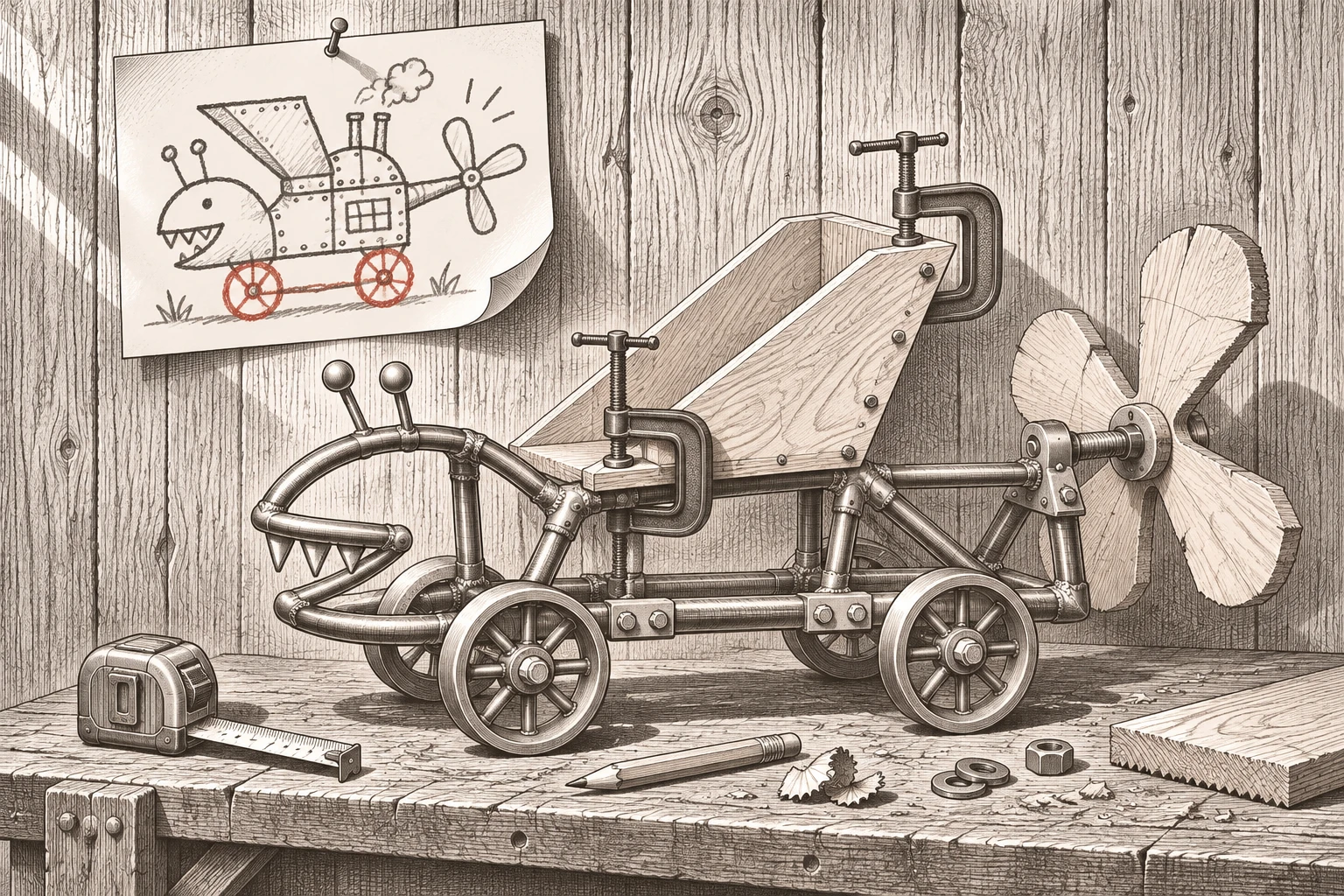
Things got more interesting when Jimmy went on camera without a comic partner. In 2017 he appeared on NBC's Making It, a crafting competition that only shares its name with his podcast, as the person who helped the contestants. The show offered him the title "The Master Helper," and he turned it down and asked to be called by his own name. On Netflix's Making Fun in 2022, he covered both halves of the old Hammered tagline by himself. Children pitch absurd inventions over video call, like a dinosaur that spits tacos, and Jimmy and a crew of his friends build them for real. On the show he is gruff, deadpan and funny, and the comedy works because it is his way of taking the kids seriously. He argues with their ideas instead of humouring them, which is exactly what you would do with an idea you actually meant to build.
One big shop
For years Jimmy worked in a low-ceilinged basement under a Manhattan salon. Before that he had shops elsewhere in the city and on Long Island, where he grew up as the son of a handyman. His current chapter began when he moved upstate to land in the Catskills. There he has been building the workshop he always wanted, with every tool he owns under one roof and room to make noise.
That room isn't only for machines. Television crews now come to him. Ask This Old House, the long-running home-improvement series, has built a coat rack and an outdoor chair with him, and in 2024 its host came back to the upstate shop to hand-stitch a leather tote. Jimmy also co-founded The Makers Mob with six other YouTube builders, a subscription service that sells project plans and lessons. His website lists in-person workshops at his shop as the next thing coming. Put it all together and the teaching at SVA, the book, the podcast, the kids' show and the workshop plans look like one long apprenticeship that anyone can join.
That is the thing to take from Jimmy. He has never needed to tell you he is good. He lets the finished object, the silent video, the gurgling toy and the letterpress poster speak for him. In an age that rewards narration, he built a following by trusting people to look closely. It would be a fine way to make anything.