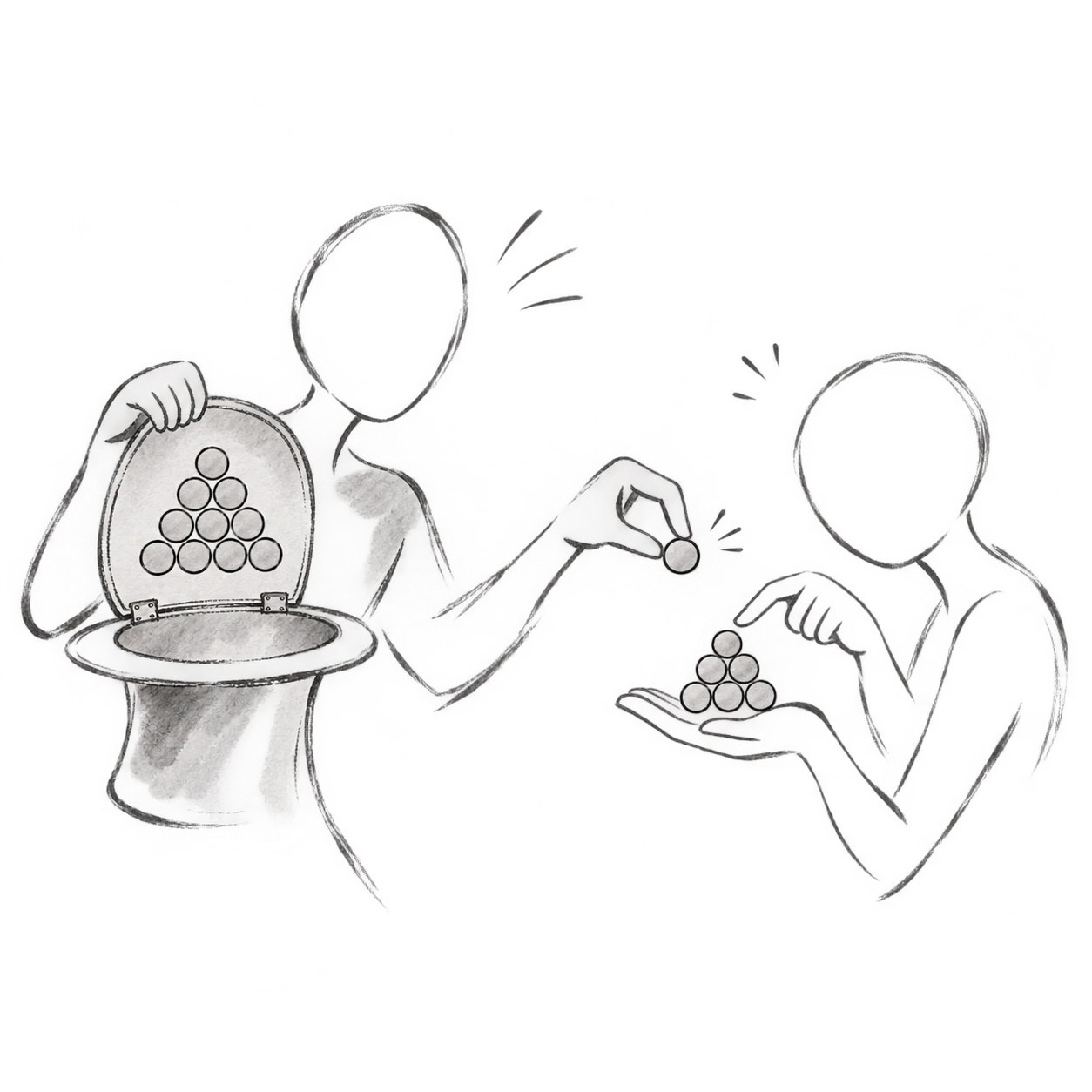
Arthur Benjamin is a professor of mathematics at Harvey Mudd College. For most of his adult life he has also walked on stage in a tuxedo and squared five-digit numbers in his head faster than the audience can type them into a calculator. He has written a prize-winning book on the art of mathematical proof. He has won a national backgammon tour's top honour twice, twenty-three years apart. And this past summer he took a one-man mathematics show to an off-Broadway theatre for forty performances. What caught our attention is how the act is built. Each trick ends with an explanation of how it was done, and the explanation is the part he seems to enjoy most.
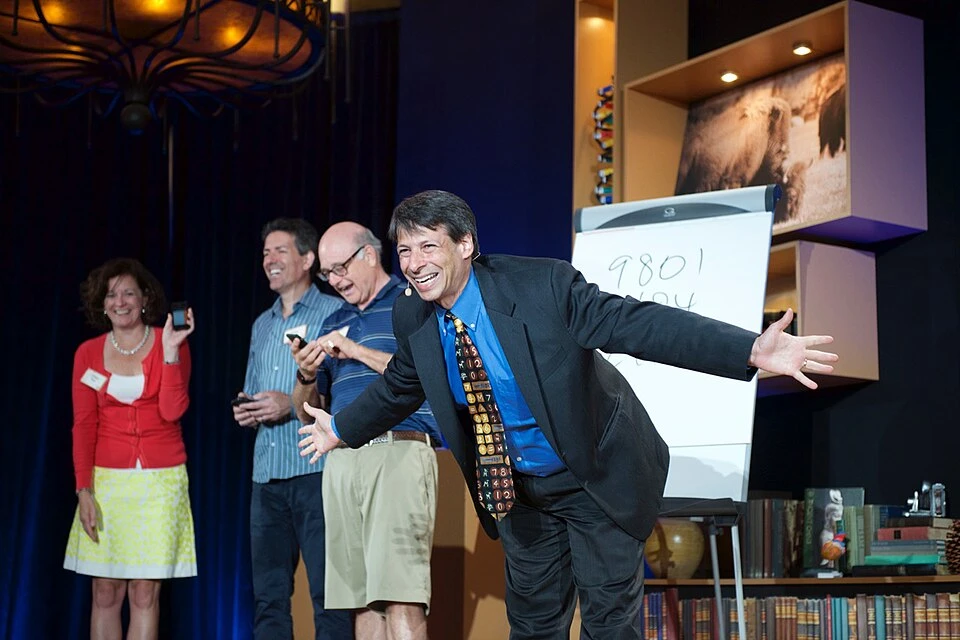
Photo credit
Arthur T. Benjamin performing, by Nstclair.
The displayed photo adaptation is also licensed under CC BY-SA 4.0.
Displayed in black and white; edges cropped.
The reveal is the point
Magic depends on keeping secrets. Mathematics works the other way round: a result only counts once you have shown exactly why it is true, step by step, for anyone to check. Arthur has spent his career performing in the narrow space where both are true at once. In an ordinary magic show he can simply astonish people. In a lecture hall or a theatre he does the astonishing thing and then shows the room exactly how it was done. In any other magician's act, that would be the moment the spell breaks. In his it is the second act, and it tends to get the bigger reaction.
The same instinct turns out to drive his best-known research. His field is combinatorics, the mathematics of counting and arranging things. It has a style of argument called combinatorial proof. Say you want to show that two formulas always give the same number. Instead of grinding through pages of algebra, you find something that both formulas are secretly counting, and then the equality becomes obvious. Here's a simple case. The number of ways to pick three people out of ten for a committee has to equal the number of ways to pick the seven people who are left off it, because every choice of one is also a choice of the other. Once you see that, you don't need to calculate anything.
His book with Jennifer Quinn, Proofs That Really Count, won the Mathematical Association of America's top book prize for turning that style into an art form. Read it next to the stage act and the family resemblance is hard to miss. In both, the satisfaction comes from suddenly seeing why something is true, and a result you can see is one you own. The off-Broadway show made this literal. Parts of the evening were spent teaching the audience to do the smaller feats themselves, so people left with a trick in their pocket.
How to multiply faster than a calculator
How to multiply faster than a calculator
Three habits hiding inside a mathemagician's act. None of them require a tuxedo, and all of them travel.
Start from the left
Schoolroom arithmetic runs right to left, ones column first. Lightning calculation runs the other way, biggest digits first, so the size of the answer arrives before its details.
It is the same instinct a good estimator uses in a meeting: settle the order of magnitude, then refine. The last digit can wait. The first one cannot.
Think out loud
The big squaring feat is performed aloud, scratch words and all, so the room hears the working as it happens. That makes the feat auditable, and as a side effect it makes it teachable.
A method you are willing to narrate in front of strangers is a method you understand. The rest is rehearsal.
Many roads, one answer
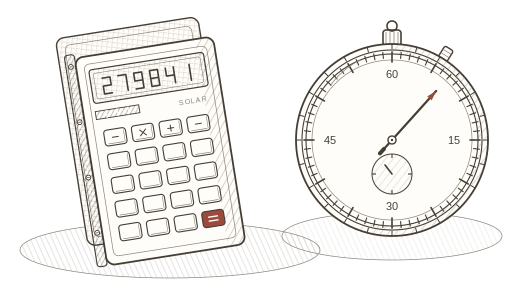
There is usually more than one way to reach the same product, and a calculator of this kind tends to run two of them against each other. We'd guess that is where the stage confidence comes from: by the time the number is spoken, independent routes have already agreed on it.
The habit is worth copying far from arithmetic. Check your answer by a different road, then say it like you mean it.
Fifty miles from Hollywood
Arthur grew up in Ohio and studied in Pittsburgh and Baltimore. In 1989 he took a job at Harvey Mudd College in Claremont, California. It is a small science and engineering college that teaches only undergraduates, so teaching is the main event, and its mathematics department sits a short drive from Hollywood, which happens to be home to the magic world's best-known club. We don't know how much that geography figured in his decision, but it has shaped everything that followed. Within a year he had auditioned at the Magic Castle, the private Hollywood clubhouse where professional magicians perform for one another and for members, and he has performed there most years since. At the Castle a magician does several shows a night for a week straight, repeating the same act to one fresh audience after another. A lecture hall rarely offers that kind of rehearsal. We'd guess he found a good deal of his timing there and carried it back to the classroom on Monday morning.
His loyalty to the college has been just as steady. Thirty-seven years at one college is a long time for someone who could clearly have gone elsewhere, and the college has repaid it. He holds a named professorship and has served a term as department chair. He won the Haimo award for distinguished college teaching in 2000. In 2017 he received a communications award from the Joint Policy Board for Mathematics, the profession's recognition for people who carry the subject out to the wider public. He co-edited the MAA's magazine for undergraduates and served as president of the Fibonacci Association.
That last role says something about how he feels about popular appeal. The Fibonacci sequence (1, 1, 2, 3, 5, 8, 13, and so on, where each number is the sum of the two before it) is his favourite mathematical object. It is also the one sequence most people outside mathematics have heard of, thanks to its habit of turning up in sunflowers, seashells and bestselling novels. Plenty of researchers would treat that fame as a reason to work on something else. He treats it as a door left open.
- The Great BenjaminiChildren's birthday partiesA teenage magician learns the first law of performing: a room of five-year-olds forgives nothing and rewards energy. The pace of everything that came later starts here.[7]
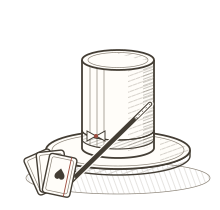
- Three shows a nightThe Magic Castle, HollywoodA year into the Harvey Mudd job, an audition at the Castle becomes a near-annual week of shows in front of magicians. Repetition at that density sharpens patter faster than any lecture hall.[7] [2]

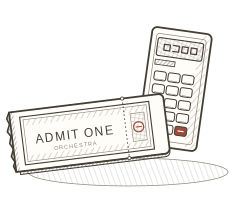
- Forty performancesTheater555, off-BroadwayThe same act, now seventy-five minutes with a director and a box office, and still ending with the method explained to the room.[2]
Chess with dice
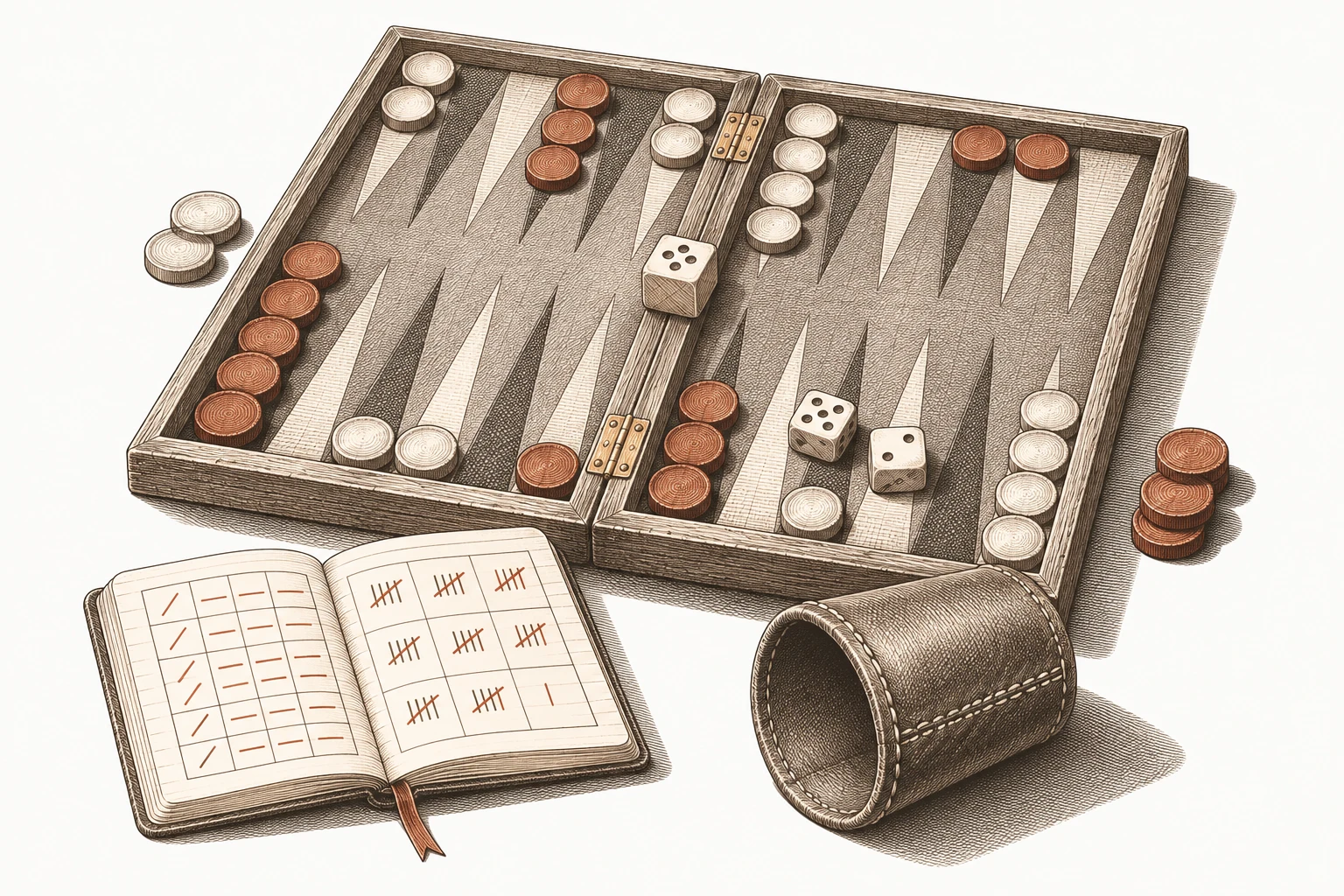
Then there is the backgammon. In this board game two players race their pieces around the board, and the dice decide how far they can move each turn. Arthur was the American Backgammon Tour's player of the year in 1997, won its online championship in 2020, and was elected to the American Backgammon Hall of Fame in 2022. The game is often described as chess with dice, and the dice are the interesting part. Someone who calculates as fast as he does might be expected to choose a game like chess, where there is no luck and the player who sees furthest ahead wins. Backgammon doesn't reward you that way. You can play a position perfectly and still lose to a bad roll, so the only honest scoreboard is your record over hundreds of games. Winning its top honour twice, twenty-three years apart, is about as long a run as a hobby gets.
We read this as a second temperament alongside the showman's. It means being patient through streaks of good and bad luck, and liking problems where the right answer is a probability, not a certainty. It also takes the discipline to keep making the smart move while the dice do what they like. That is a useful temperament for a teacher as well. Students arrive with their own dice, with luck and backgrounds a teacher doesn't choose, and the job is to keep making the right moves anyway.
A year in New York
In 2025, thirty-six years into the professorship, Arthur moved to New York for a year as visiting professor for public outreach at the National Museum of Mathematics in Manhattan. He ran book clubs, short courses on games and magic, and the museum's ask-a-mathematician sessions. Out of that year came That Math Show. It was produced with the company behind That Physics Show, directed by Eric Krebs, and opened at Theater555 on Father's Day 2026. It ran through the middle of August: five performances a week, seventy-five minutes each, with no co-star. He started out as a teenage magician entertaining rooms full of five-year-olds. Now he was holding a room where tickets cost sixty dollars and the critics took notes.
What strikes us is how little the basic formula has changed, astonish first and then explain, while the rooms have steadily grown. A teenager's party act became a Magic Castle set, then a TED talk watched more than twenty million times, then six video courses, and now a theatrical run. Every version still ends the same way, with the method out in the open. He is on sabbatical in the spring of 2027, and a book on the mathematics of games and puzzles is reportedly in the works. If it reads anything like he performs, the last chapter will be the one that tells you how.