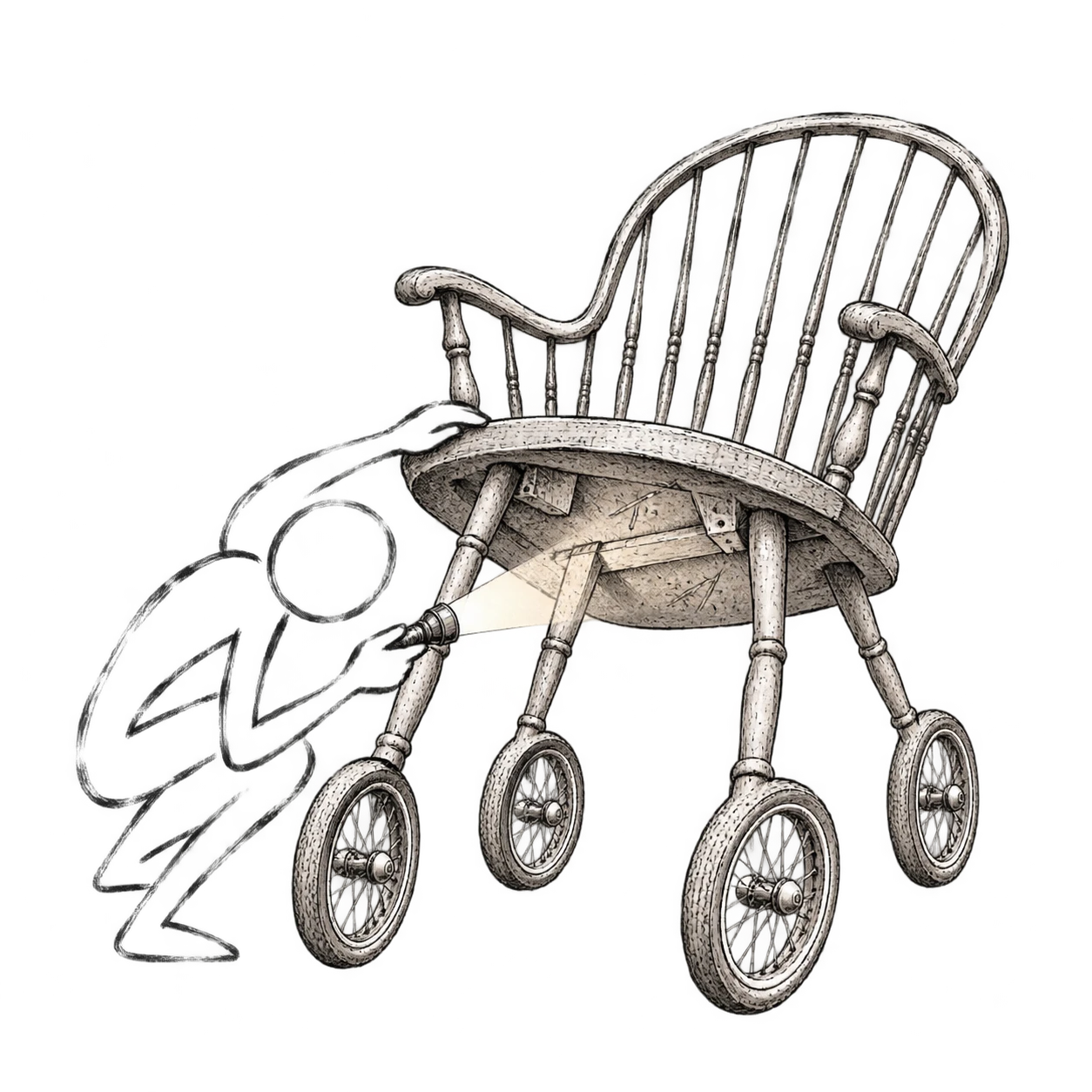
Leigh Keno is the appraiser who taught a generation of public-television viewers to turn a chair upside down before deciding what it is worth. He has spent half a century working in American antiques as a scholar, a specialist at the auction house Christie's, a dealer, an auctioneer and one of the most recognisable faces on Antiques Roadshow. On that long-running PBS series, members of the public bring family heirlooms to a travelling event, and experts tell them on camera what they have. What caught our attention is where his eye has gone lately. First it went to the judging field at Pebble Beach, the most famous classic-car show in the world. Now it has gone into a software company he co-founded in his late sixties, which aims to put an appraiser's judgement into code.
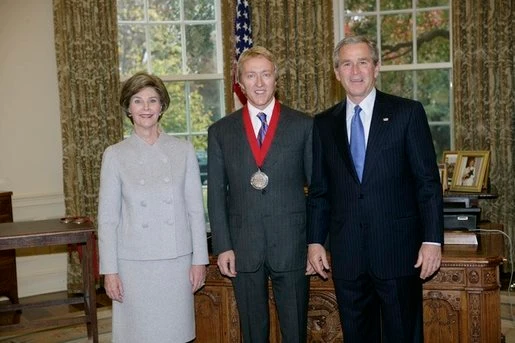
Photo credit
Leigh Keno (centre), November 10, 2005. White House photo by Eric Draper.
Original photoPublic domain (U.S. government)
National Humanities Medal presentation, Oval Office. Archived White House photograph D-0394.
Displayed in black and white; edges cropped.
Dealer before driver's licence
Leigh grew up in the Mohawk Valley of upstate New York. It is canal-and-farm country, and it produced much of what the antiques trade now calls Americana: the furniture, pottery and household goods made and used by early American families. He and his twin brother, Leslie, were buying and selling as schoolboys. While still in their early teens they set an auction record for American stoneware, the sturdy salt-glazed crocks and jugs that farm households once used for storage. The thing to notice is what he did with that head start. By nineteen he was re-cataloguing the ceramics at Winterthur, the great Delaware museum of American decorative arts. At twenty-two he had published a paper on windsor chairs, the classic spindle-backed wooden chairs of early America, in the trade's most serious magazine. He treated a boyhood enthusiasm as a discipline, with footnotes.
A small story from his last year at Hamilton College says a lot. Decades earlier, the stone monuments left by nineteenth-century graduating classes had been dumped in a field near the campus. Leigh had them hauled out and reinstalled between two college buildings. Someone else saw rubble. He saw historical records that belonged back where people could see them, and he organised the labour to put them there. That is the Roadshow move in miniature: spotting the value in something others have written off. And he made it nearly twenty years before the show existed.
Looking underneath
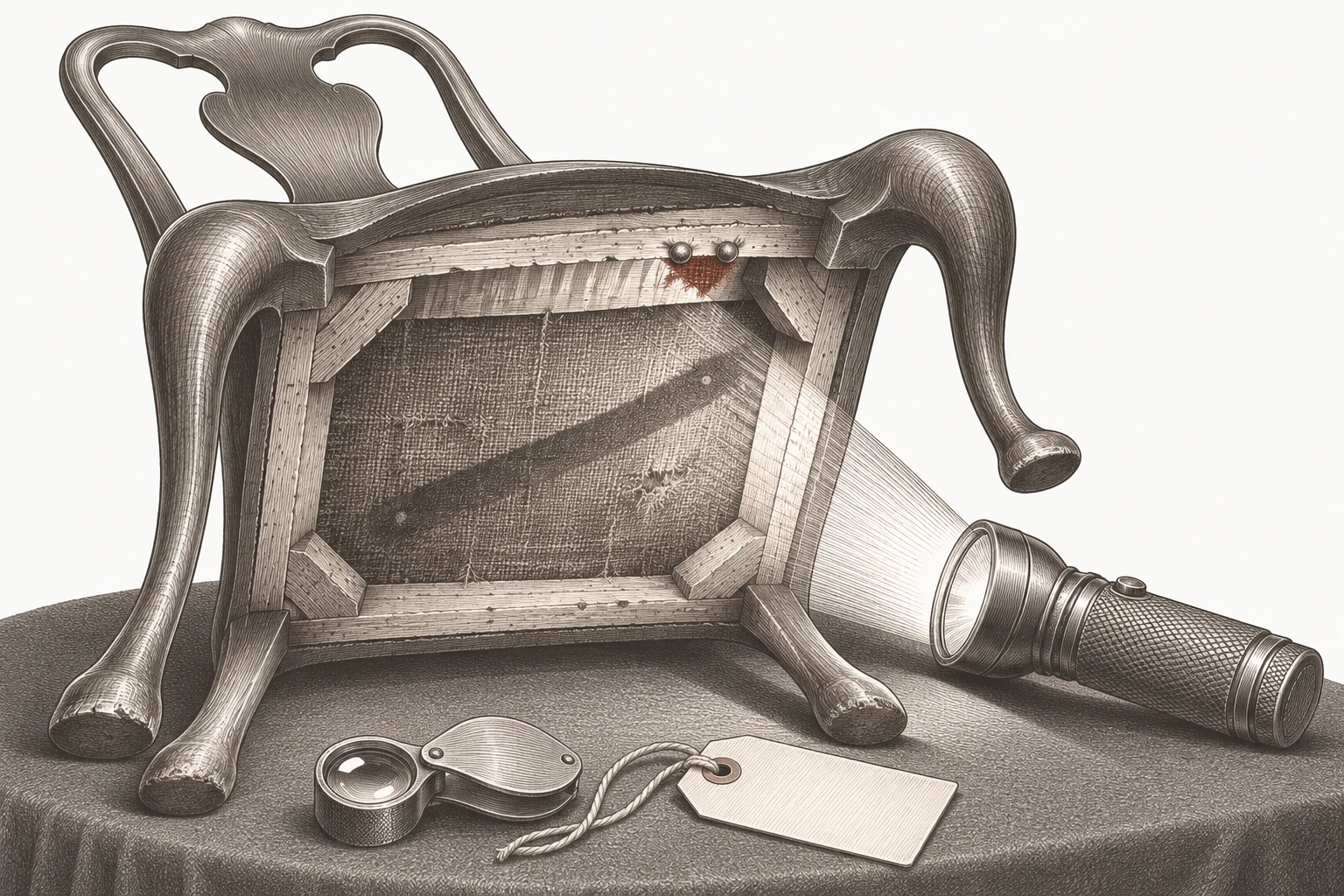
The craft Leigh practises is called connoisseurship: judging what an object is, when and where it was made, and whether it has been altered, mostly by looking very closely at it. It is done largely with a flashlight and a bent back. A fine eighteenth-century chair reveals its truth on the underside, where nobody thought to fake or polish anything. There you find the marks of the original maker's tools and the colour of wood that has never been refinished. You might see the shadow where an original brass fitting once sat, or a scrap of red fabric still caught under the heads of the first upholsterer's nails. He has built a career on refusing to be impressed by the top surface. The reward is the occasional object that turns out to be one of only a handful known to exist. There is also the steadier satisfaction of telling a family what the thing in their hallway actually is.
What makes him unusual among connoisseurs of his generation is that he gives the method away. Dealers have traditionally kept their knowledge to themselves, because the ability to spot what others miss is the business. Leigh has spent nearly thirty years as an unpaid appraiser on Antiques Roadshow, written monthly columns, hosted his own programmes and lectured across the country. The National Humanities Medal he received in 2005 was awarded explicitly for educating Americans about their own material past. He seems to have concluded early that a public that knows how to look is better for the trade than a public that doesn't, and he has been proven right.
An auction house with a front door
Forty-five lots on East 69th Street
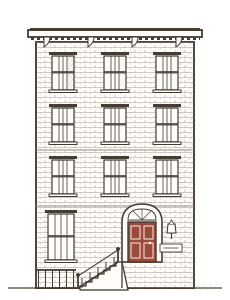
In a city of auction giants, Leigh Keno chose to sell from the second floor of his own townhouse. Here is why the small room works.
The owner is on the floor
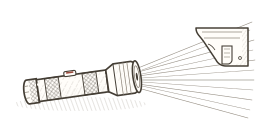
At a big house the specialist who catalogued a piece may never meet the person bidding on it. In the townhouse the founder takes the preview questions himself, phone in one hand, flashlight in the other, crouched beside the chest. Every answer carries his own name.
He sells things twice
The star chair of his January 2020 sale was one he had placed with the same collectors in 1991, when his dealership was a few years old. Three decades later the piece came back through his hands with its file intact. A boutique house can hold a relationship that long.
The name is the warranty
Big catalogues hedge with attributions and conditions. Leigh stands behind what he sells, personally. That is only possible at a scale where one eye has looked at every lot, which is exactly the scale he picked.
The same eye on wheels
Leigh's second field looks like a hobby from the outside and is nothing of the kind. Since 2006 he has judged the Preservation Class at the Pebble Beach Concours d'Elegance. A concours is a show where classic cars are judged on condition and authenticity, and the one held each summer on the California coast is the most prestigious in the world. Most cars there have been restored to look better than new. The preservation classes are different. Here unrestored cars compete on originality, and worn leather, faded paint and other evidence of a long life count in a car's favour. It is the automotive equivalent of the untouched chair, and it is no accident that a furniture scholar ended up judging it. He has written about how historically important cars should be cared for, co-founded a fund and an auction devoted to them, and raced a prewar Jaguar that came from his father, including on a thousand-mile rally across China.
The underlying idea is the same in both worlds, and it is worth borrowing in any field. An object's value lies partly in its surface and partly in its story. A careless restoration destroys both at once: it removes the original finish, and with it the physical evidence of where the object has been. Preserve first. Intervene only when you must. Keep the paper, meaning the receipts, letters and records that document an object's history.
- A scholar of the humble chairHistoric Deerfield and The Magazine AntiquesFresh out of college he published on windsor chairs, the everyday seating of early America. The lesson of such objects is that their value survives in original surface and honest wear, which no refinishing can give back.[2] [1]
- Judging the unrestoredPebble Beach Concours d'EleganceInvited to judge the Preservation Class, where cars compete on how much of their original fabric survives. The furniture rule, applied to steel, leather and paint: a careful restoration can erase the evidence that makes a thing itself.[2] [8] [5]
- Preserving the story itselfArtTagCo-founded a company to pair AI appraisal with a permanent digital record of an object's ownership. The third material is information: provenance that cannot be lost in a house move or an estate sale.[1]
Teaching the eye to outlast the appointment book
Leigh founded Keno Auctions in 2009 and ran it from his own townhouse on the Upper East Side, a deliberately small operation in a city of giant auction houses. In 2024 he started something new: ArtTag, a company that combines artificial intelligence with a permanent digital record of an object's provenance. Provenance is the trade's word for an object's ownership history, and a well-documented history can make a large difference to what something is worth. As we read it, the company's ambition is to make two things that have always lived in experts' heads available to anyone with a phone. The first is a trained judgement about what an object is and roughly what it is worth. The second is the record of who has owned it and where it has been, which is what gives that judgement its weight.
It is a striking thing to attempt at this stage of a career. The temptation, with fifty years of experience behind you, is to write the memoir. Leigh has chosen instead to try to encode what he knows. The idea is that a family heirloom in a hallway in Ohio could get a version of the attention he would give it on a Saturday at a Roadshow taping in some convention centre. That carries a risk for any expert, because it means admitting the knowledge can be separated from the person who holds it. He appears comfortable with the admission.
One more detail pleases us. His professional base is now listed in Little Falls, New York, a short drive from the town where he started dealing. The valley that produced the stoneware and windsor chairs he first studied is now the place where he is building a tool meant to catalogue everything else. For a man who has spent his life insisting that objects are better understood when you know where they came from, it seems the right address.