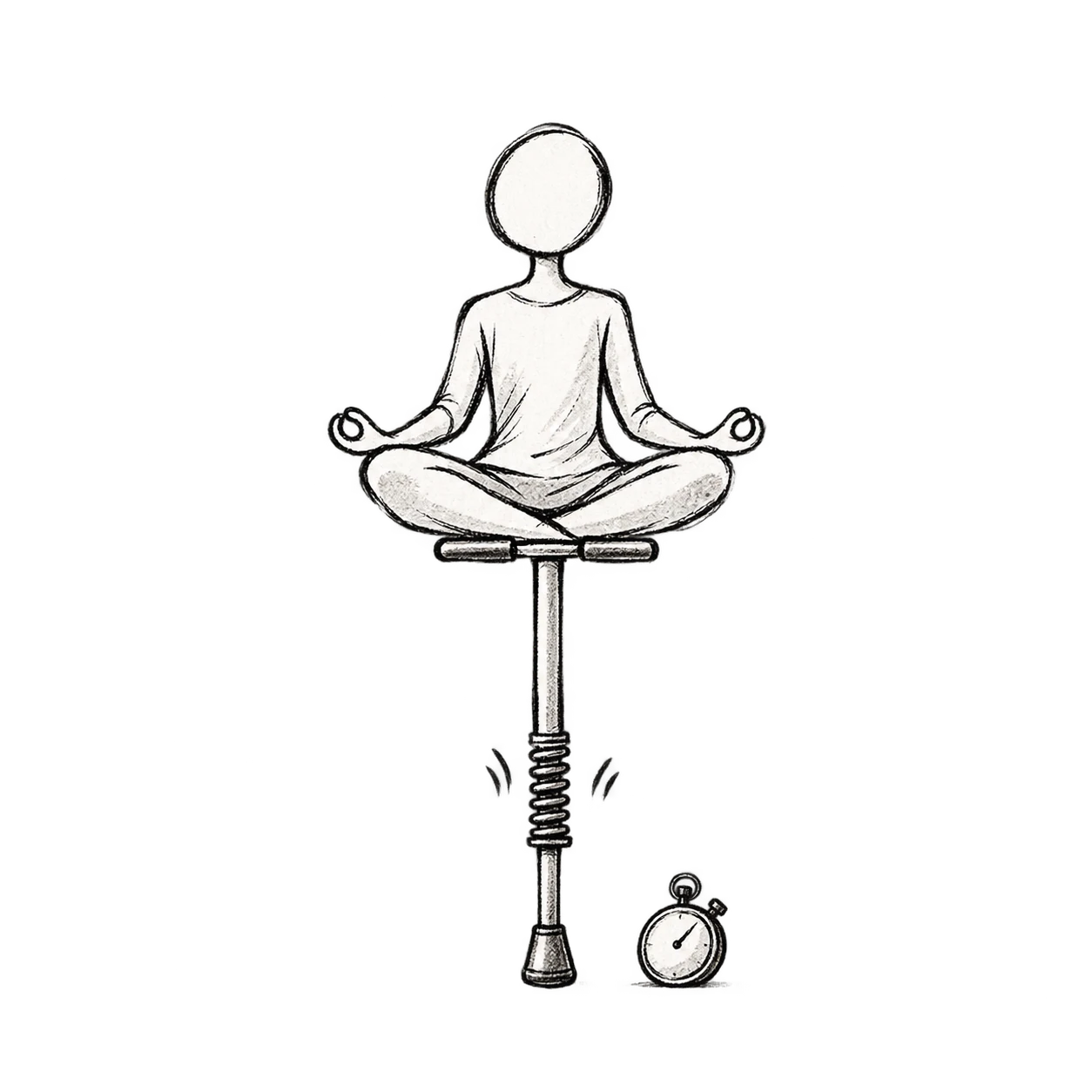
Ashrita Furman has set more Guinness World Records than anyone who has ever lived: more than 600 by Guinness's own count, over 200 of them still standing, across all seven continents. He did almost all of it between shifts at a health food store in Jamaica, Queens, that he has run for decades. The headline number turned out to be the least interesting thing about him.
The store and the stopwatch
Jamaica, Queens, is where Sri Chinmoy, the Indian-born meditation teacher, settled in the 1960s and built a community with an unusual idea at its centre: that running, cycling and endurance sport could be a form of spiritual practice. Ashrita joined as a teenager in 1970 and has never left. The same neighbourhood, the same store, the same twice-daily practice, the same teacher's community, for more than half a century.
That matters, because the records look from the outside like restlessness. Somebody who pogo-sticks up Mount Fuji and sack-races a yak must surely be a wanderer, a man who can't sit still. The life underneath is one of the most settled you will find in New York. The settledness is the point. A fixed base makes wild experiments cheap: there is no brand to protect, no sponsor to satisfy, no career riding on whether the pool cue stays upright. He can afford to fail at jumping jacks in 1979 and come back after weeks of training to do 27,000 of them, because nothing in his life was waiting on the result except his own curiosity.
Anatomy of a silly record
What a melon record actually takes
From the outside it is a man, a sword and a friend in a helmet. Underneath is a method he has refined for 47 years. Swipe to see it.
1. Find the open category
He reads the record book the way others read a menu, hunting for the entry that is hard, fun and oddly uncontested. When nothing fits, he proposes a new one. Underwater pogo-sticking and underwater juggling exist as categories because he asked.
2. Practise it like a job
His first attempt at the jumping-jack record failed. Weeks of daily training later he did 27,000 in under seven hours. Even a one-minute balloon-popping record gets a proper training block.
3. Wait for the body to quit
Somewhere around hour ten of forward rolls, the physical side gives up. That is the moment he has built his whole practice around: breathing, chanting, detaching from the pain. The melons are packaging. The attention is the product.
The unclaimed door
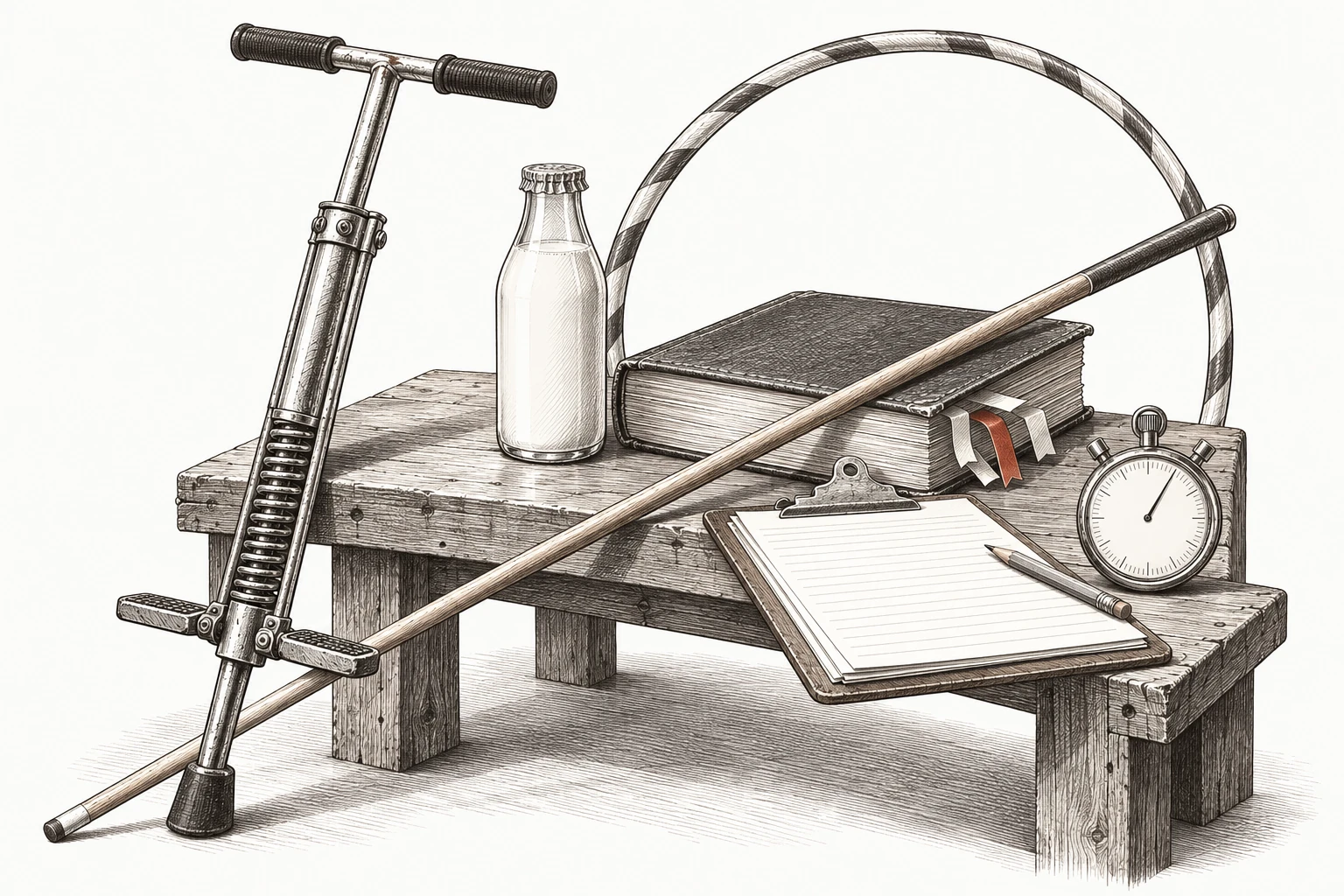
Look at the records Ashrita chose, and a method shows through the melons and the shaving-cream pies. Strength and speed, the arenas where genetics decides early, barely feature. What recurs instead is attention held for an absurdly long time: a pool cue balanced on one finger for seven miles, a full milk bottle carried on the head for 38 kilometres, twelve miles of continuous forward rolls. Those are the things a person who has sat in meditation every morning for fifty years is structurally better at than an Olympian.
He also went where nobody was competing. Several of his categories did not exist until he proposed them: pogo-stick jumping underwater, rowing a machine across land, juggling beneath the surface of a pool. The lesson in that is portable far beyond Guinness. Find the thing you are oddly good at, then find the room where that oddity is the whole contest. Ashrita found a category of achievement where a patient, playful meditator was the favourite, and then he stayed there for 47 years.
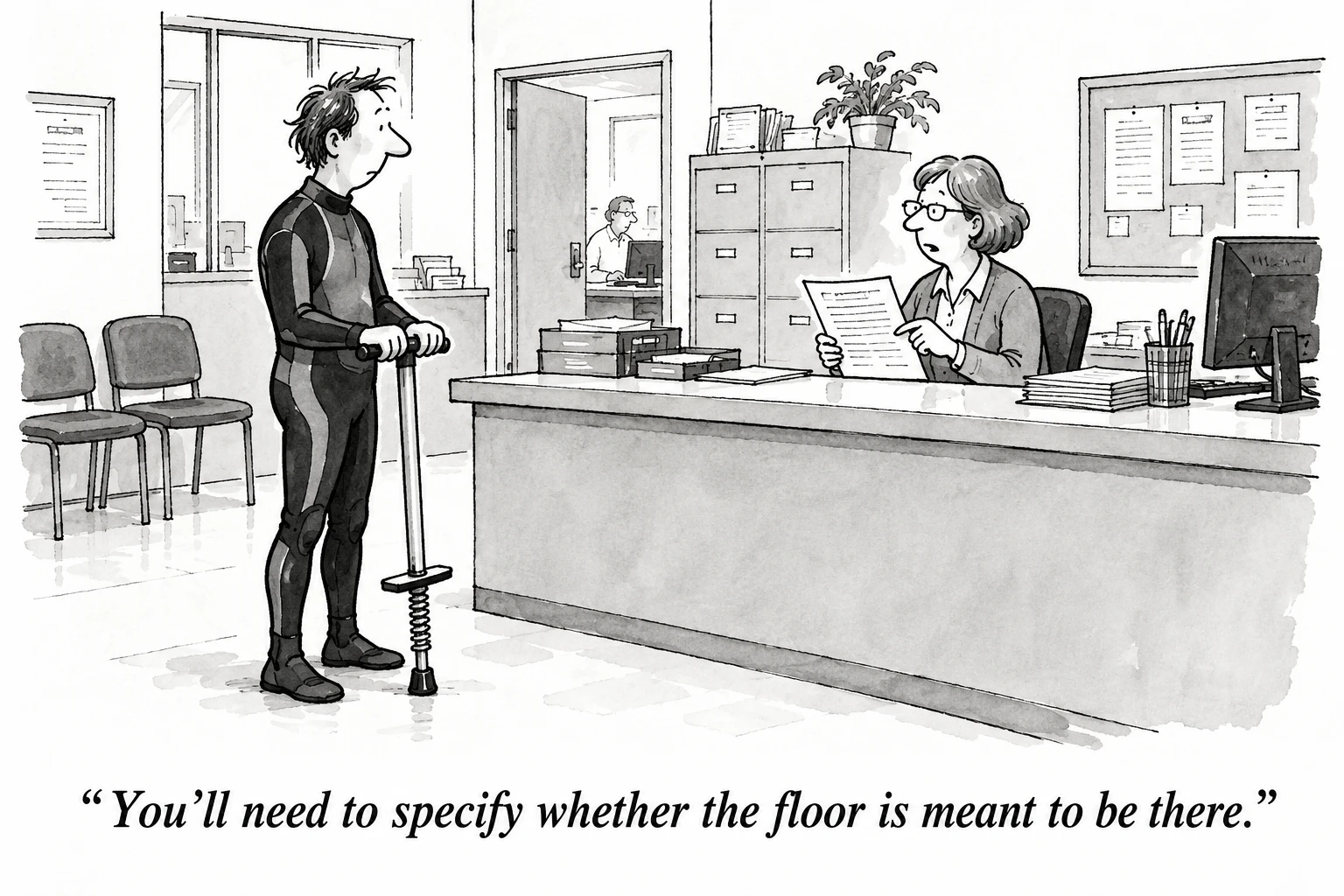
The playfulness is a strategy, too, as much as a mood. Hopscotch, somersaults, pogo sticks, hula hoops: these are children's games, and children can repeat a game for hours without the repetition becoming grim. Choosing joyful disciplines is how a person keeps training through decades without burning out on it.
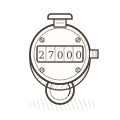
- One body, one countFirst record, New York27,000 jumping jacks in six hours and forty-five minutes. A single person and a tally. The whole enterprise began as a private test.[1] [2]
- Writing his own categoriesInvented recordsRather than only chasing existing marks, he began proposing new ones: pogo-sticking underwater, juggling beneath the surface. The game widened from beating others to designing the game itself.[1]
- A record that needed a crowd100 records held at onceHis hundredth simultaneous title was a poem read aloud in 111 languages by more than a hundred friends in a Manhattan park. The milestone was shared by design.[1] [4]

- A record as a tributeMost candles on a birthday cake72,585 candles lit with his spiritual community for what would have been his late teacher's 85th birthday. By now a record could hold grief, gratitude and a whole community at once.[1]

A map drawn in records
He has hula-hooped a mile at Uluru, balanced a pool cue at the pyramids, pogo-sticked in Antarctica and up the side of Fuji, and jumped rope on a pogo stick at Angkor Wat. The group he belongs to travels for its torch relays and races, and Ashrita has served as its tour manager, so the records folded naturally into the itinerary. The effect, seen whole, is a man using the planet's most solemn monuments as a backdrop for play, and somehow making them warmer for it.
Each foreign attempt also means persuading strangers: local witnesses, officials, a friend willing to have fifty watermelons sliced off their head with a sword. Doing that in forty countries requires a kind of charm that does not show up in the certificates. You can see its result in the subculture he has seeded. Record-breakers in Nepal cite him by name as the reason they started. When he turned up in Kathmandu for a peace run in 2020, he was received as something like a visiting founder.
A scoreboard other people can erase
Here is the part of the story that deserves the most admiration, and it has nothing to do with a pogo stick. Ashrita's headline, "most records held at once", is a number that any stranger with a chin and a chainsaw can lower. His records fall regularly. In 2024 a younger challenger announced openly that he was coming for the concurrent-titles crown. Ashrita re-takes some of what he loses and lets the rest go, and by every account he treats each erasure as evidence that the idea works: someone else believed they could do more, and did.
That equanimity is what makes him worth studying rather than just watching. He built a life around a figure he cannot defend and chose to measure himself by progress instead. He turned 72 this autumn, the same age as the record book itself, which was conceived the month he was born. Guinness inducted him into its hall of icons in 2024. He is still training in Queens, still scanning the categories for a door nobody has opened. The next chapter, as far as anyone can tell, is the same chapter, and there is something enviable in a man who found his game in his mid-twenties and never needed another one.