Lana Bazzy runs the part of Dubai's government whose job is to make the city a good place to start a company, and she built the platform it now uses to do that. What caught our attention is the shape of the career underneath: a person who keeps launching first-of-their-kind things from inside very large organisations, and who seems to have been designing self-sustaining systems since long before anyone paid her to.
The ground founders stand on
Dubai has set itself a ten-year economic plan with a figure in it that makes the ambition concrete: thirty companies worth a billion dollars or more, grown from the city by 2033. Somebody has to turn a number like that into mentors, investors, regulatory shortcuts, desks, programmes and introductions. Since 2023 that somebody has been Lana, first as a director at the Dubai Economic Development Corporation and now as Vice President for innovation, startups and small businesses at the Department of Economy and Tourism.
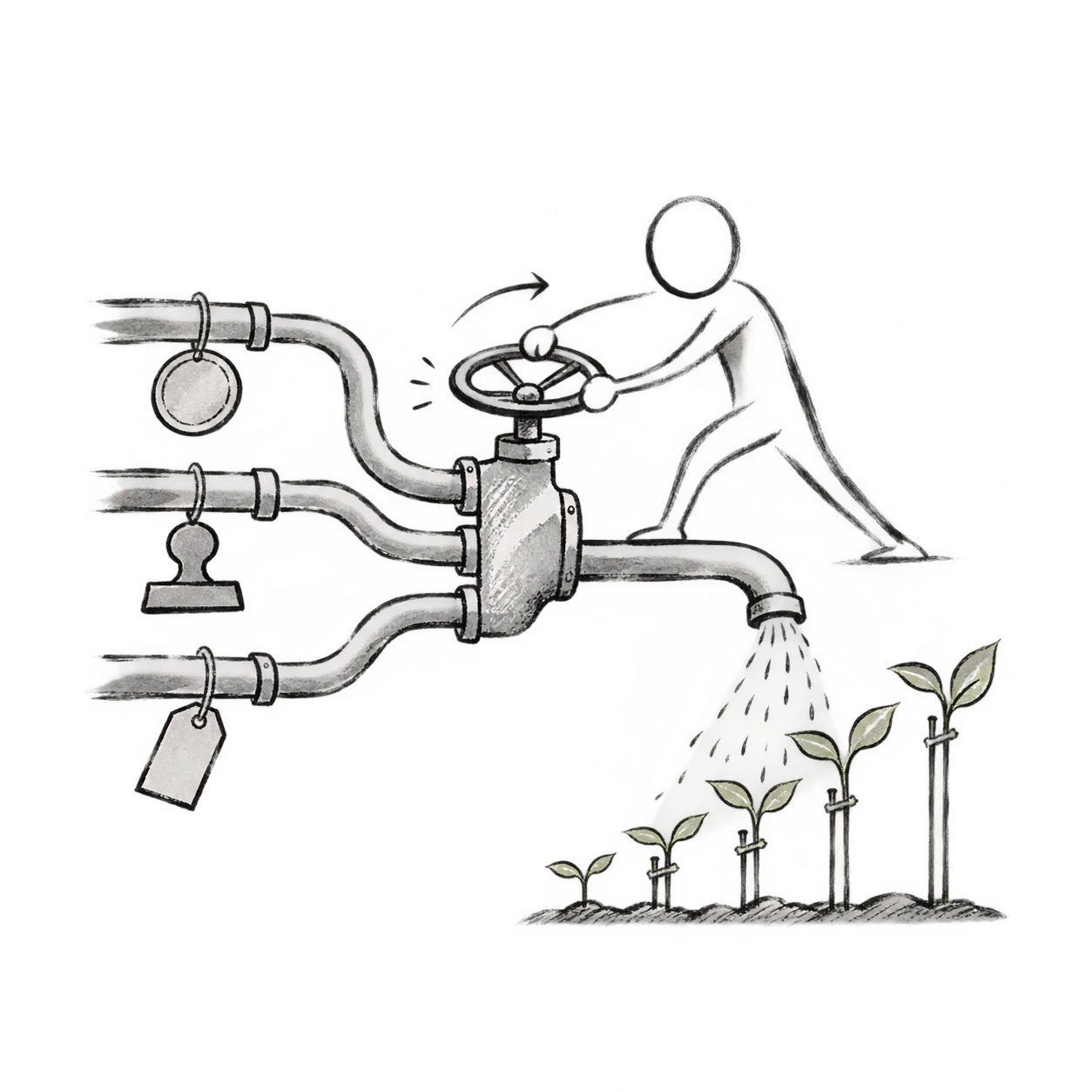
Dubai Founders HQ, which she built and leads, is the visible result: a physical campus in the city centre paired with a digital platform, with more than twenty-five public and private partners plugged in, launched by the Crown Prince in October 2025. Readers outside this world should know what an "ecosystem builder" actually does, because it is a strange job. The founder and the investor both have obvious roles; the ecosystem builder is the person who notices that a company's second funding round, its licence and its first overseas hire are three different conversations with three different institutions, and you make them one conversation. It is plumbing, in the most consequential sense of the word.
Two chairs
She has sat on both sides of the table
Lana Bazzy designs the government side of Dubai's startup scene, and she arrived there having already done the pushing and the advising herself. Swipe to see how each chair taught her something the next one needed.
The operator's chair
At Amazon in London she ran product strategy for a brand-new diagnostics unit and got a regulated consumer health test to market in the UK in under eight months, coordinating more than 130 people across legal, clinical, operations and technology.
That is what it feels like to be the one waiting on approvals, with a launch date already promised.
The adviser's chair
Before Amazon, she spent six years in Dubai consulting, much of it advising governments on how to attract investment and grow their economies.
Advisers see the whole board but never move the pieces. It is a useful frustration to carry into a job where you finally can.
The government's chair
Now she sits inside the Dubai Department of Economy and Tourism, building the platform founders use to raise money, get licensed and expand abroad.
She knows exactly which conversations a founder dreads, because she has had them from the other side. That lived experience is the advantage built into Dubai Founders HQ.
Building new things inside big machines
There is a particular craft in launching something that has never existed inside an organisation that already has everything. Lana has done it twice at scale, and the two settings could hardly be more different.
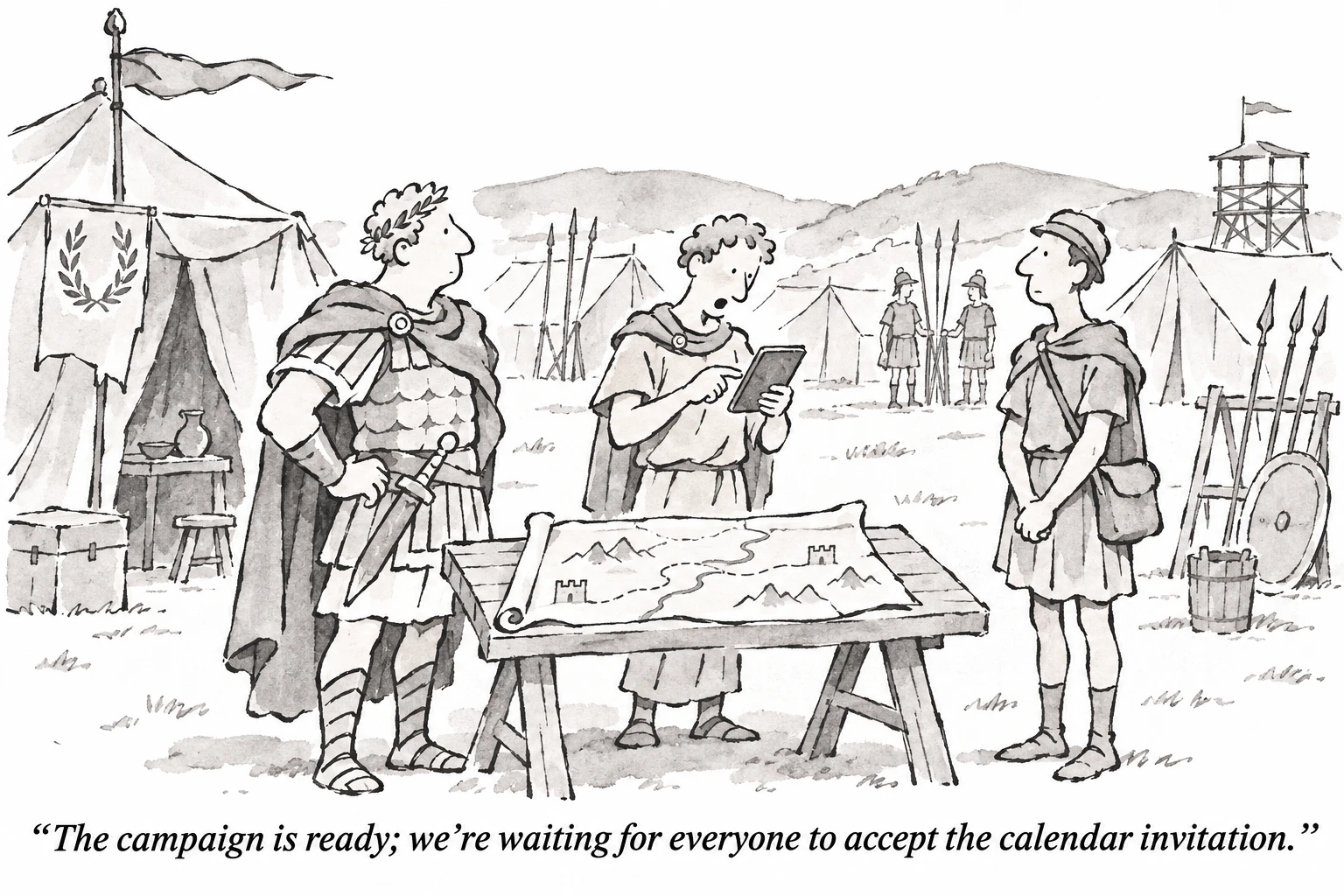
At Amazon in London, in late 2020, she took over product strategy for a brand-new diagnostics unit and shipped the company's first regulated, consumer-facing healthcare test in the UK in under eight months. Amazon is famous for speed; healthcare regulation is famous for the opposite. Getting one through the other meant directing more than a dozen workstreams and over a hundred and thirty people across product, operations, legal, clinical and regulatory teams, in the middle of a pandemic, while also co-leading the expansion of Amazon's own employee testing programme across five European countries. The obvious lesson from that is about stamina. The more useful one is that speed inside regulation is a learnable skill, and it depends on treating the rule-makers as part of the team from the first week rather than as a gate at the end.

Dubai Founders HQ is that skill applied to a city. It carries the same signature: build it so it can be described in one sentence, stitch in every stakeholder early, launch with a date attached. Her certifications tell the same story in miniature (a Scrum product owner and a Six Sigma green belt is an unusual pairing in a government department), and so does the fact that her consulting years were spent advising governments on investment attraction and economic development before she ever worked inside one. She has looked at this problem from the outside, from the private sector and from the chair she now sits in. That is a rare vantage point, and she has earned every angle of it.
A farm behind the school
The earliest thing on Lana's public record is also the most revealing. In 2009, fresh out of university, she spent two months volunteering in Hohoe, a town in Ghana's Volta region. Plenty of graduates do a version of this. What she did next is the part worth noticing: she founded a project that raised funds to build a junior school, and then, rather than stopping at the building, started a two-acre farm so that the orphanage next to it could feed itself after the donors had gone home.
- A farm, not just a schoolHohoe, GhanaThe school was the visible gift. The two-acre farm beside the orphanage was the part designed to still be working years after the fundraising stopped.

- A programme that outgrew its briefAmazon, EuropeAlongside the eight-month diagnostics launch, she co-led an employee testing programme across five countries and widened it to temporary workers and vendors, growing its reach by more than forty percent.

- A door many partners hold keys toDubai Founders HQBuilt as a shared platform with more than twenty-five public and private partners rather than a single programme, so it keeps functioning regardless of who is standing at the front of the room.

A school is a gift. A farm is a system. Choosing to build both, at twenty-two, suggests someone who already thought about what happens on day four hundred rather than day one. Her next stop was a stint with a microfinance organisation, the archetype of aid designed to sustain itself, and fifteen years later her entire job is building a structure whose success is measured by what it keeps producing without her in the room. We would hesitate to call it a plan. It reads more like an instinct that has simply been given bigger and bigger things to work on.
Out, and back
Lana's career traces a loop. She started in Dubai, advising governments and companies in the region for six years, then left for Cambridge, Milan and London, and came back in 2023 with Amazon on her CV. The platform she then built exists so that founders can grow from Dubai into the rest of the world. It is hard not to notice that she is a worked example of her own pitch: someone who went out, learned how a global machine actually operates at the controls, and brought it home at exactly the moment the city needed people who had.
That return belongs to a broader story readers may recognise. Across the Gulf, a generation of professionals who studied in the US, trained in Western multinationals and are bilingual in Arabic and English have been coming back this decade to build institutions rather than just advise them. Lana is one of the clearest cases we have seen of that pattern producing something tangible.
Two smaller details round out the picture. Her undergraduate degree, taken in three years in Washington, DC, paired political science with psychology, which is more or less the exact toolkit her current role demands: how institutions behave, and how people inside them actually decide. And at every stage where a group needed someone to speak for it (a Model UN team, an Arab students' association, a Cambridge MBA cohort that elected her to represent them twice) she was the one chosen. Ecosystems are, in the end, groups of people who have agreed to coordinate. She has been the person trusted to do that coordinating for a long time.
The clock on the wall
What makes this chapter especially interesting is that it comes with a deadline. The 2033 agenda is public, the targets are numeric, and the platform she built is one of the main instruments for hitting them. Few people in economic development get to be measured so plainly, and fewer still would want to be. Lana has spent a career putting dates on things that did not previously have them. Watching what the next eight years produce in Dubai's startup scene will, in a small but real way, be watching her work.