Charles J. Limb is a surgeon at the University of California, San Francisco. He specialises in the ear and in the delicate base of the skull just behind it. He holds an endowed chair, a senior post funded by a dedicated gift. He leads the division that does hearing surgery, and he directs the university's centre for cochlear implants, the devices that let many deaf people hear again. He is also the scientist who first put jazz musicians inside a brain scanner and asked them to improvise. Those sound like two separate careers. What caught our attention is that they turn out to be a single project. One half works on getting sound into the brain, and the other studies what the brain does when it makes music of its own.
The hardest sound to hear
Most of hearing medicine is organised around speech. That makes sense: speech is what people lose first and miss most. Charles has spent his career insisting that the real test of an ear is music, because music is the sound with the most going on at once. Think of a melody, the particular colour of each instrument (a violin and a flute playing the same note still sound different), and a chord that resolves and feels like it has come home. If a person can follow all of that, everything simpler is already working.
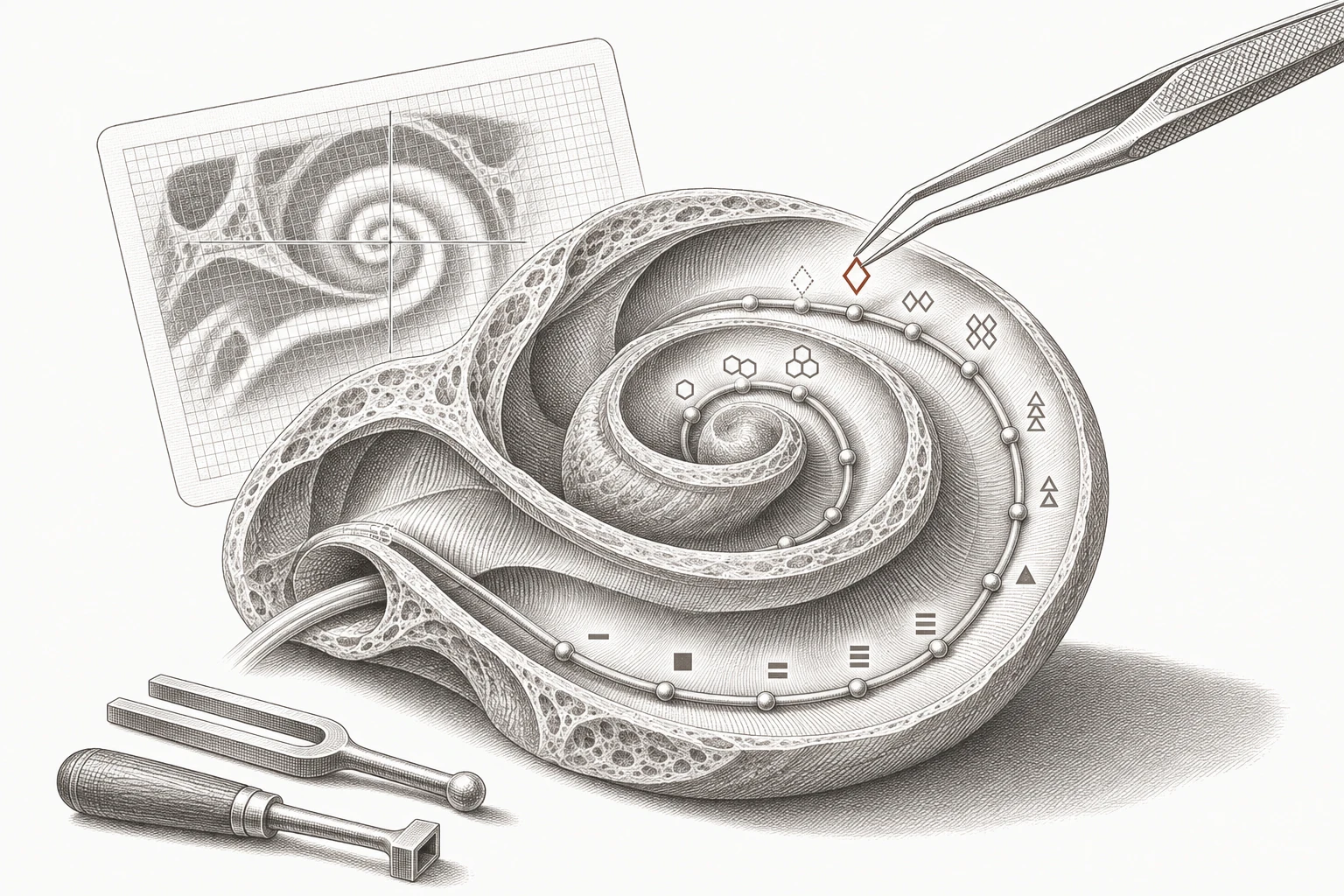
That standard shapes his clinical research in ways a casual reader would miss. Some background helps. The cochlea is the snail-shaped spiral in the inner ear that turns sound into nerve signals, and different points along the spiral respond to different pitches. A cochlear implant is a thin strip of electrodes threaded into that spiral. Each electrode stands in for a band of pitch and stimulates the nerve at its spot.
Where the strip ends up varies from patient to patient. Yet the devices have traditionally been switched on with the same default tuning for everyone, as if every strip sat in the same place. Charles and his group began using high-resolution scans to see exactly where each contact had landed, then rewrote the settings to match. Put plainly, that is a surgeon treating an implant the way a technician treats a piano that arrived out of tune: find the note that is in the wrong place and move it. The ambition behind it is bigger than the method. He wants people who hear again through a machine to get past conversation and reach a symphony.
Building a piano for a magnet
Building a piano for a magnet
Before Charles Limb could ask what happens in a jazz musician's brain, he had to make an instrument that could survive inside a brain scanner. Swipe for how the gear came before the science.
The problem was physical
A scanner is a narrow tube, a powerful magnet and a lot of noise. A pianist inside it is flat on their back, cannot look down, and cannot have a scrap of ordinary metal near them. No existing instrument fit that brief.
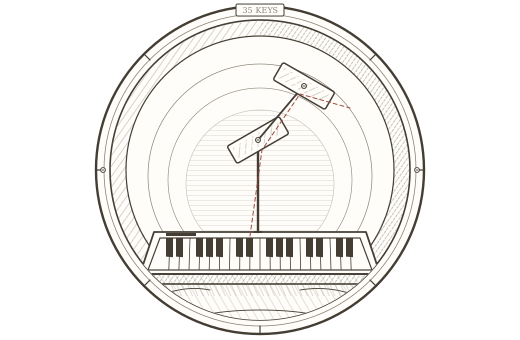
Thirty-five keys and two mirrors
The answer was a short, full-sized keyboard that rests on the lap and makes no sound of its own; each key sends a signal to a computer that plays the note back through headphones. A pair of angled mirrors lets the player watch their own hands while staring at the ceiling. Charles climbed into the scanner himself to work out the ergonomics, and the device went back and forth across the country for two years of tweaks.
Then the conversation could start
Once the keyboard existed, the experiments could grow. Musicians played a memorised piece, then improvised; later, Charles sat outside the scanner with a second keyboard and traded phrases with the person inside, so the lab could watch a brain in a musical conversation. The habit on show is a musician's: set up the gear properly, and only then play.
What the scanner showed
The improvisation studies are what made him known. Pianists lay on their backs inside an MRI scanner, which is essentially a giant magnet, so they played a specially built keyboard that could go in with them. They switched back and forth between a piece they had memorised and free improvisation. Meanwhile the scanner tracked blood flow in their brains, a stand-in for which areas were working hardest.
The pattern that emerged was a kind of trade. Areas linked to self-monitoring and judgement went relatively quiet, while an area linked to self-expression became more active. In ordinary language, the inner editor stepped out of the room so the inner author could speak.
What stands out to us is how carefully he handles a result that invites overstatement. Brain-scan images are seductive, and claims about music and the mind draw a crowd. Charles is one of the loudest voices for the limits of his own tools. As a journal editor he pushed his field to rely on evidence over anecdote. His lab's work on implant users leans on rigorous trial designs rather than striking single cases. In these designs patients are assigned to treatments by chance, or each patient tries both options in turn, so the comparison is fair. The person most likely to be carried away by the romance of the subject is the one keeping it honest. That combination of a romantic question and an unromantic method is probably the most useful thing he offers anyone working on something they love.
The circle widens
Look at who his lab has studied over the years and a quieter story appears. The first subjects were jazz pianists. Then came freestyle rappers, improvising lyrics over beats. Then a classical pianist who improvises in the concert tradition, then a master of the tabla, the hand drums of Indian classical music. Then children. Then older adults with early memory problems, learning to improvise at a piano. The question began as a jazz fan's curiosity about what goes on inside a great soloist. It has become a question about a capacity everyone has, in every musical tradition and at every age.
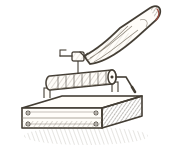
- A deaf inventor and his phonographJohns Hopkins, in trainingWhile still a surgical trainee, he co-wrote a history paper on Thomas Edison's hearing loss and the invention of the phonograph. The interest in what deafness does to a life in sound was there before any scanner.[2]
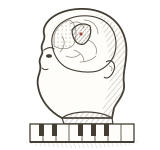
- Improvisers inside the scannerNational Institutes of HealthThe jazz improvisation study made spontaneous creativity a measurable thing: regions tied to self-judgement went relatively quiet while a region tied to self-expression rose. It remains his most cited work.[2] [3]
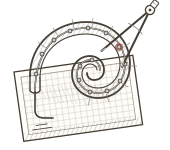
- Retuning the implantUCSFHis lab scanned where each cochlear implant electrode had actually landed and rebuilt the pitch map for each person, improving how well users could tell notes apart without harming speech.[7] [2]
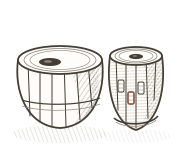
- Beyond jazzUCSFThe same scanner method has since been turned on freestyle rappers, a classical improviser, children, older adults and a tabla master from Indian classical music. Improvisation stopped being a jazz question and became a human one.[2]
The arc matters because of where it points. Studying a virtuoso tells you what the brain can do at its peak. Studying a child or a seventy-year-old tells you whether the same activity might help a brain that is still forming or starting to fade. He now helps lead a national network that brings together federal arts and health agencies in Washington with researchers. Its aim is to turn the vague idea that "music is good for you" into something backed by solid evidence. For a surgeon who began by chasing the mystery of a great solo, it is a telling destination. He has kept the mystery and made it useful.
The bandleader
In medicine and science, the senior researcher who runs the lab is usually listed last on a paper, and the person who did most of the hands-on work goes first. Scan his publications from the last decade and his name is usually last. First place goes to trainee surgeons and lab scientists, many of whom have gone on to run programmes of their own. He has collected teaching awards at both of the hospitals where he has worked. He chairs a surgical division, directs a cochlear implant centre, has served as president of a national hearing society and has edited a journal. Those are the roles of someone whose craft has shifted from playing the solo to setting the groove for others.
A jazz quintet is a decent model of how this seems to work. The leader chooses the tune, counts the band in and then spends most of the night making everyone else sound good, stepping forward only when the music needs it. The senior author of these papers is also a saxophonist at home. He keeps a house full of instruments and plays in a casual quintet with fellow physicians. His lab has probably absorbed the bandleader's habits.
Things he has made
What he hears next
Charles built his working life in Boston, New Haven, Baltimore and Bethesda before moving to San Francisco. The Baltimore years were where both halves took shape, with a hospital, a music conservatory and a government research scanner all within reach of each other. In California the implant work has become more precise, and the creativity research has spread to musical traditions around the world.
The lesson a reader can take is simple and demanding. Pick the thing you care about most, and don't leave it as a hobby or a mood. Make it the hardest test your professional work has to pass. Charles did that with music. The result is a surgeon who measures his patients' hearing against symphonies, and whose science began with a piano built to fit inside a magnet.