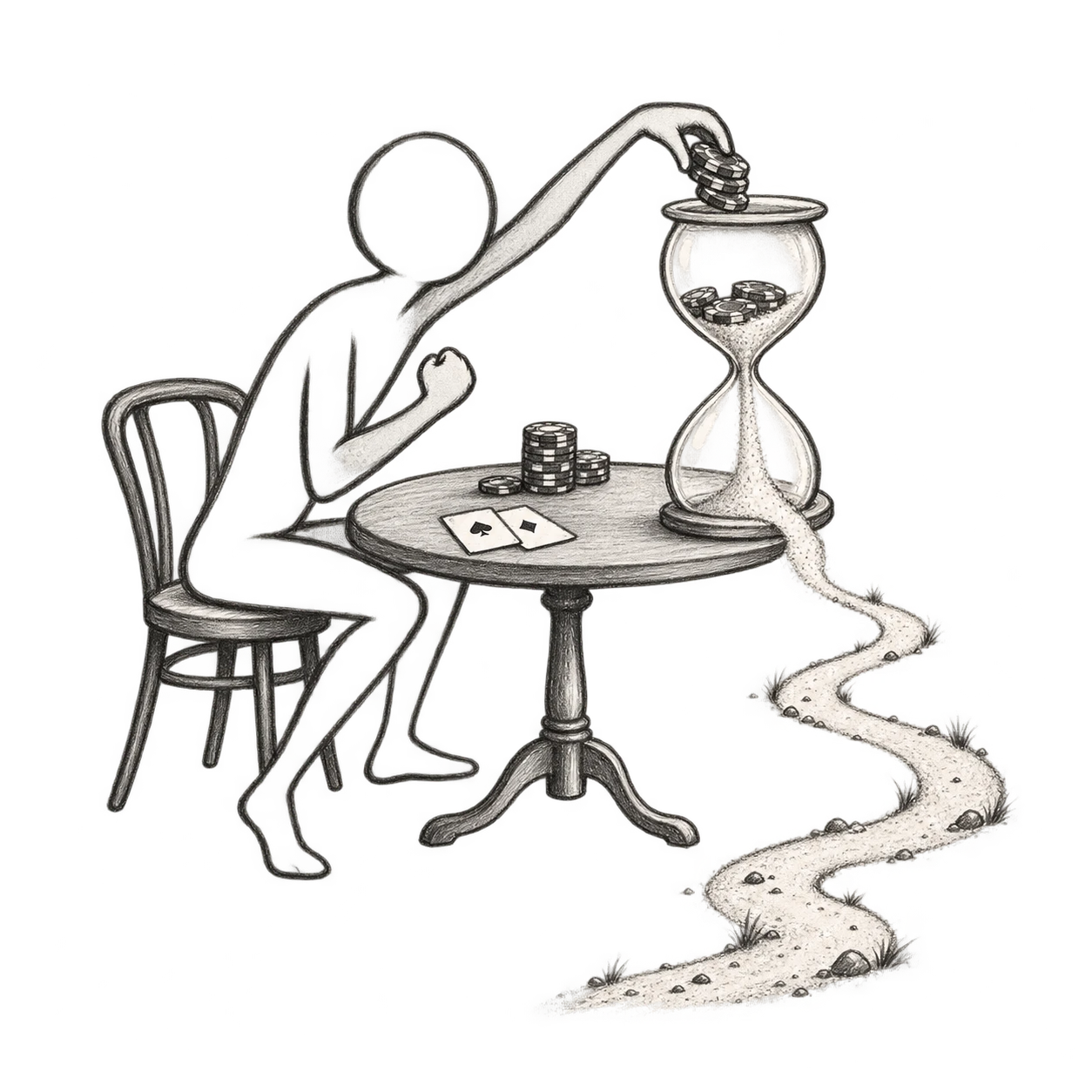
Bill Perkins has traded natural gas out of Houston for three decades and runs Skylar Capital, the fund he founded in 2012. The wider world knows him for something else: Die With Zero, a book arguing that money left unspent at the end of a life is a life partly unlived. Between those two facts sit feature films, some of the largest poker games ever played, and two satellite companies that watch oil tanks and ships from orbit. What drew us in is that these are one mind at work, applied with unusual nerve to markets, to companies, and to the question of how to live.
Where the molecules go
Bill started in 1991 on the floor of the New York Mercantile Exchange, the pit where energy contracts were shouted into existence, a Jersey City kid commuting across the Hudson. Four years later he moved to Houston. That year Texas was deregulating its electricity market, and Houston is where energy stops being an abstraction: pipelines, salt-cavern storage, tankers, and the people who know where the gas actually is. A fundamental trader (one whose edge comes from understanding supply, storage and weather better than the market does) belongs near the physical thing. He has stayed thirty years.
- The pitNew York Mercantile ExchangeHe learned energy markets in the one place where prices were still made by people standing in a room, badge on, ticket pad in hand.[2]
- Houston, as a market was bornTexas power deregulationHe moved to the city where gas is pipes, valves and storage caverns rather than a ticker symbol, and built a thirty-year career on knowing the physical system.[3]
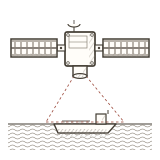
- Eyes in orbit, feet in LondonSynMax, SkyFi, Skylar Energy AdvisersWhen the physical world grew too large to walk, he founded companies to watch tanks and ships from space, then opened a London office as the gas itself crossed the Atlantic.[3]
Those years ran through El Paso Energy, Statoil and AIG, and then Centaurus Energy, the fund John Arnold built in Houston after Enron's collapse. It became one of the most profitable commodity funds in history, and Bill was a trading principal from its first day to its last. When it wound down in 2012, he started Skylar and named it for his daughter Skye.
In 2023 he opened a London office. American liquefied gas was flowing to Europe in unprecedented volumes, and the market's centre of gravity had shifted. It was the same instinct as 1995: when the gas moves, move with it. The opportunity he is positioned for is a physical one. Years of underinvestment in pipelines and storage, on both sides of the Atlantic, have left the system brittle, and a trader of bottlenecks earns his living exactly where the system bends.
The amateur at the professionals' table
The amateur at the professionals' table
Bill Perkins trades natural gas for a living. Poker is the game he plays for the love of it, at stakes that make professionals pay attention. Swipe to see why that choice says so much about him.

Buy-ins the pros respect
The 2013 Big One for One Drop cost $111,111 to enter and drew the strongest field in the world. Bill finished third, for just under $2 million. Six years later he reached the final table of a £1 million buy-in event in London.
He is one of a small handful of people who play these games without poker being their profession, and he keeps finishing among the professionals.
Stakes he chooses
A natural gas position can dwarf anything on a poker table, and the market decides the size of it. At the table, the size is his call.
That is the appeal we see: a place to compete purely for the contest, with the outcome mattering just enough to be felt and never enough to change a life.
Bets that become stories
He is also the source of the poker world's most talked-about side bets: half a million dollars for a friend to carry a tattoo for life, close to a million paid out when two players cycled the three hundred miles from Las Vegas to Los Angeles.
Read one way, it is extravagance. Read another, it is a man buying stories that everyone at that table will still be telling in thirty years, which is precisely the kind of return his book says money is for.
Why guess when you can know
Fundamental traders have always wanted to count things: the level in a storage field, the tanker that turned around mid-voyage, the flare at a plant that isn't supposed to be running. In 2020 Bill founded SynMax, which uses commercial satellite imagery to find and monitor oil and gas assets and to track ships. The trader built the eyes he had wished for.
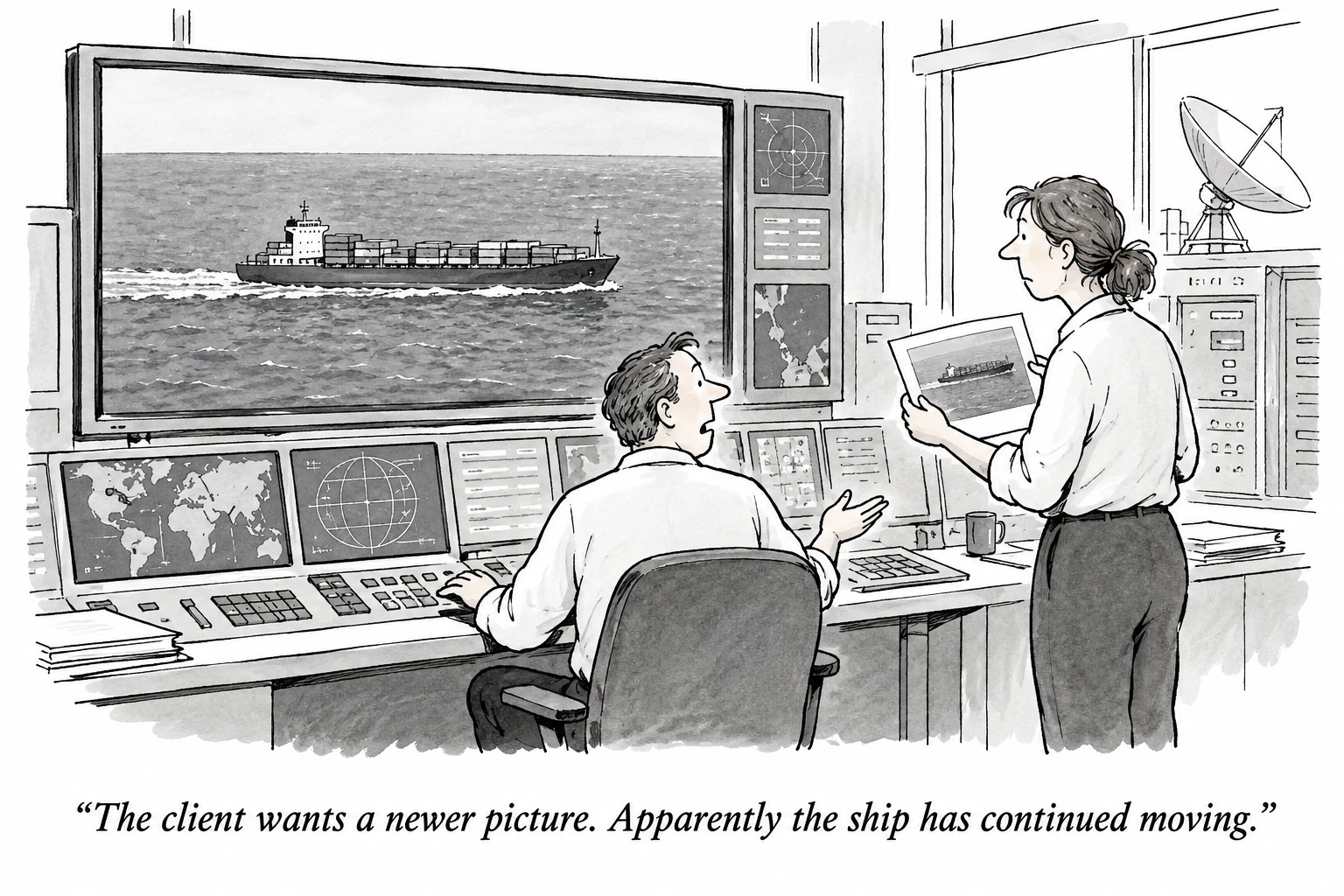
Then he did something unexpected with them. SkyFi, founded in 2022, lets anyone order a fresh satellite image from an app, no government or hedge fund required. And when SynMax became the exclusive maritime channel for a new satellite constellation in 2025, its posture was to sell data to competitors as readily as to customers. A man who spent his career profiting from information edges now spends part of it erasing them for everyone else. That reads as a worldview: markets and companies grow when more people can see, and money is a tool rather than a scoreboard. The same idea sits at the heart of his book.
The options trader's theory of a life
Here is the connection we have not seen anyone make. An options trader is paid to understand time decay: an option loses value every day it goes unused, until it expires worthless. Die With Zero takes that intuition and applies it to a person. The hike available at thirty-five is a contract that expires; the money saved for a trip you can no longer take has expired with it. The book treats a life as an allocation problem across three resources (time, health and money) that are abundant at different ages, and asks for an actual plan rather than a hope.
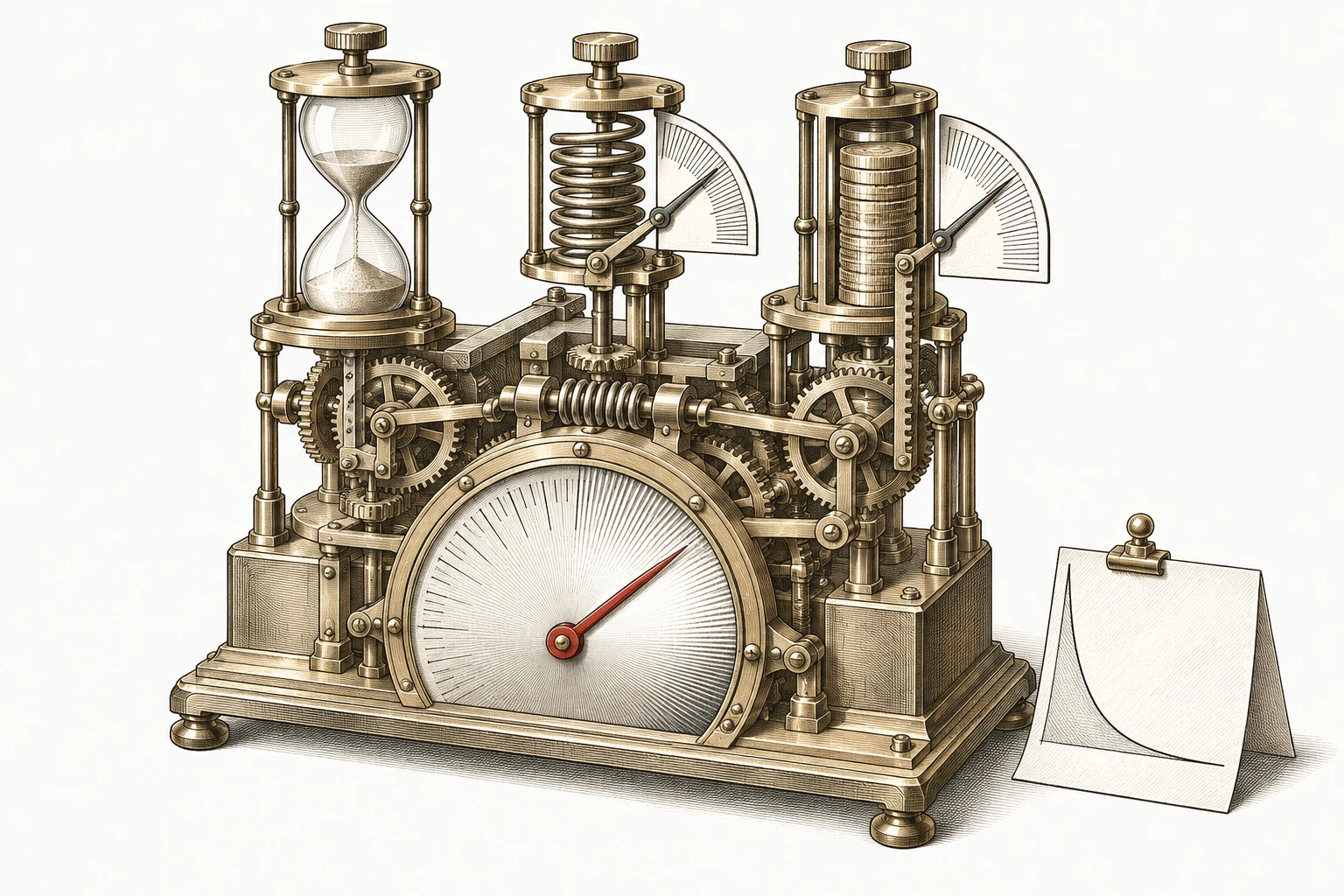
It is exactly the book an electrical engineer who became an options trader would write, and that is why it has travelled so far beyond finance circles. Much of personal finance is written by people who have only ever saved. This one came from someone who had run the numbers under real pressure and concluded that the hard question is never how much but when. He now takes that argument to rooms full of business owners who have won the accumulation game and have no model for the next one. The lesson is portable to any income: decide on purpose what each year of your life is for, because the default plan is autopilot.
A table where the heart still races
Bill competes at the highest buy-ins in poker: third place in the 2013 Big One for One Drop, a seat at the final table of a £1 million event in London in 2019. The sums are large by any ordinary measure and small next to a natural gas book, which is the interesting part. The desk sets his stakes for him; the table is the one arena where he chooses them. An amateur who seats himself among the best professionals alive, for the pleasure of the contest rather than the living, is practising his own philosophy: the point of winning was never to stop feeling anything.
Names on the door
Skylar carries Skye's name. Brisa Max Holdings, the company he ran in the Virgin Islands for eight years, carries Brisa's. The man who argues that memories are the dividend that compounds put his daughters' names on his firms.
The islands also gave him his sharpest test of his own philosophy. When Hurricanes Irma and Maria struck back to back in September 2017, he put his time, logistics and money into airlifting people out and flying supplies in. It is the book's giving logic in action: help that arrives the week the roofs come off is worth more than a larger sum left in a will. His longer commitments, to the International Rescue Committee and to the Dave Thomas Foundation's work on adoption, follow the same preference for the present tense.
He has produced films since 2009, including Unthinkable with Samuel L. Jackson, and keeps a sci-fi horror picture on his list for a slower year. Thirty-five years after his first day in the pit, that is where Bill is: a London office, two companies in orbit, a philosophy read by millions, and a list that is still growing. Readers can take their own lesson from that: write the list, price the time, and spend it.