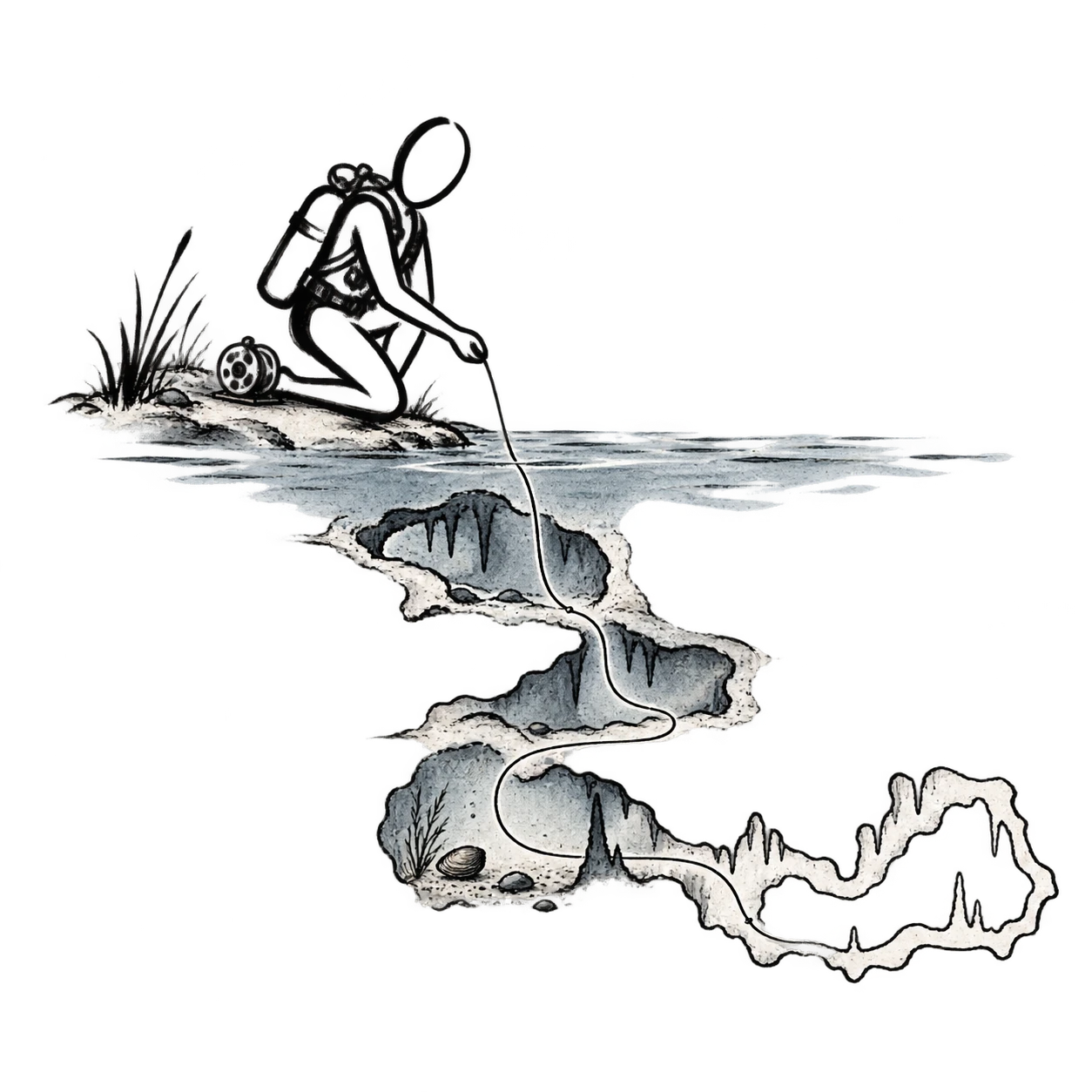
Jill Heinerth swims through places no human has been: flooded limestone passages far inside the earth, tunnels running through an Antarctic iceberg, the dark water under Arctic sea ice. She caught our attention for two reasons. The person doing this trained as a graphic designer. And after four decades of expeditions on every continent, she has decided that the most important unexplored place left to her is a river about an hour from her front door.
A designer's eye, three hundred feet down
Jill grew up in Mississauga, studied visual communications and design at York University, and in 1988 opened a small design and advertising firm west of Toronto, right as desktop computers were turning typesetting and paste-up into something you did on a screen. She took to the new tools early and the firm did well. She was also already a diver, teaching and leading trips to the shipwrecks off Tobermory. In the early 1990s she sold the business and moved to the far east end of Grand Cayman to fill tanks, guide dives and work out how a person could make a living underwater.
It would be easy to read that as a flight from the drafting table. We think the design years travelled with her. Cave exploration has always involved two jobs: getting there, and bringing back something a person on the surface can understand. By 1997 Jill was with the U.S. Deep Caving Team at Wakulla Springs in Florida, living for two years in a trailer behind the dive shop she and her husband Robert ran, breathing from a prototype rebreather on missions that lasted up to a full day including decompression, so the team could build the first accurate three-dimensional digital map of an underwater cave. A map is a visual communication problem. So is a photograph framed with one hand while the other manages life support. When the filmmaker Wes Skiles asked her to run the deep camera for a National Geographic special on that project, he was hiring a trained designer who happened to be one of very few people on earth qualified to be in the frame. That pairing, elite capability and an instinct for how an image reads, has shaped everything she has done since.
- The studioDesign and advertising firm, west of TorontoTrained in visual communication, she opened her own firm as desktop computers arrived and learned to make ideas read clearly on a page and a screen.[5]
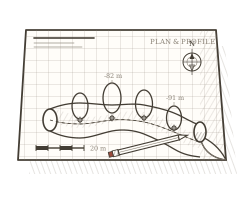
- The mapWakulla Springs, FloridaOn day-long dives she helped build the first accurate three-dimensional digital map of an underwater cave: a hidden drinking-water conduit turned into a picture anyone could grasp.[4] [5]
- The tour7,000 km across Canada by bicycleTo show her water-literacy film We Are Water, she and her husband cycled across the country screening it town by town, so the delivery matched the message.[3] [8]
Changing what the dive is for
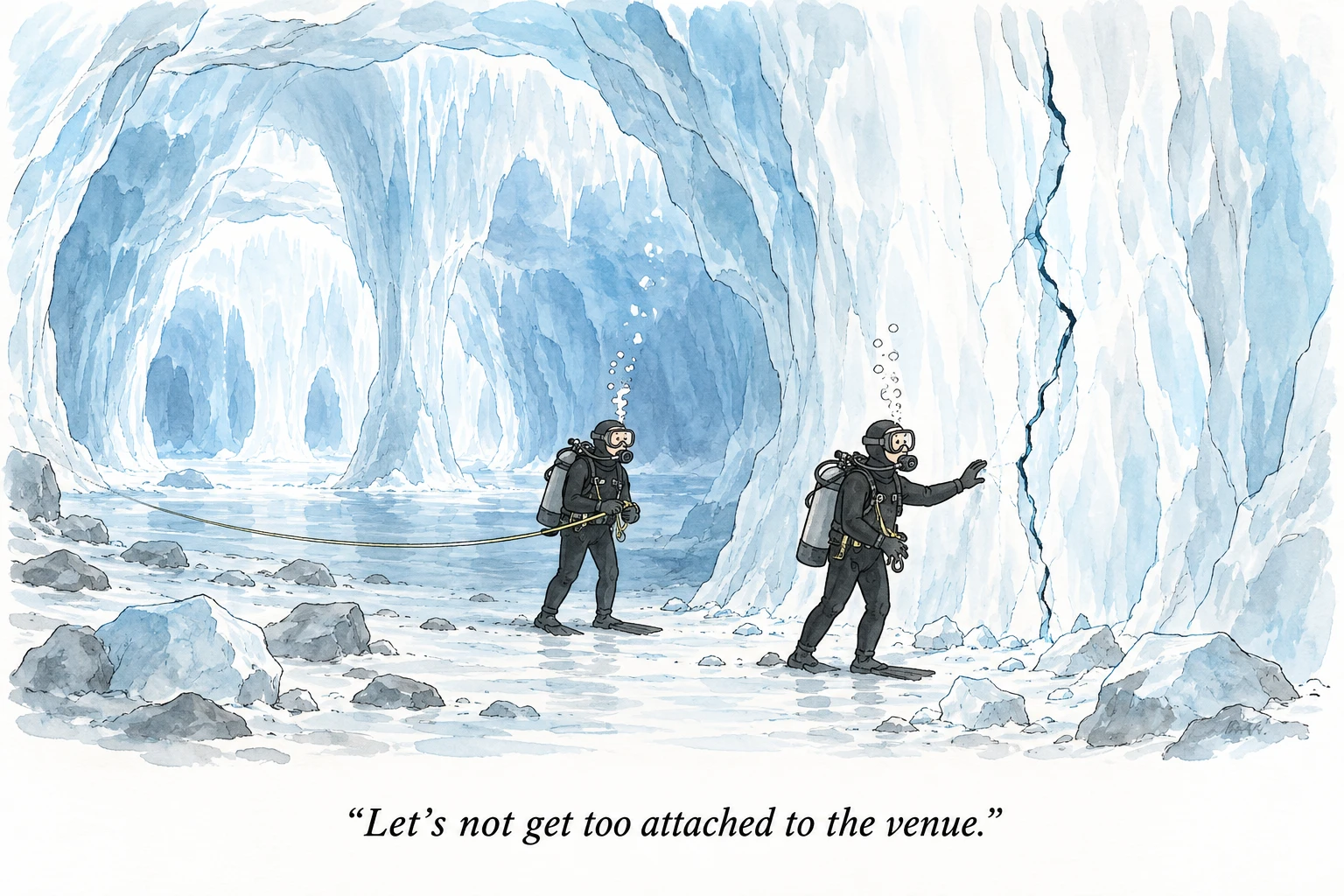
Cave diving in the 1990s was measured in superlatives: deepest, longest, furthest in. Jill holds some of those marks, including a penetration of more than three kilometres into a cave on a single dive, further than any woman has gone. What interests us is how she moved the meaning. The Wakulla model showed, with GPS precision, where Florida's drinking water flows beneath its towns. From there she made herself the eyes and hands of people who cannot follow her: biologists describing new species, archaeologists lifting an ancient Lucayan skull from 240 feet down in a Bahamian cave, hydrogeologists tracking aquifers that are being drawn down faster than rain can refill them. In 2001 she led the first dives inside an iceberg, the giant B-15 off Antarctica; hours after the final dive, the berg broke apart. She came home with footage, and with an early, physical data point about a warming planet.
Cave divers like to compare themselves to astronauts without a mission control: nobody outside can help, so everything is solved inside. Jill extended that self-reliance outward. If no one else can reach these places, no one else is going to carry the report back either. She treats access as a debt, repaid in understanding.
No mission control
No mission control
Inside a flooded cave there is no surface to rise to and no one outside who can help. How Jill Heinerth turned that fact into a method, and why boardrooms now ask her to explain it.
The problem must be solved where it happens
A silt-out can erase visibility in seconds; a lost guideline has to be found by touch. Cave divers accept that the only rescuers available are already in the cave with them. Jill built a career on treating that constraint as a design brief: every piece of equipment, every signal, every habit exists so that the team can get itself home.
The brave part happens before the dive
For the 2001 Antarctic iceberg dives she insisted on rebreathers, which recycle breathing gas and stay warm, instead of conventional tanks that can fail in the cold. On the final dive, currents inside the berg turned a one-hour plan into a three-hour fight to the exit. The equipment decision made months earlier is what brought everyone back.
Fear, kept and used
She has never claimed to be fearless and treats fear as information about risk. That is the lesson she now carries to corporate audiences: step into the unknown deliberately, with eyes adjusting, after doing the work. It is a philosophy you can apply to a new job as readily as to an ice cave.
The frontier an hour from home
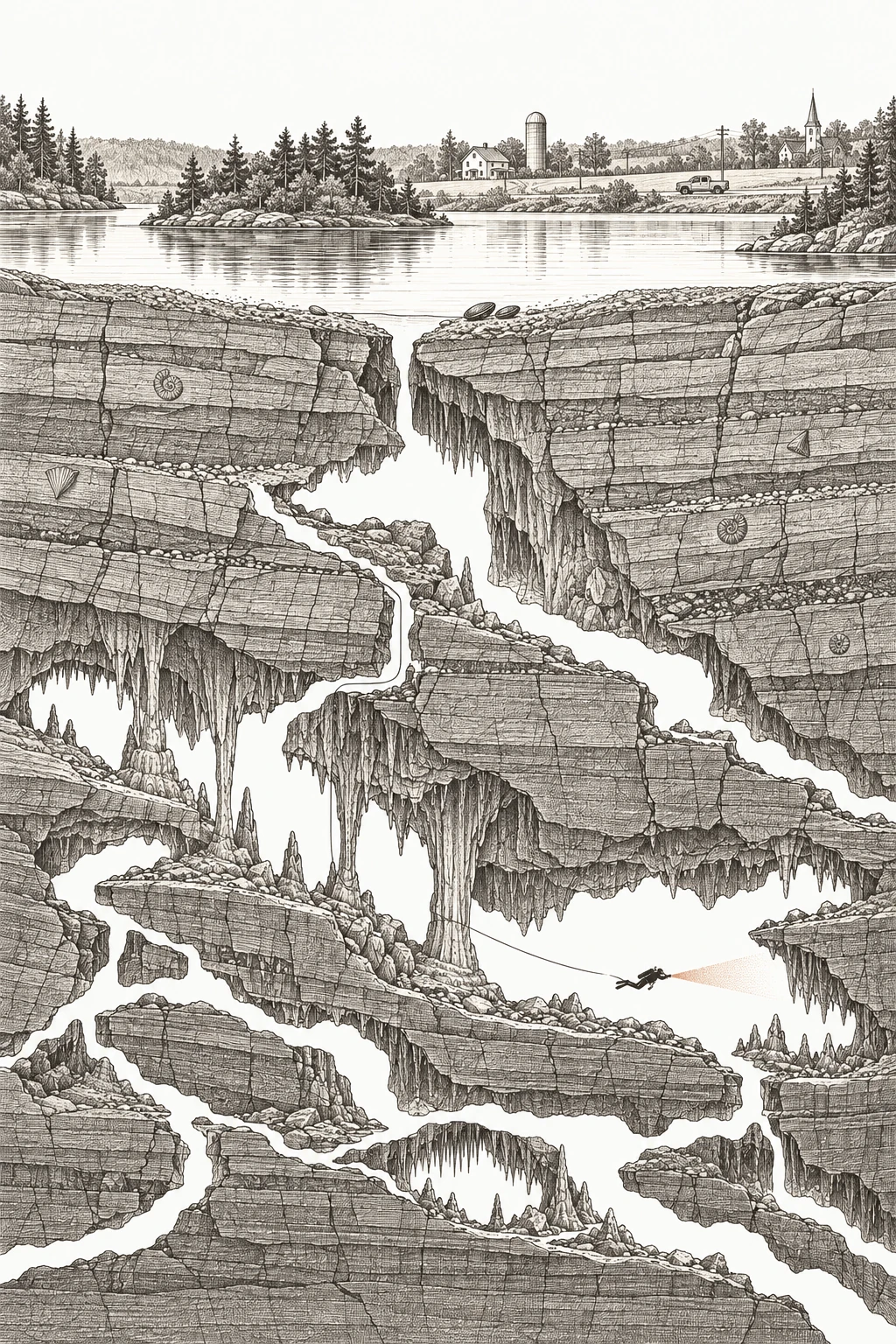
Jill lives in Carleton Place, a small Ottawa Valley town, which puts her within driving distance of the Kichi Sibi, the Ottawa River. Under its islands near Westmeath lies Canada's longest known underwater cave system, more than ten kilometres of passage straddling Ontario and Québec, and so little known that people in the capital are surprised to hear it exists. In recent years she has been surveying it, and since 2022 she has also dived with a Canadian Museum of Nature team studying native freshwater mussels and worked alongside the Kebaowek First Nation on riverbed surveys. The Ottawa Riverkeeper made her its honorary one. When she received the 21st Century Adventurer Award in Munich in July 2026, she earmarked part of the money for the river.
There is a Canadian habit here that we admire: finding the unmapped in the near north rather than abroad, the way a certain generation of painters turned from Europe to Algonquin Park. Jill's version is practical as well as romantic. She has spoken openly about weighing the carbon cost of every flight an expedition requires, and the river is a frontier she can reach by car. The arc of her geography runs from the suburbs of the country's biggest city, out through the Caribbean, Florida and both poles, and back to a valley town where the great unknown is downstream of the grocery store. We suspect she finds that funny, and fitting.
Telling it to everyone
Exploration, for Jill, is finished only when it has been told, and she has been unusually deliberate about telling it in the register each audience needs. Her memoir, Into the Planet, was praised by the New York Times and the Wall Street Journal. Her picture book, The Aquanaut, was chosen by Dolly Parton's Imagination Library, which mails free books to children under five, so there are toddlers who know her as a character before they can read her name. Executives hire her to speak about risk assessment. An Australian director in his twenties spent three years making a feature documentary about her, Diving Into the Darkness, which premiered in Sydney in 2024 and won a feature documentary award at the Santa Barbara International Film Festival. She writes a newsletter, lectures on expedition ships, and still answers to the title the Royal Canadian Geographical Society invented for her in 2016: Explorer-in-Residence, the first in Canada. The post came with no job description, so she wrote one, and the one she wrote was about young people.
That range looks less surprising once you remember the designer. Every one of those formats is a brief with a different client, and she has been taking briefs since 1988.
The next passage
Jill is now in her fourth decade of this work, with a river to finish mapping, a newsletter to feed, and award money she has pointed at the next generation of underwater explorers. Her career offers something to anyone who never intends to put on a rebreather: the courage people admire in her is mostly preparation, and the places worth exploring are often the ones everyone drives past.