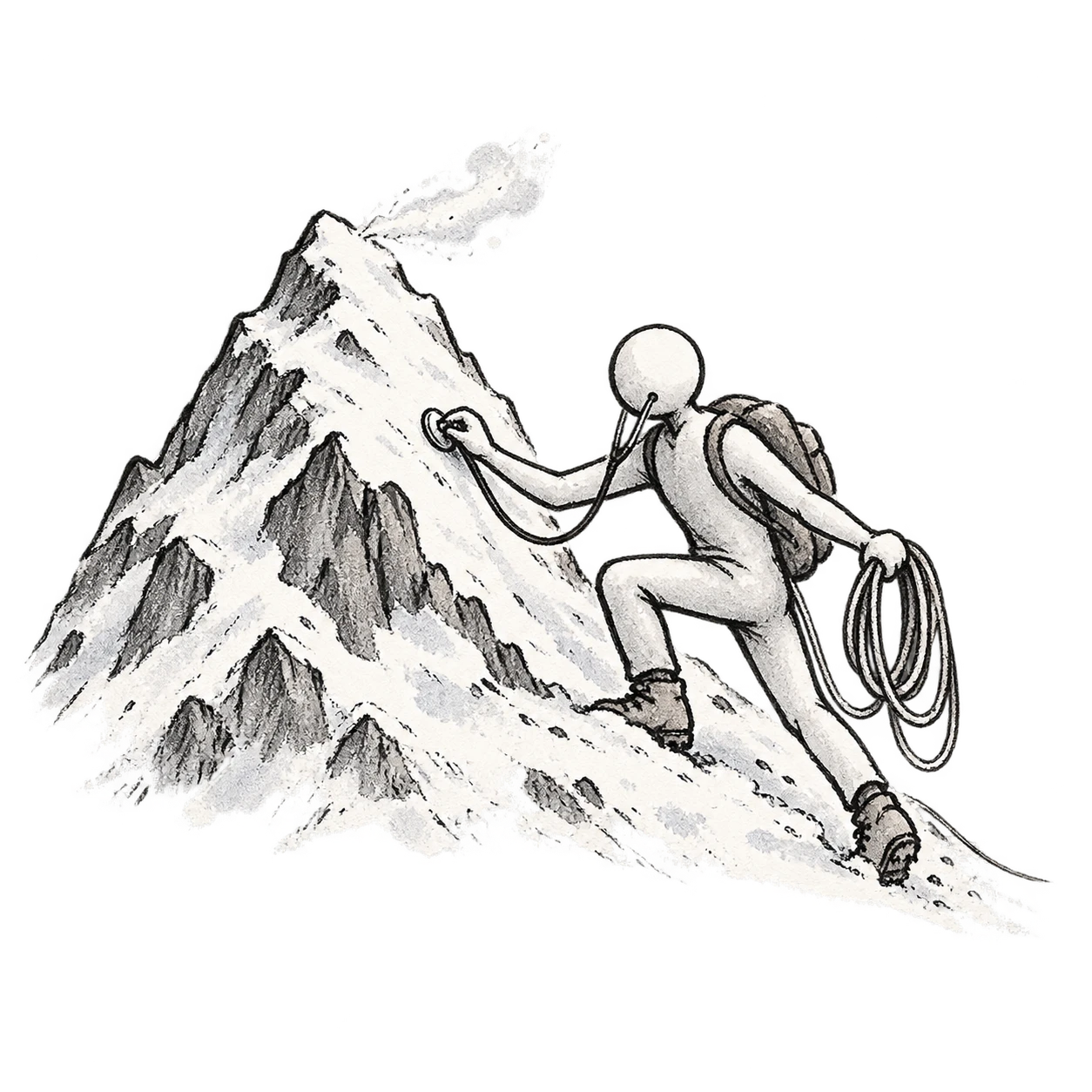
Ed Viesturs is the first American to stand on top of all fourteen of the world's 8,000-metre peaks, and he climbed every one of them breathing only the thin air that was already there. The record is remarkable. What made us look twice is the record behind it: eighteen years in the most lethal arena in sport, and he came home every time with every finger, every toe and every teammate.
The optional summit
Some context for anyone who has never thought about this. Above 8,000 metres the body starts to shut down; climbers call it the death zone, and most who go there carry bottled oxygen to trick their lungs into thinking they are lower. Fourteen mountains reach that height. By the time Ed finished the set on Annapurna in May 2005, only a handful of people in history had done it without the bottle.
The fourteen summits are the headline. The number we keep returning to is twenty-one, the expeditions it took to get them. One attempt in three ended with Ed walking back down the mountain without the summit. On Everest in 1987, on his very first Himalayan expedition, he and his partner were about 300 feet below the summit, out of rope, with the weather turning; they went down. The summit came three years later.
Our reading of this is that he treated a turn-around as a scheduling decision, one that could be revisited next season. People who have spent months of their lives and a great deal of money getting somewhere tend to feel they must cash in on arrival. Ed budgeted the walk-away before he left home, which meant that when the day came he could make the call without grief. It is a useful idea well below the snowline: decide what a win looks like before you start, and make sure the definition includes getting back.
The same ethic ran outward. Six times he set his own summit aside to help someone else get down, including two rescues on K2 in 1992 that earned him the American Alpine Club's Sowles Award, and the 1996 Everest storm, when he was on the mountain with an IMAX film crew and helped bring down a climber the world had already given up for dead. A round trip, in his accounting, was something you owed to other people too.
A doctor's eye on a patient that can't talk
Ed trained as a veterinarian, finishing his doctorate at Washington State in 1987 and working in a Seattle practice. The invitation to that first Everest came in his final spring of school. Within two years he had to choose, and he chose the mountains, having concluded that two demanding crafts would each get only half of him.
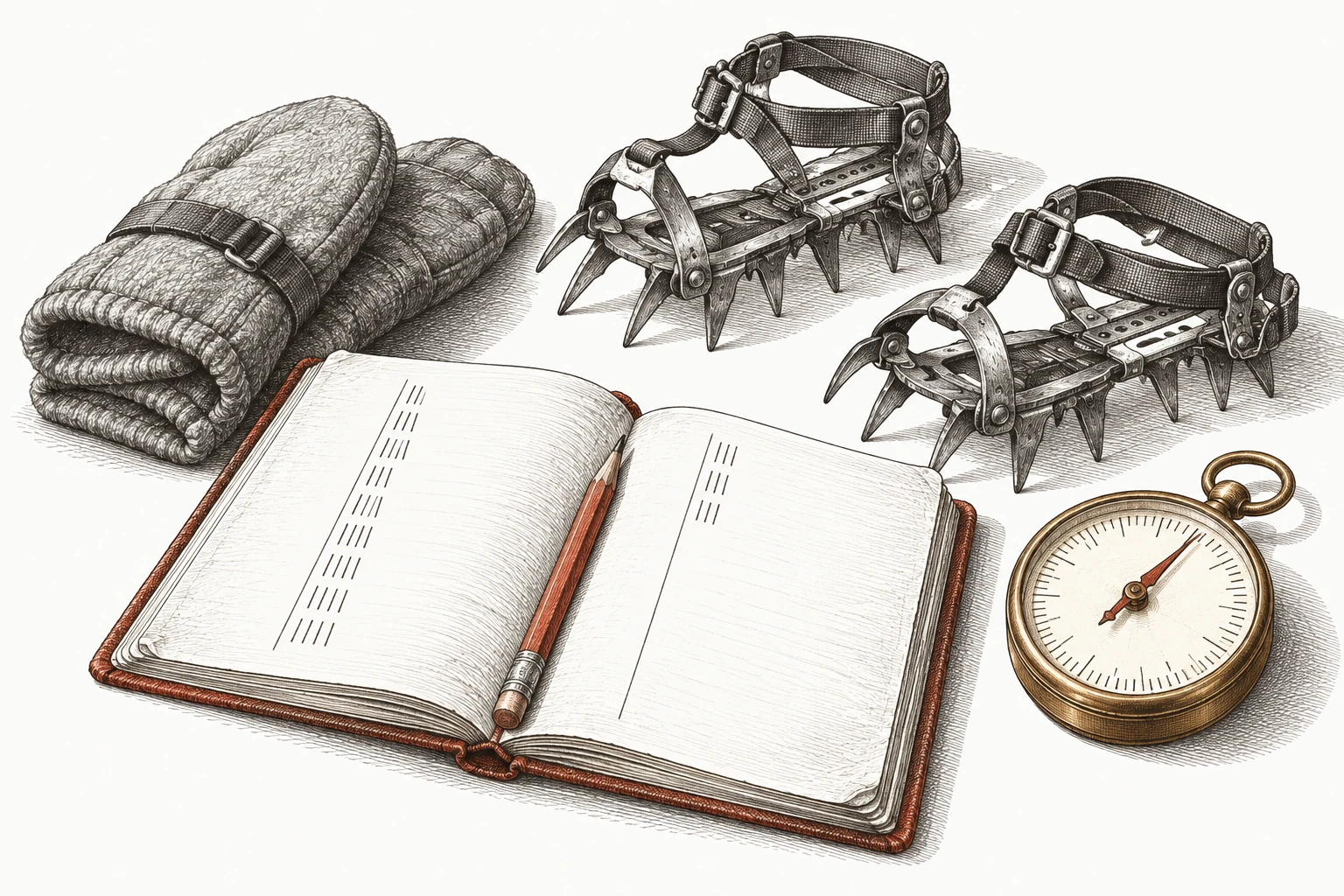
We would hedge this, because it is our inference rather than his claim, but veterinary medicine looks like good preparation for the way he climbs. A vet's patient never describes its symptoms. You read breathing, gait, posture and small changes over time, and you decide whether to act or to wait. A mountain is the same kind of patient. Ed's style has always been to treat a bad feeling about a slope or a cloud bank as clinical information, something to be weighed on the spot. The one occasion he pushed through that feeling, on K2 in 1992, he spent the descent in thigh-deep new snow learning the lesson for good.
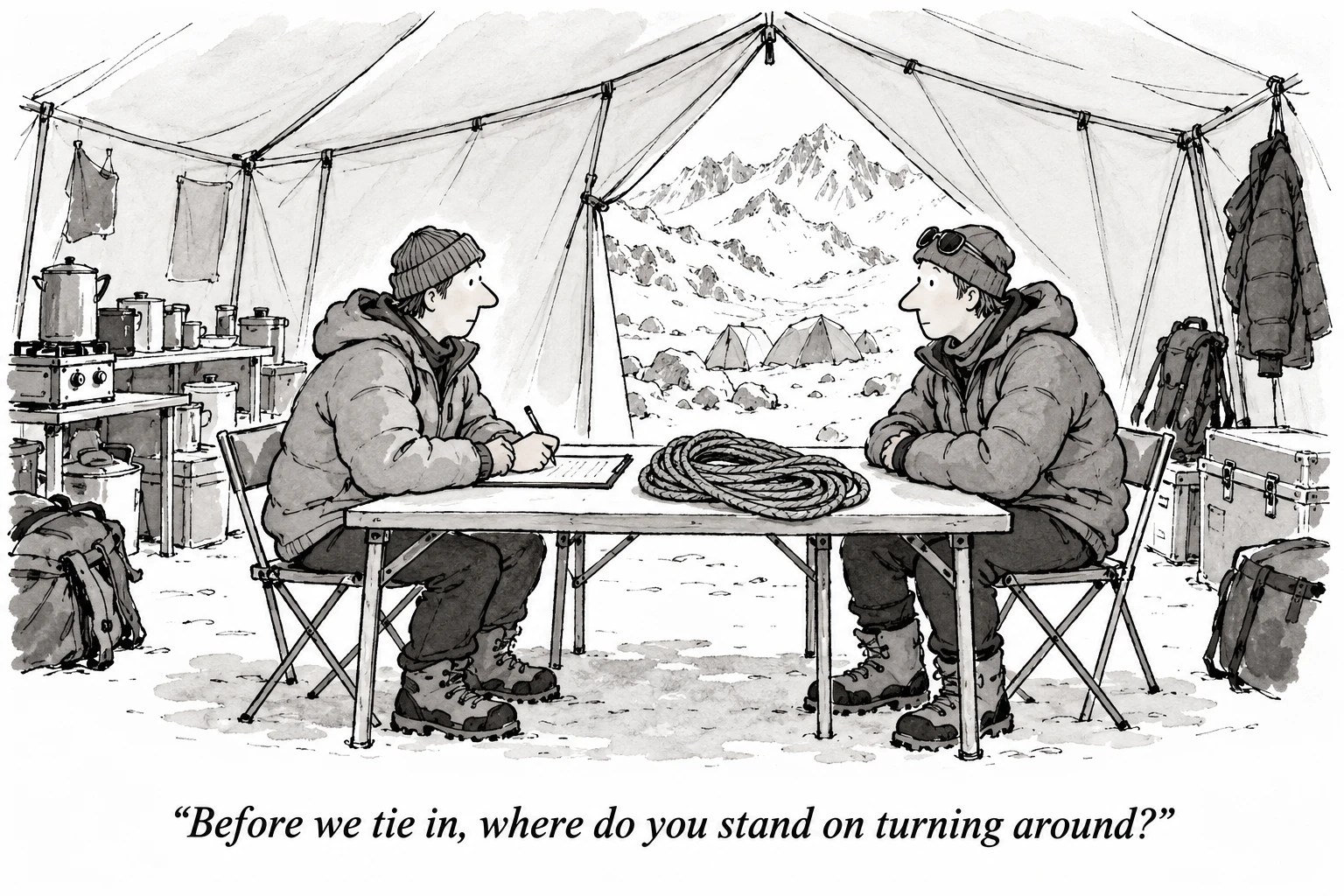
Out of that year came his idea of a partner. From 1993 he climbed thirteen expeditions with the Finnish mountaineer Veikka Gustafsson, chosen as much for a matching sense of what risk was acceptable as for his strength. That is a lesson worth stealing in any field: pick the people you tie yourself to by how they decide, not by how fast they move.
The last mountain was the first one
The last mountain was the first one
The peak that put the idea in his head as a teenager was the one still standing between him and the end, eighteen years later. Three attempts, three days in a tent, one window.
A book in a flat town
Growing up in Rockford, Illinois, the nearest thing to a mountain was a page. The account of the French team's 1950 first ascent of Annapurna, the first 8,000-metre peak ever climbed, was one of the earliest climbing books he read, and the one that made him want more than day trips on rock.
Annapurna is also, by the numbers, the most dangerous of the fourteen: a north face that sheds avalanches almost continuously.
Twice he walked away
In spring 2000 he reached the foot of the north face, watched it avalanche all day, climbed no higher than 5,900 metres and went home saying he would never return. In 2002 he tried the long east ridge instead and judged it was not for him either.
By then he had thirteen of the fourteen. Only one was left, and it was the one he had already twice declined.
Three days, then eleven hours
In May 2005 he came back to the north face with Veikka Gustafsson, already acclimatised from a neighbouring peak, so they could move fast and spend as little time under the ice as possible. The wind pinned them in a tent at 6,900 metres for three days and nights. He was prepared to go home a third time.
On 12 May the wind dropped enough. Eleven hours later he stood on his fourteenth summit, fingers and toes intact. Four days after they left the mountain, falling ice in the same gully killed an Italian climber on what would also have been his fourteenth peak.
Ed who?
In 1989 there was no such job as an American professional high-altitude climber. A few Europeans lived that way, in a culture that paid for it. Ed left a profession with eight years of schooling behind it to invent a career that did not exist, and his early phone calls to outdoor companies were met with a polite blank. He kept calling. Gradually a stable of brands put him on retainer for product testing, trade shows and photo shoots, and those retainers bought the plane tickets to Nepal and Pakistan. Rolex has had him as an ambassador for more than thirty years. He approached a livelihood the way he approached a peak: many attempts, no single shot.
There is a second thing hiding in that career. A climber who declined the one piece of equipment most people consider essential has, by necessity, strong opinions about every other ounce he carries. That is a designer's instinct, and brands noticed it long before he did it full time. In 2021 the man who once cold-called gear companies became co-owner and designer at Himali, a mountain apparel brand. The loop closed neatly.
- The mountain he never stopped climbingMount Rainier, WashingtonHired as a young guide on Rainier, learning from experienced climbers who became lifelong mentors. Ten summers of guiding followed, and the ascents kept coming for four decades: number 216 was in May 2021.[7] [1]
- One rope, thirteen expeditionsHimalaya and KarakoramHe met the Finnish climber Veikka Gustafsson and found a partner who weighed risk the same way he did. They climbed together on thirteen expeditions through to the final summit in 2005, and remain close friends.[7] [4]
- Carrying it for someone elseBig City MountaineersHe became the public voice of a charity that takes under-resourced city kids into the wilderness with mentors, and of its benefit climbs on iconic peaks. Fifteen years on, he still holds the role.[1] [8]
The classroom he keeps going back to
Mount Rainier is where Ed learned the trade, hired as a young guide in 1982 and mentored by some of the best climbers in the Northwest. He guided there for ten summers. In May 2021 he climbed it for the 216th time. The mountain that taught him is the one he keeps returning to, now as the teacher.
He lives in Ketchum, Idaho, with his wife and four children, in a Sun Valley town where people who have been everywhere tend to settle. He still guides with Madison Mountaineering and is slated to co-lead an Aconcagua expedition in January 2027, well into his sixties. Since 2011 he has been the public voice of Big City Mountaineers, which takes under-resourced city kids into the wilderness with mentors. There is something fitting in the former flatland kid, who first met the Himalaya in a library book, now arguing for a trail as a place to learn.
His speaking career, which began in 1996 and once took in a Seattle Seahawks team that went on to the Super Bowl, is unusual in its genre. In most motivational stories the hero reaches the top. In Ed's, the hero is often the day he went home, and the audience leaves with the strange, freeing idea that patience can be a strategy in its own right.