Jim Rogers co-founded one of the most successful investment funds in history before he was thirty, stepped away from it at thirty-seven, and then spent the next four decades doing something stranger and more interesting than managing money: going to see the world for himself, twice around, and moving his whole family to the part of it he believed would matter most. At eighty-four he is still scouting places most of us would struggle to find on a map. What caught our attention is the consistency underneath all that motion. Jim has run his investments, his travels and his family life on the same long clock, and he has been willing to look odd for years at a time while he waits for the rest of the world to arrive.
Going to look
Some context for readers who do not follow finance. In 1973 Jim and George Soros started the Quantum Fund, a pooled pot of money that could bet on almost anything, anywhere. Over the following decade it returned several thousand percent while the broad American market barely moved. That alone would earn a place in the textbooks. What makes Jim's story worth telling is what he did with the freedom it bought.
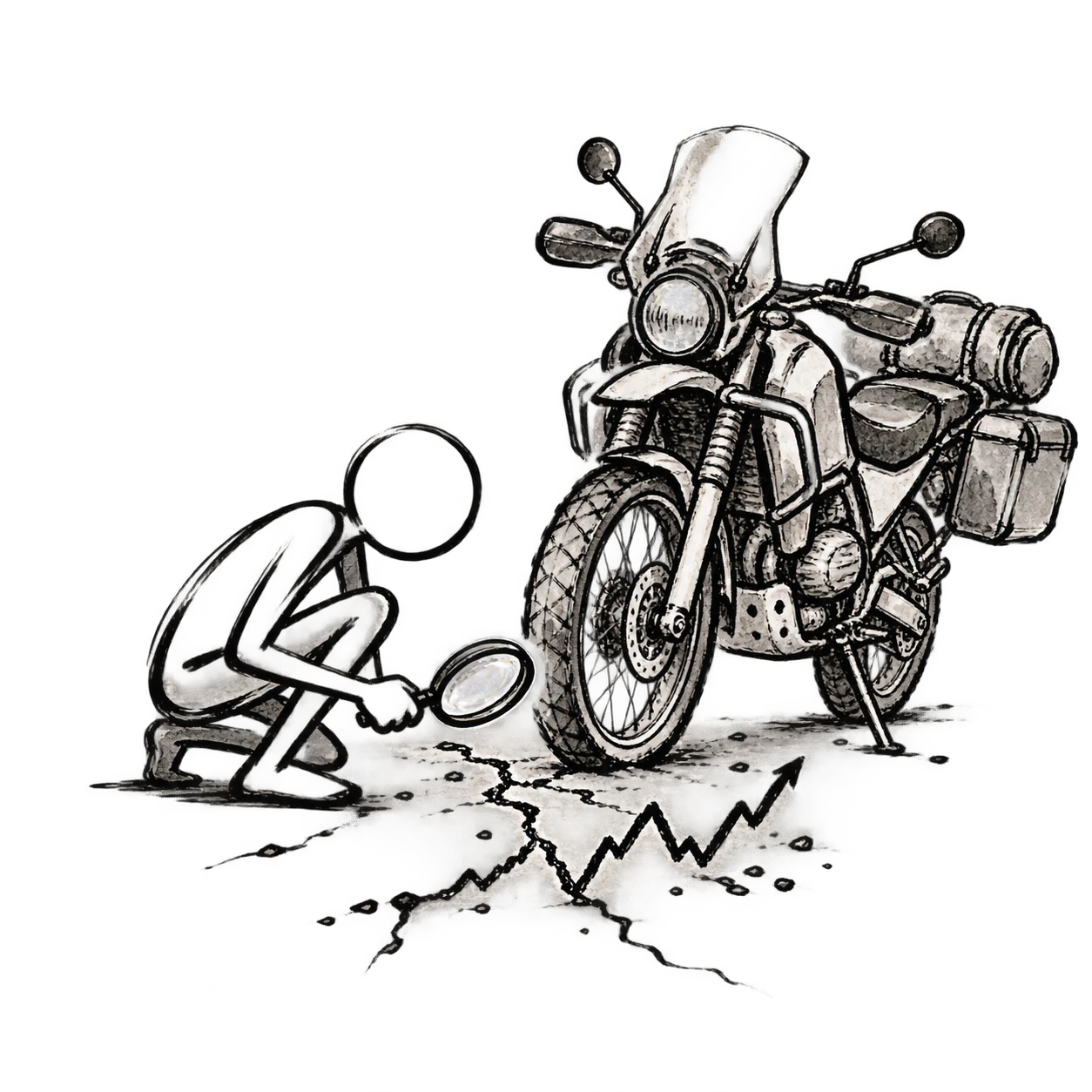
The conventional path for a successful fund manager is to start another fund. Jim bought a motorcycle. In the early 1990s he rode it around the world, and at the turn of the millennium he did the whole thing again with his now wife, Paige Parker, in a custom-built Mercedes: 1,101 days, 116 countries, 245,000 kilometres, starting in Iceland on the first day of 1999 and ending back in New York three years later with a Guinness World Record. It would be easy to file those journeys under adventure, and they were. But read them alongside his investing and a different picture appears. Most people who think about the world economy do so from a desk, through reports written by other people who were also at desks. Jim's instinct has always been to drive to the border and see what the guards do, what the roads are like, whether the local currency is worth what the official rate claims. The travel was his research method, and it is why his calls tend to come years before they become consensus. He was warning friends about China's rise in the mid-1980s when New York was fixated on Japan. Being that early looks, for a long time, exactly like being wrong, and his career suggests he made peace with that very young.
How to read a country from the road
The field notes of a man who refused to stay at his desk
Two trips around the world, by motorcycle and then by car, were not a break from investing. They were how Jim did it. Swipe for what a border crossing can tell you that a spreadsheet cannot.
The border is the first balance sheet
Within an hour of entering a country you learn how its officials behave, whether there is a second exchange rate on the street, and how far the official story is from the lived one. Jim treats that gap as data. A thriving black market is neither good news nor bad; it is information about how the real economy runs.
Slow travel, deliberately
Driving rather than flying forces you through the places between capitals: the farms, the small towns, the roads that are paved or are not. Flying over a country shows you its airports. Jim's method depends on the parts nobody puts in a brochure.
1,101 days, and the numbers were the least of it
The Millennium Adventure began in Iceland on New Year's Day 1999 and reached New York again on 5 January 2002, through 116 countries and 245,000 kilometres, in a purpose-built Mercedes shared with Paige Parker. It earned a Guinness World Record, his third. The stated purpose was simpler than the statistics: find out what people everywhere were doing at the turn of the century, and how well they were doing it.

A thesis you can live in
In 2007 the family left New York for Singapore. The usual reason a financier moves to Singapore is tax or proximity to deals. Jim's was a language. He had decided, roughly from the moment his daughters were born, that fluent Mandarin would be one of the great advantages a person could carry into the second half of this century, and he wanted them to have it properly rather than from a tutor once a week. Mainland cities were considered and set aside for air-quality reasons. Singapore, where English and Mandarin live side by side in the same classrooms, was the compromise that turned out to be the ideal.
What he did next is the part we find most telling. The family did not join the expatriate circuit of international schools and compound life. The girls went to a Chinese-medium local primary school with a century of history, took part in Singaporean theatre and became the sort of local fixtures that make taxi drivers do a double take: two American children speaking Mandarin like natives. Jim himself speaks almost none. He placed the bet on their behalf and then removed every hedge, which is exactly how he approaches a market he believes in. Where many investors hold a view about Asia, Jim moved his address into it and raised his children inside it. Almost twenty years on, the family describes itself as Singaporean in everything but passport, and the word "expat" sits uneasily on them.
There is a lesson here for anyone, whether or not they ever buy a share. A conviction you merely state costs nothing and changes nothing. A conviction you organise your life around is a different object entirely, and it tends to compound.
- The cox who read the waterOxford, the Boat RaceA coxswain is the lightest person in the boat and pulls no oar. The job is to read the river, choose the line and call the race. Jim steered Oxford to victory on the Thames, a role that rewards judgement over muscle.[4]

- A small team against the whole marketThe Quantum Fund, New YorkTwo partners and a handful of staff set out to read the direction of the entire world economy and position ahead of it. The fund's returns over the following decade became legend. The posture is the same as the cox's: find the line before the bigger crews do.[3] [5]

- Steering a family toward a far shoreSingaporeThe most consequential call he ever made was for people other than himself: that his daughters should grow up fluent in Mandarin and at home in Asia. He chose the destination, moved the family and kept them on course through local schooling, without speaking the language himself.[4] [5] [7]

Comfortable being early
Jim turned eighty-four last month, and the person who shows up in his recent interviews is recognisably the one who left Wall Street in 1980. In the autumn of 2026, with stock markets at record highs and the word "AI" acting as a magic spell on share prices, he is holding mostly cash, a few Chinese shares, and a position in Uzbekistan. He fully expects artificial intelligence to change the world. His objection is simpler. When everyone already agrees something is wonderful, the price has usually agreed too, and there is nothing left for the newcomer but the risk.
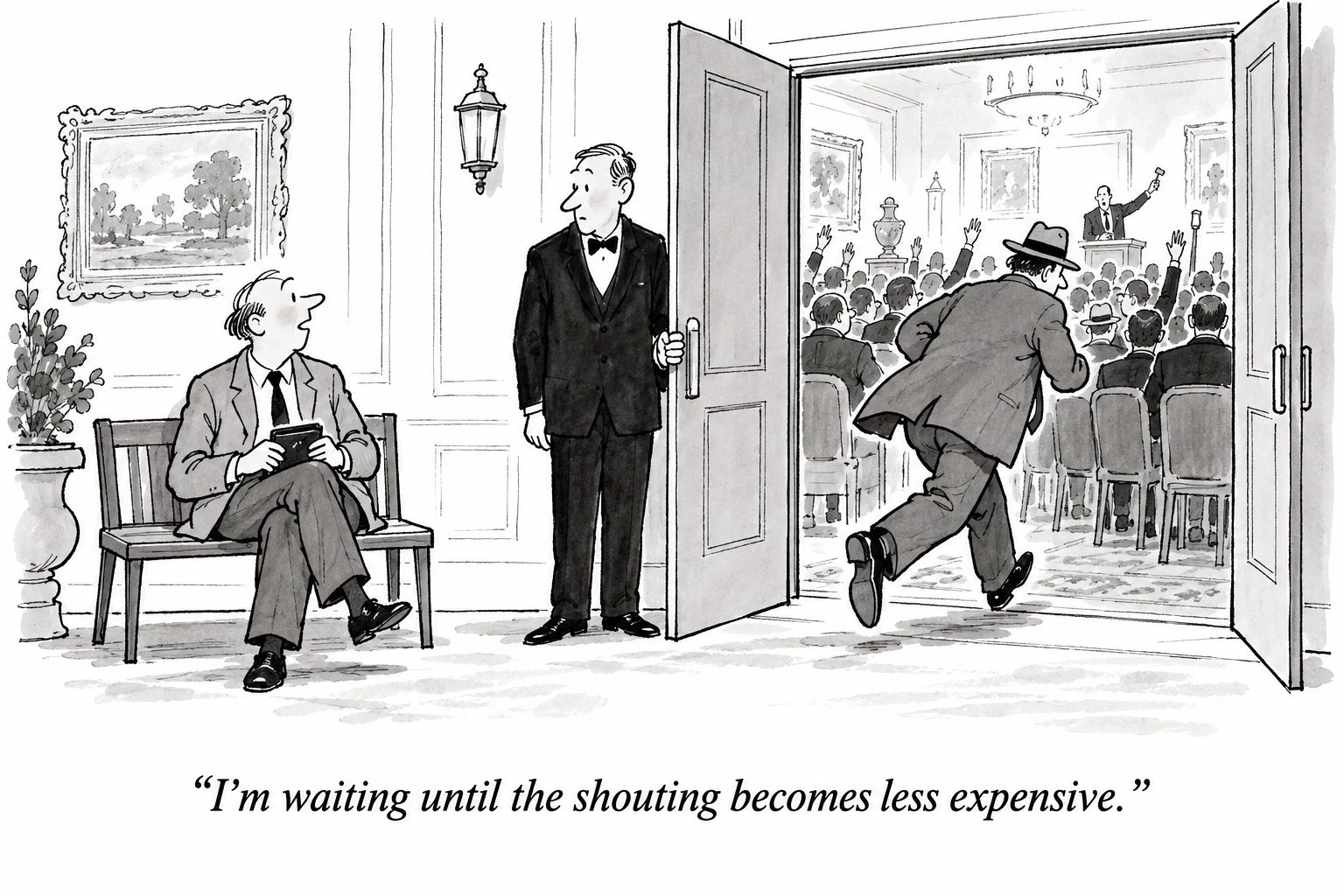
His favourite kind of idea is one that makes the room ask whether he has lost his mind. That test has not changed since the 1980s, and it is worth noticing how uncommon it is for someone to hold a temperament that steadily across fifty years of market cycles and a complete change of continent. Plenty of investors talk about contrarianism; it is a flattering word. Far fewer are prepared to sit on the sidelines for years while their neighbours get rich, which is the actual cost of it. Jim's willingness to pay that cost, cheerfully and in public, is the quality his readers and viewers keep coming back for.
The Uzbekistan position is a small window onto how his mind works. A former Soviet republic reopening to the world, a big young population, resource wealth, rich neighbours, and almost no attention from global investors. He has been to Samarkand several times and ranks its central square alongside the Taj Mahal among the most beautiful things he has seen. Most people's enthusiasm for a place ends at a photograph. His ends in a brokerage account and, more often than not, a recommendation that you go and see it yourself.
The small-town frontier scout
Jim grew up in Demopolis, Alabama, a town of a few thousand people on the Tombigbee River, and went from there to Yale and then to Oxford, where he coxed the Oxford crew to victory in the 1966 Boat Race. There is a temptation to tell that arc as escape, and it would be wrong. The more accurate reading is appetite. A boy from a small place who wants to see everything, and then actually does, carries the small place with him as a measuring stick. It shows in his writing, which is plain, practical and allergic to jargon, and in his travel habits, which were closer to a backpacker's than a billionaire's long after he could afford otherwise.
It also shows in what he chose to build. Beyond the fund, he created a commodity index in 1998 that let ordinary investors own a basket of oil, grain and metals when almost nobody thought raw materials were interesting, taught finance at Columbia, and wrote six books that are really one long argument: the world is bigger than your newspaper says, and the best way to understand it is to go and look. His most recent recommendation to readers is Samarkand. We suspect the next one will be somewhere we have not thought about yet, and that he will have been there first.