
Karl Poonawala is a Mumbai investor who has looked at companies from every seat in the house: as a venture bet, as a distressed asset, from the inside as a builder, and from the owner's chair at a family office. He now writes long, meticulously sourced studies of businesses that have lasted, under the name Kenzo Research. What caught our attention is the question running underneath all of it. Most people in his trade ask how a company grows. Karl keeps asking what makes one endure.
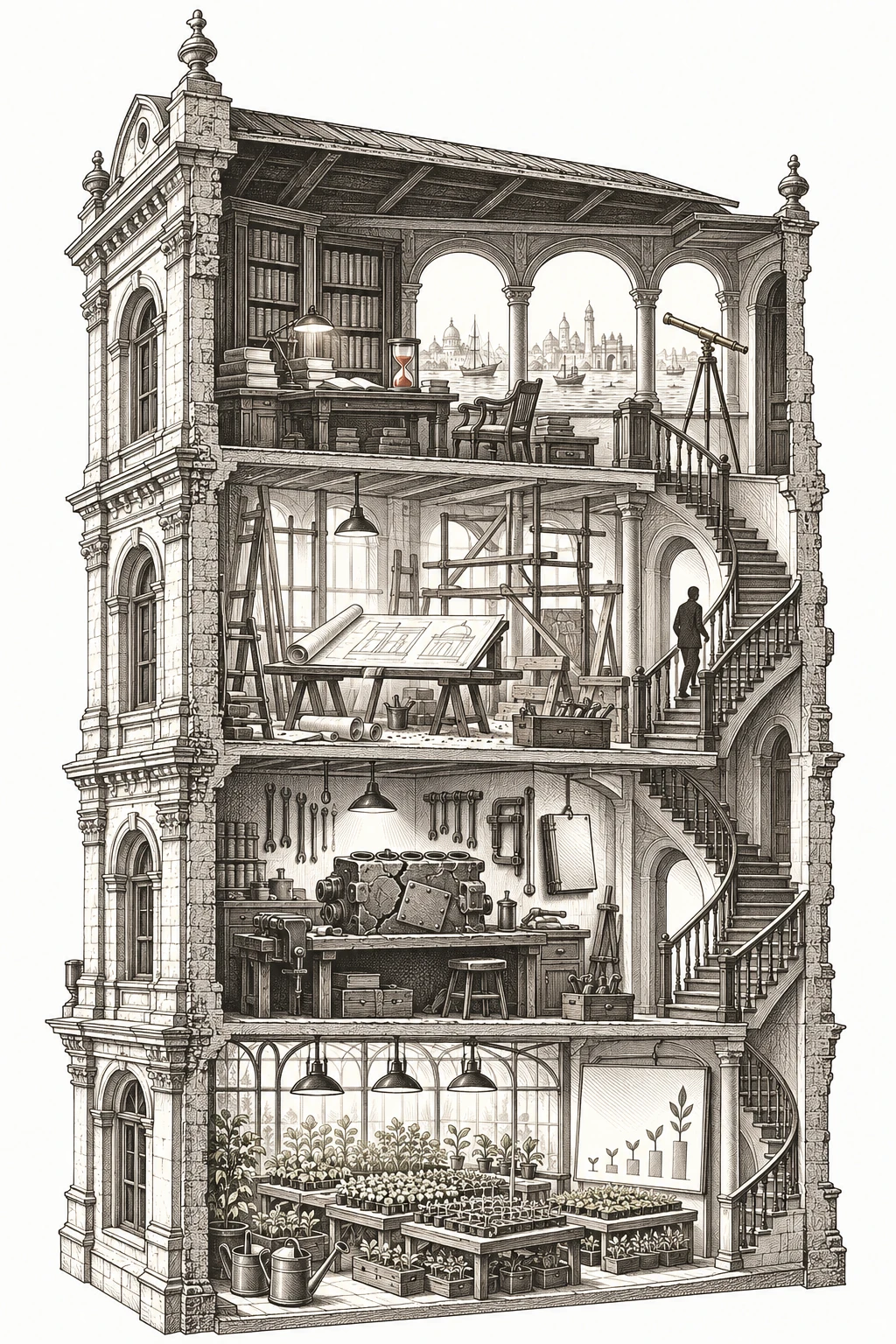
Four rooms
Venture capital is the maternity ward of business. Everything is possibility, growth curves and the next round, and most people who start there stay there. Karl began at Lightbox in 2014, the year the firm opened its doors in Mumbai to back early consumer companies, which means he learned the craft inside a brand-new shop rather than an established one.
Four years later he walked into the opposite room. Special situations is the polite name for what happens when the story has failed: a company that owes more than it earns, a plant that has stopped, a lender deciding whether anything is worth saving. For four years his job was turnarounds, which is the only place you learn what actually kills a business rather than what is supposed to make it fly. Then came two years building rather than investing, and after that a seat at Ayra Ventures, the family office founded by Samina Hamied of the Cipla family, where the capital has no fund clock and the question of how long to hold something is a real decision rather than a formality.
Seeing both the birth and the near-death of companies before your mid-thirties produces a particular sensibility. You stop being impressed by speed. You start noticing what held. That is rarer than it sounds in a city that spent most of the last decade rewarding velocity above almost everything, and it is the lens through which everything Karl writes now makes sense.
The subjects he picks
A writer's choice of subjects is a kind of autobiography, and Karl's reading list is unusually consistent. A warehouse retailer that has held its prices down for forty years. A luxury group he describes as a patient acquirer. An Indian industrial group that kept faith with a petrochemical plant through a decade-long fight with a state government. The newly rich family offices of India, and what they could do with capital that never has to be returned. Read together, these are not six essays. They are one argument, made through other people's companies.
A canon of patience
A canon of patience
Look at what Karl chooses to study and a pattern appears: businesses that won by refusing to hurry. Four subjects, one argument.
The warehouse that would not raise its prices
One of his earliest long studies was Costco, a retailer most analysts file under boring. What interests him is not the bulk packs but the restraint: a company that could have widened its margins at any point in forty years and chose not to, and became one of the most valuable retailers on earth partly because of that refusal.
The lesson he draws is not about retail. It is that patience, held long enough, becomes a moat nobody can copy quickly.
The plant that went dark, and the owner who stayed
Then an Indian industrial group almost nobody outside the trade has heard of, whose anchor asset, a petrochemical plant in Bengal, was shut down during a fight with the state government while rivals circled. The owners kept the lawsuits alive, waited out the political weather, and came back.
What Karl notices is that the group's real advantage was never a sector or a product. It was a time horizon longer than anyone else at the table.
Capital with no clock
The most personal piece is a memo to India's new family offices, written while he sat inside one. A venture fund must return its money within about a decade; a family's own capital never has to. That freedom is a structural edge, and his sharpest point is that most of its holders waste it by imitating the funds they could outlast.
Read the three together and you have something close to a promise about how he would invest himself.
Attention over access
Notice what the subjects have in common besides patience: nobody else was covering them properly. A privately held group whose founder has given almost no interviews. A retailer most analysts treat as boring. A class of investor that produces no annual letters. Karl's pieces are assembled entirely from the public record, with bibliographies running to thirty or forty entries and disclaimers that read like an analyst's rather than a fan's. The edge is not access. It is the willingness to read closely, for a long time, about things the market has decided are not worth the effort.
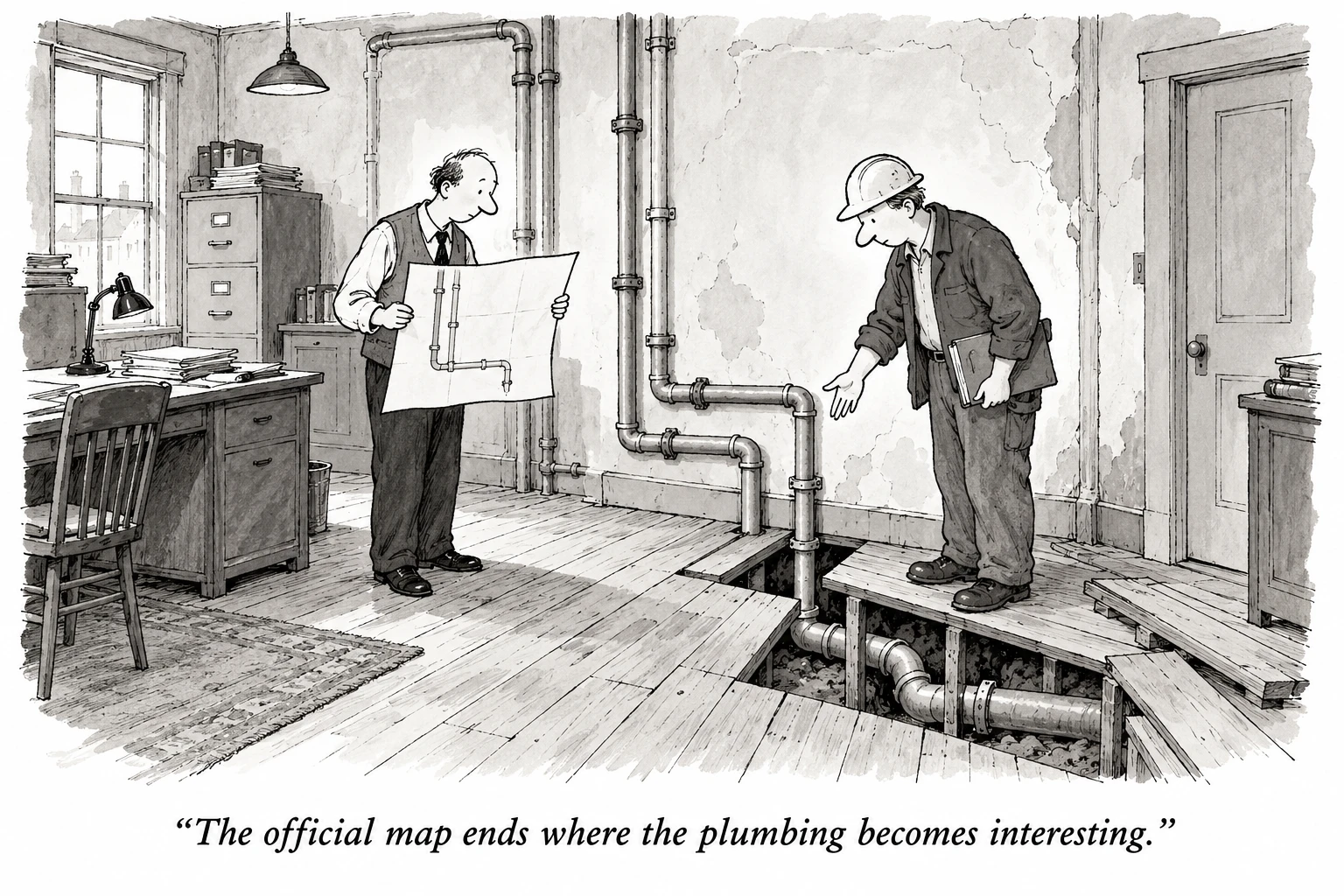
That instinct has an earlier echo. After a finance degree at Warwick, the conventional next stop for an Indian graduate is London or New York. Karl went to Beijing, to Peking University's business school, to study the Chinese economy and specifically its shadow banking system, the murky credit plumbing that even Chinese regulators struggle to see clearly. He learned the language while he was at it. Choosing the least legible corner of the world's other giant economy, and then learning to read it, is the same move he now makes on paper: go where the coverage is thin, and stay until it isn't.
- The murky cornerPeking University, BeijingAn Indian finance graduate chose Beijing over London, studied the least transparent corner of Chinese credit, and learned the language to do it.
- The beginning of companiesLightbox Ventures, MumbaiJoined a venture firm in its founding year and spent four years around businesses at their most hopeful.

- The end of companiesC1, special situationsFour years of distressed turnarounds: what actually fails, what can be salvaged, what holds.
- Writing it downKenzo ResearchLong profiles of durable businesses, assembled from the public record for the people who own capital rather than manage it.[1]

Stewardship, a few streets away
There is a Mumbai context worth noticing here. The city's most durable business houses are owned not by families directly but through charitable trusts, a structure that turns heirs into stewards and makes the next generation's job preserving something rather than spending it. When Karl writes admiringly about Sweden's Wallenbergs, whose companies have passed through five generations by way of foundations, the Indian analogue sits a short walk from his office. He is, in a sense, writing an Indian tradition back to itself.
The timing matters. India's large family offices have multiplied several times over in a handful of years, as founders cash out and their children, often educated abroad, decide what to do with money that has no deadline. Many of them will simply imitate venture funds. Karl's work is addressed to the ones who would rather play a different game, and it would not surprise us if the research turns out to be the front door to something with his own name on it. He has spent twelve years learning what makes capital patient. The obvious next step is to run some.
One last detail. His volunteering is with Future Hope, a Kolkata charity that takes children off the street and commits to each of them for fifteen years of schooling and care. It is the same principle he keeps writing about, applied to a person instead of a balance sheet: the returns that matter most arrive late, and only to those who did not leave.