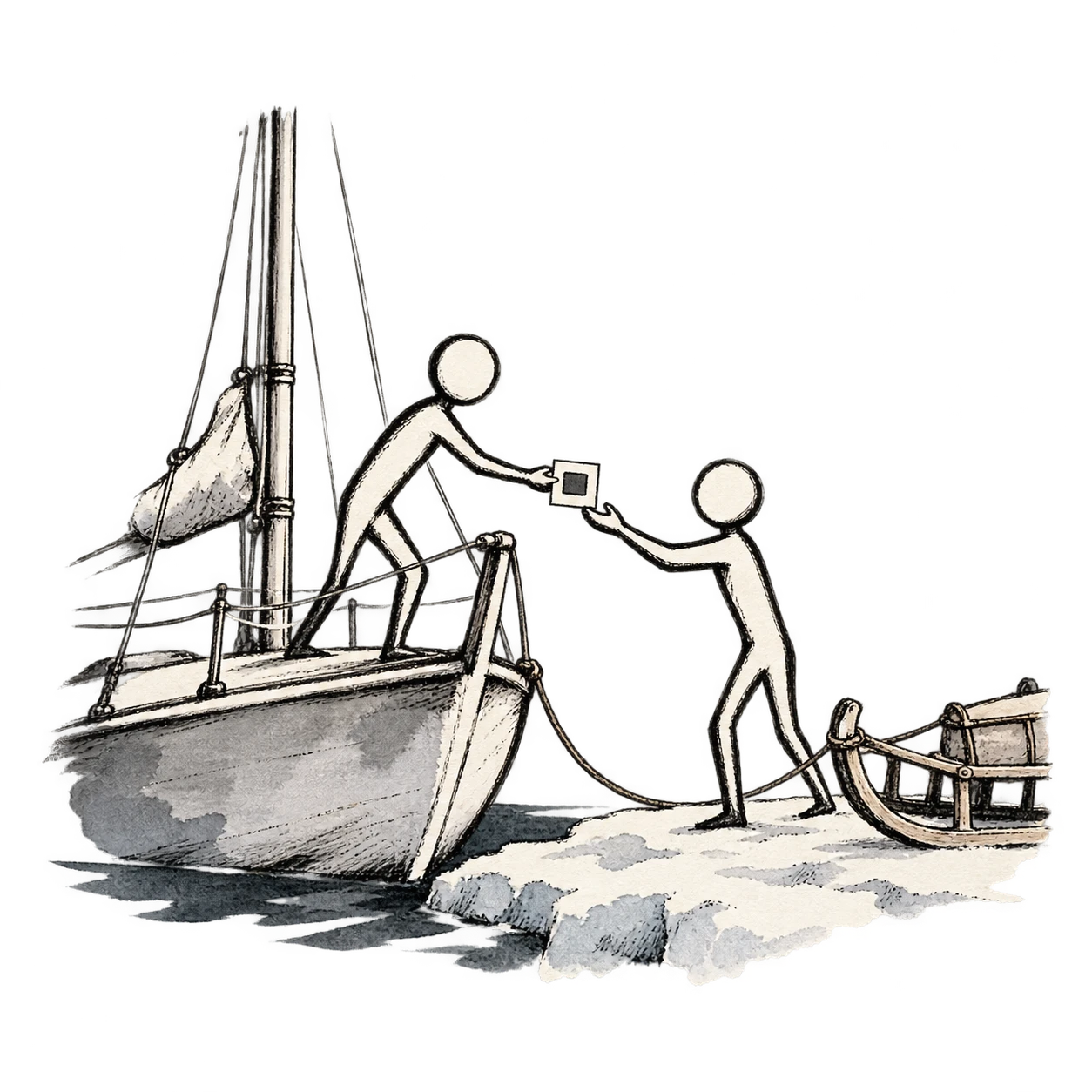
Lonnie Dupre has spent thirty-five years going north by whatever the ice would allow: dog team, kayak, canoe, skis, crampons, and most recently a 36-foot steel sailboat that left his hometown dock on Lake Superior and came back from Greenland eighteen months later. He is the first person to circle Greenland under human power and the first to stand alone on Denali's summit in January. What drew us in was less the list of firsts than a habit underneath them: he keeps returning to the same frozen places with a different instrument in his hands, and with photographs to give back.
The place stays, the vehicle changes
Polar travel tends to sort people into tribes with separate gear lofts: the mushers, the ski-haulers, the alpinists, the high-latitude sailors. Lonnie has been each of them in turn. In 1991 and 1992 he led a dog-team crossing of the Northwest Passage, three thousand miles through the Canadian Arctic in winter. From 1997 to 2001 he and a partner worked their way around the entire coast of Greenland, dogs in the cold months and kayaks in the open-water months, 6,500 miles in all. In 2006 he went toward the North Pole in summer, hauling canoes built to be dragged over ice and paddled across the gaps. In 2009 he did the full distance from Canada on skis. In 2015 he climbed alone. And in 2025, in his mid-sixties, he cast off as the skipper of an ocean-going sloop.
The geography barely moves. The method never stops moving. That looks to us like the real secret of lasting this long in a field that wears bodies out: he has arranged his life so that every decade he gets to be a beginner again at something hard, without ever leaving the cold he loves. The expertise accumulates, but so does the humility, and the two seem to keep each other honest.
- By dog teamNorthwest PassageThree thousand miles across the Canadian Arctic in winter, led from behind a sled. Dogs were his first polar craft and have stayed his favourite.[1] [6] [8]
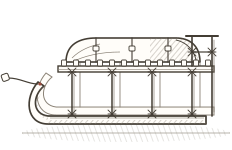
- By kayak and sledAround GreenlandDogs in the frozen months, kayaks in the open-water months, 6,500 miles around a whole island. The first time anyone had closed that loop under human power.[1] [10]
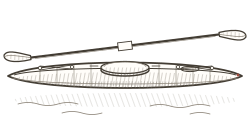
- By crampon, aloneDenali in JanuaryAfter skis, canoes and dogs, the mountain. He planted 175 bamboo wands on the way up so he could find the way down.[5] [10]
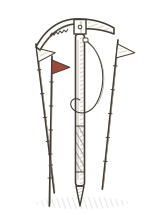
- By sailNord HusA 36-foot steel sloop, refitted over three years, skippered from his hometown dock to Greenland and back to Newfoundland in his mid-sixties.[3] [4] [7]
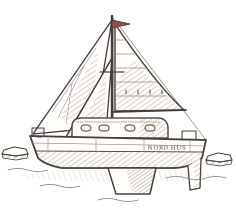
Sailing out of Minnesota
A Minnesotan sailing to Greenland sounds like the setup to a joke until you look at a map. Lake Superior drains through the other Great Lakes and the St. Lawrence Seaway into the Atlantic, which means the little harbour at Grand Marais is, technically, a port on the way to the Arctic. Lonnie took that technicality seriously. The voyage below is the story of what happened when he did.
From the dock at Grand Marais
The Arctic starts at the end of Main Street
How a Minnesota polar explorer in his sixties turned a Lake Superior harbour town into a departure point for Greenland, and what happened over the next 7,500 miles.
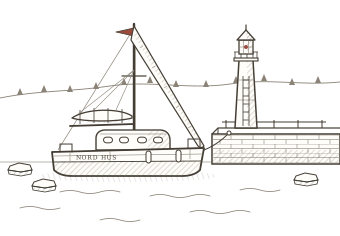
The map nobody checks
Lake Superior drains through the other Great Lakes and the St. Lawrence Seaway into the Atlantic. Lonnie read that as an invitation. In April 2025, with ice still on the harbour, Nord Hus left Grand Marais and spent the spring waiting for locks to thaw, threading the Seaway, and running the north shore of Quebec before crossing the Labrador Sea to Nuuk.
A boat you build before you sail it
The sloop is a steel 'origami' design, chosen for strength and simplicity. Three years of work went in before departure: a new mast, foam insulation against the hull, thermal windows, multiple heat sources, reinforcement, paint. For a man who builds log cabins, outfitting an Arctic boat was a familiar kind of winter project.
Leaving the boat in the ice
By July 2025 Nord Hus had passed the Arctic Circle. Rather than rush, the crew laid the boat up for the winter in Aasiaat and went home. Sailors call that unusual; polar travellers call it a depot. In spring 2026 they came back, recommissioned the boat and pushed north into uncharted water and drifting growlers, improvising routes from satellite imagery where the charts gave out.
Eighteen months later
Nord Hus reached Newfoundland in September 2026. Along the way the crew had counted seabird colonies, sampled seawater for environmental DNA, visited 1850s Inuit dwelling sites and carried supply depots north for a crewmate's next ski expedition. One crew member, on her first voyage she would call an expedition, came home with a new sense of what is possible. So, we suspect, did the skipper.
The explorer who goes back
Firsts are what the record books keep. Returns are what Lonnie actually does. Even his first major expedition, the Northwest Passage crossing, was designed as a comparison with Knud Rasmussen's 1923 expedition through the same country, noting how Inuit life along the route had changed in seventy years. Two decades after the Greenland circumnavigation, in 2022, he went back by dog team to the Polar Inuit communities of the far northwest to see how their world had shifted, a trip that became the documentary Amka. Then in 2026 he came back a third time, by sea, carrying slides of families he had photographed a quarter-century earlier, and simply turned up at the villages to hand them over.
There is something important hidden in that pattern. Climate change is nearly impossible to see on a first visit. It only becomes visible as the difference between two visits, which means it is only visible to people who come back. Lonnie's persistence has turned a career of expeditions into something like a longitudinal study of one coastline, conducted with dogs and kayaks and now a boat. The Nord Hus crew also spent time at dwelling sites from an 1850 Inuit migration from Canada to Greenland, which tells you how he reads the Arctic: as a place with a human history and neighbours, where a good guest brings the pictures and asks what has changed.
Routes drawn as arguments
In 2004 Lonnie received a Rolex Award for Enterprise, one of five given worldwide that year, and he put the money into a trip that was as much a piece of communication as a feat of endurance. The 2006 expedition toward the North Pole was deliberately scheduled for summer, when the sea ice is at its weakest, and the team travelled in canoes modified to slide over floes and float across open leads. The open water was the point. He built a route that could only be travelled because the ice was failing, and let the method make the case for him. It is a clever piece of design, and it says a lot about how he thinks: the expedition itself is the argument.
Hands near wood
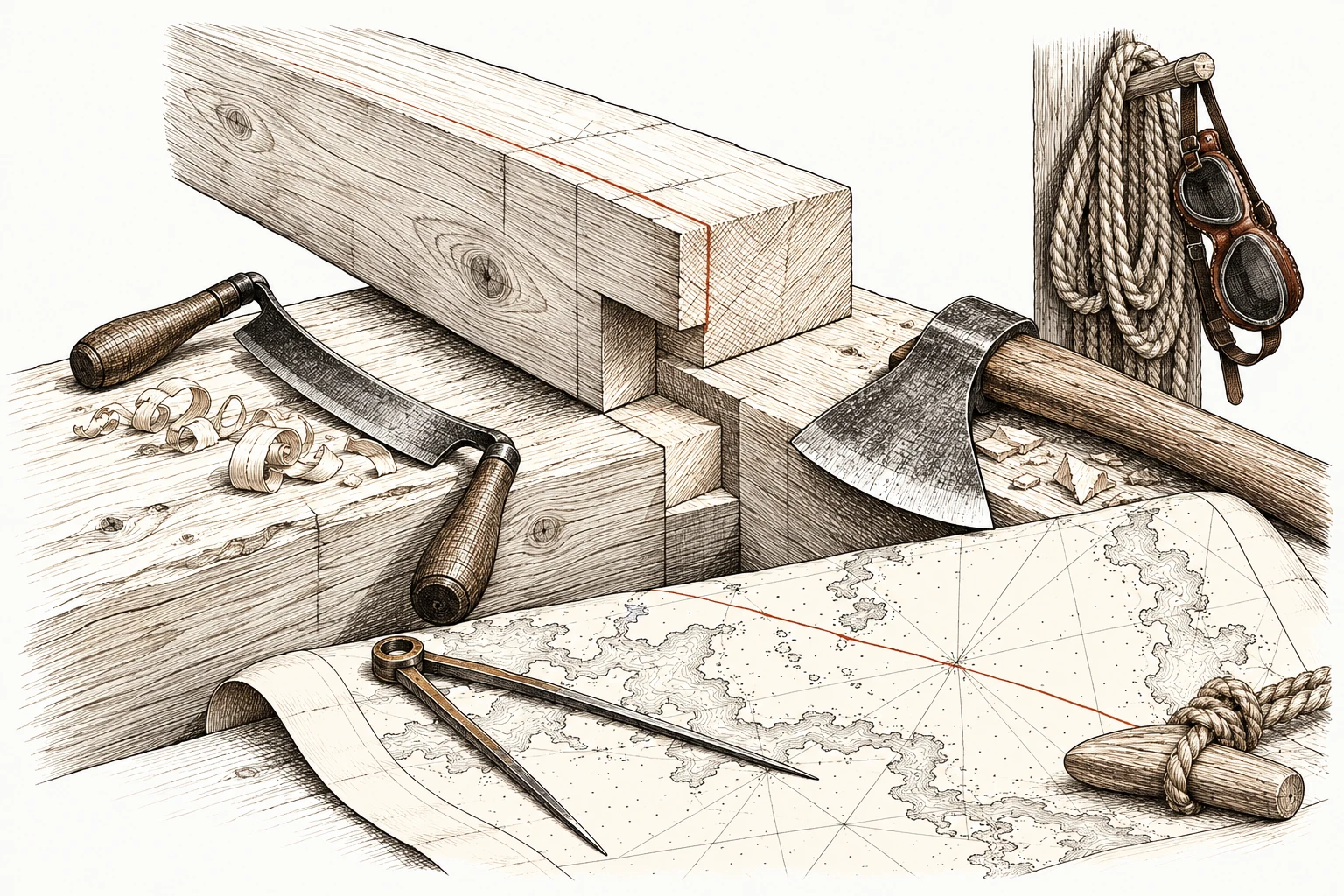
Grand Marais sits at the end of the road on Lake Superior's North Shore, a town of about 1,300 with Scandinavian roots and, at its heart, the North House Folk School, which teaches the old northern crafts: skin-on-frame kayaks, timber framing, boat building. Lonnie has taught dovetail log cabin construction there and has built cabins around the county. A half-dovetail corner is a lovely piece of engineering: the weight of the building pulls the joints tighter over time, so the structure gets snugger the longer it stands.
That same sensibility built the boat. Nord Hus (the name means "North House" in Norwegian, and whether or not it nods to the school down the road, the kinship is hard to miss) spent roughly three years in Lonnie's hands before it left the dock: new mast, foam insulation inside a steel hull, repainting, reinforcement, multiple heat sources. The explorer and the carpenter turn out to be the same person. Both make patient, hand-fitted systems that are meant to hold under load in the cold, and both know the work is mostly done before anyone is watching.
Turning around
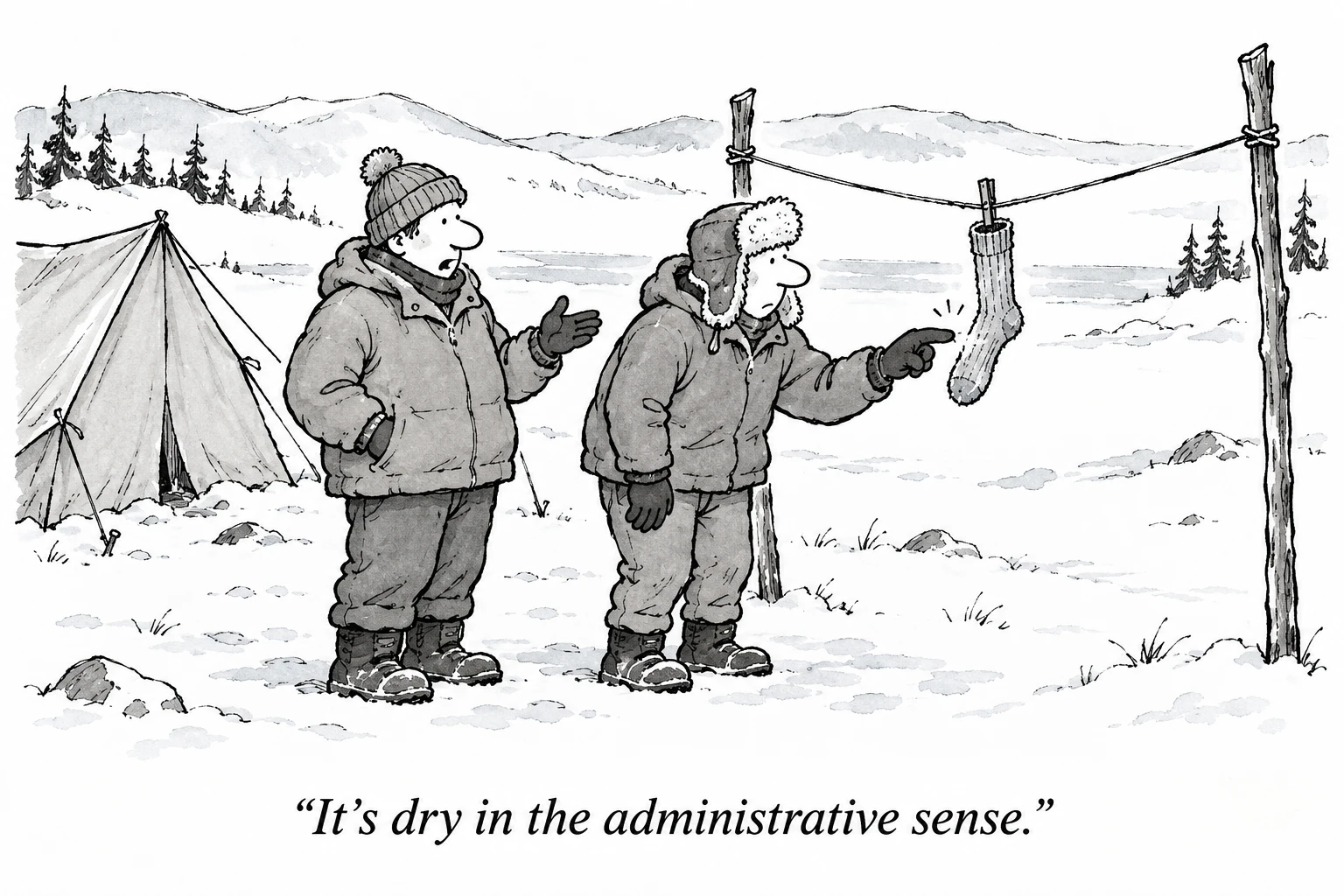
Denali in January is dark most of the day, swept by winds over 100 mph, and routinely colder than minus 50. Before Lonnie, sixteen people had reached the summit in winter and six of them had died doing it. He went up alone in January 2011, 2012 and 2013, and each time the weather told him to come down, and he listened. In January 2015 he stood on top.
The three descents are the credential. A climber who can turn around three times on the same mountain, and still come back for a fourth winter, is practising a kind of patience that has nothing to do with stubbornness. Two details from that climb stay with us. He brought his sea-ice tactics for managing moisture to the mountain, because in January nothing dries, which is the cross-pollination of a man who has done everything the Arctic offers. And he planted 175 bamboo wands on the way up to mark the route down. He planned his return before he reached the top, which is more or less the story of his life.
What the winter holds
Nord Hus reached Newfoundland in September 2026, and Lonnie's stated plans for the months ahead are cross-country skiing and writing. One of his crew, a sailor who had never before called any trip an expedition, came home talking about what she now believes is achievable. That is a meaningful shift in role for someone who built his name on going first: at 65, he has become the person others get to grow beside. The dock in Grand Marais is still there, and from it, as he has now demonstrated, you can reach the Arctic. We suspect he is already thinking about which instrument to try next.