Mary Roach has spent more than two decades writing bestsellers about the things a dinner table tends to steer around: corpses, digestion, sex, war wounds, and now the business of replacing worn-out human parts. She is routinely filed under "science writer", a label that describes the shelf her books sit on without quite describing what she does. We looked closer because her method turns out to be one of the more interesting pieces of craft in American nonfiction, and because almost nobody talks about it.
Travel writing, where the destination is a lab
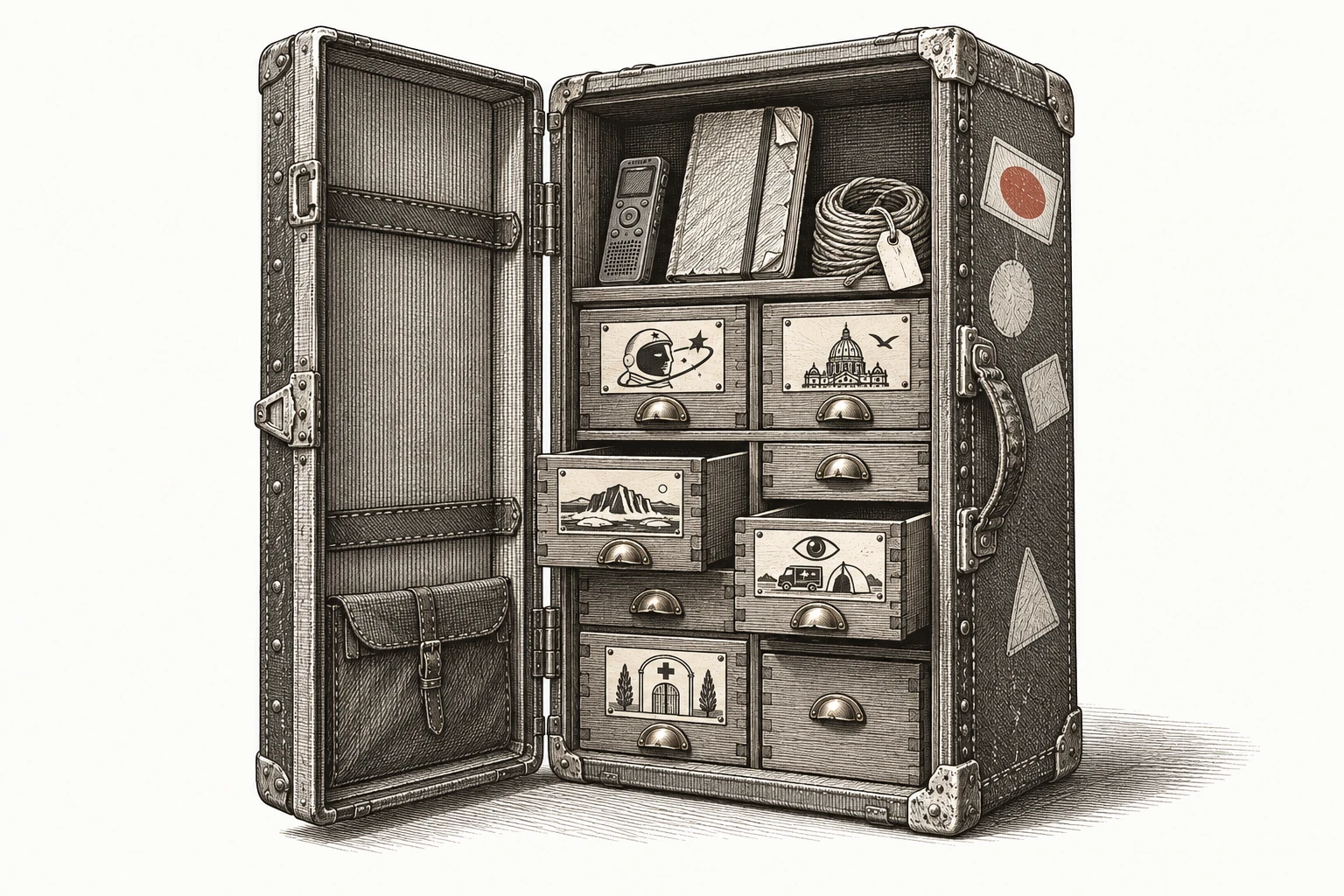
The simplest way to understand a Mary Roach book is to stop thinking of it as a science book at all and think of it as a travelogue. Each one is a dozen or so chapters, and each chapter is a place she physically went: a body farm, a brothel that doubles as a research site, a Dutch food-science campus, a cosmonaut training centre outside Moscow, a sterile pig facility in China, the Vatican's gull problem. The topic of a book is chosen less for its importance than for its geography. If an idea doesn't offer enough rooms to walk into, it gets dropped, however worthy it sounds on paper.
That is a documentary filmmaker's test, and it explains why her books feel so unlike the genre they're shelved with. Most popular science is written from a desk, explaining downward. Mary writes from the field, reporting sideways, with the reader standing next to her. It's a structure she had already perfected in magazine features (go somewhere strange, come back with a scene) long before the magazine business made that kind of travel harder to fund. What she did in 2000 was scale the form up: a book as fifteen features stitched together by one appetite.
Getting into rooms
The doors behind the jokes
Every funny chapter in a Mary Roach book sits on top of a permission someone had to grant. Four of the harder ones.
A year for a submarine
To write about sleep deprivation at sea, she sought clearance from the top of the Defense Department and then waited a year to board a nuclear submarine. The chapter that resulted reads as effortless. The effort was all upstream.
Just show up
A surgeon in Tbilisi never answered her emails. So she booked a flight, brought a friend, and arrived at his clinic. He was away; his staff opened his files anyway. Unanswered mail, it turns out, is often a filter for seriousness.
The second yes
Two American companies breeding organ-donor pigs wouldn't let her near the animals. A facility in China would. Her rule seems to be that the world always has a second door, and someone behind it who is proud of the work.
A night in the machine
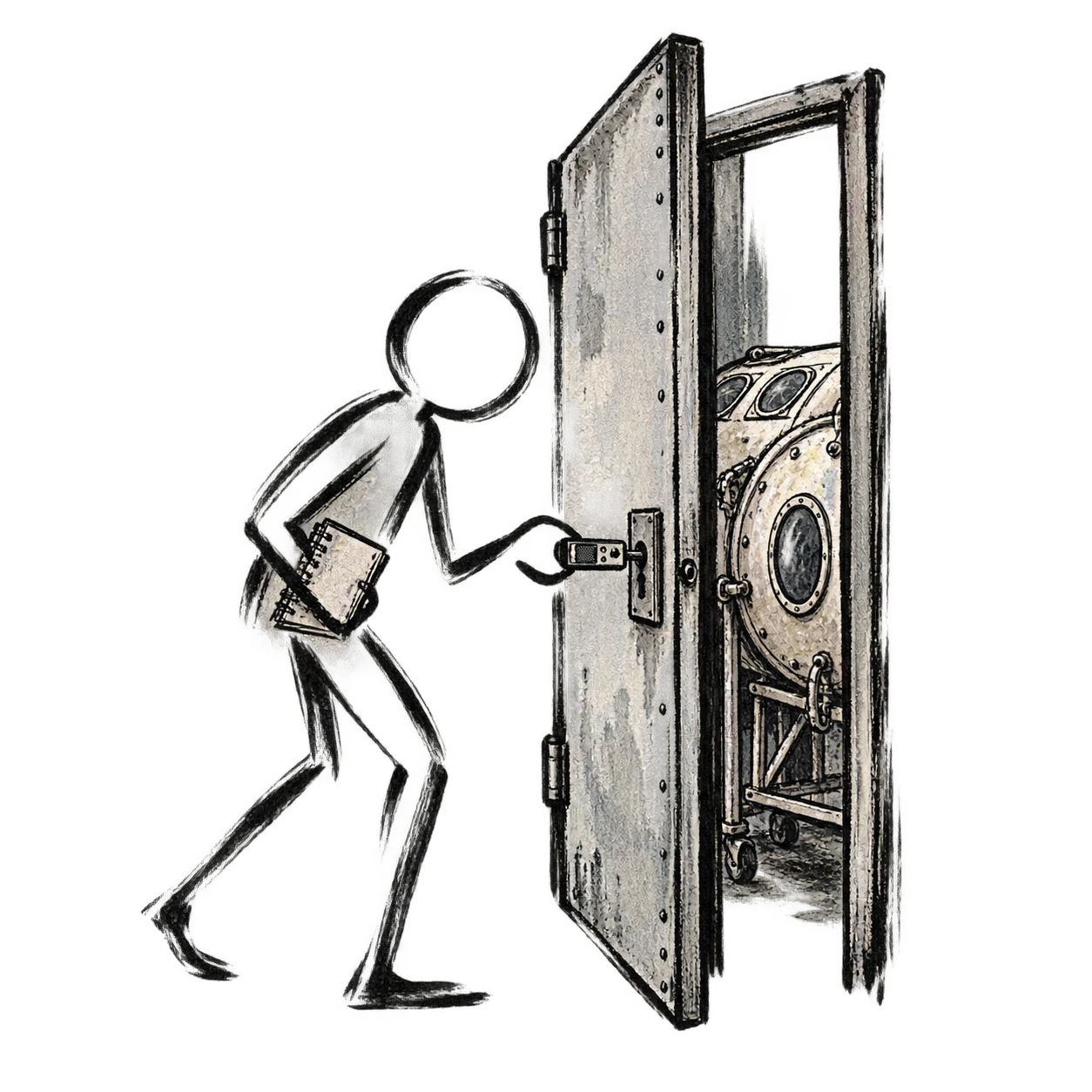
She asked a widower in Kansas City if she could sleep in the iron lung his late wife had used. He agreed. Reading about why polio patients found the machine a relief wasn't enough; she wanted the reader to have someone who had been inside.
The ask is the craft
The jokes are what people remember, so it's easy to miss how much of the work is logistics and nerve. The access behind these books is extraordinary. Clearance from the Defense Department's public affairs office. A year of asking before she was allowed aboard a nuclear submarine to watch sailors not sleep. Two years of patient wheedling into the laboratories that study sexual physiology. When two American companies breeding organ-donor pigs declined to let her near the animals, she found a facility in China that said yes. When a surgeon in Tbilisi didn't answer her emails, she flew to Georgia and knocked.
There's a lesson in this that has nothing to do with science. Mary treats "no" as a routing problem rather than a verdict. She asks for things that sound unreasonable (could I spend the night in your late wife's iron lung?) with such evident, uncynical curiosity that people find themselves saying yes. Researchers who spend their careers being ignored discover someone who wants to understand exactly what they do, and will fly across the world to see it. That kind of persistence is usually described as a personality trait. Looking at her career, it reads more like a discipline she practised until it became one.
Standing on the reader's side of the glass
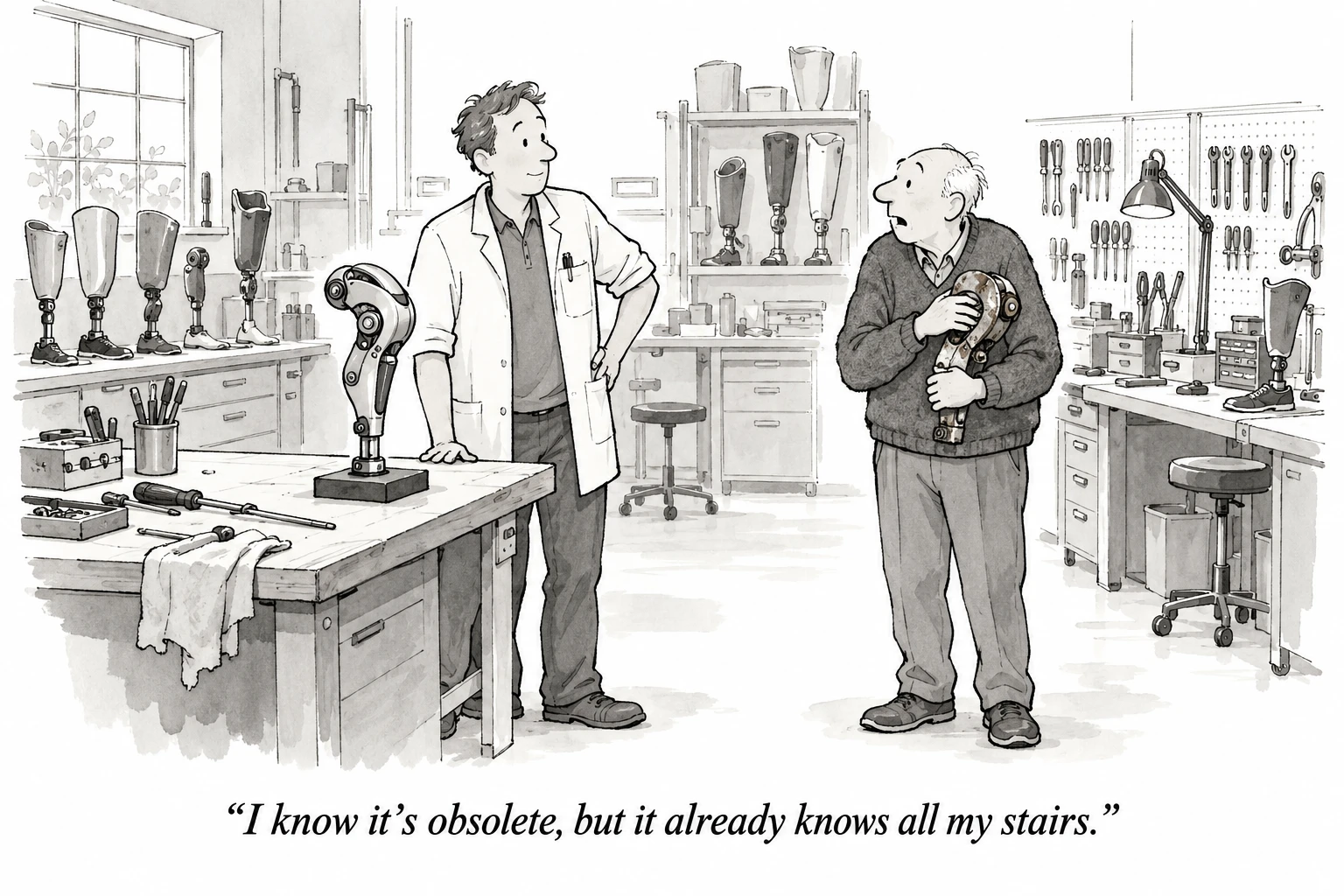
Mary holds a psychology degree, not a science one, and this turns out to be the right training. Her books aren't really about anatomy. They're about the relationship people have with their own bodies: the embarrassment, the squeamishness, the stubborn attachment to parts that no longer work. An amputee weighing a prosthetic against a limb that still half-functions. A woman after a mastectomy who was never told she could simply choose to go flat. A surgeon who builds things slightly too large because he is proud of them. These are questions about people, and a psychologist's eye is what notices them.
Her position in every scene is the same: she is the non-expert in the room, asking the question the reader would ask if they weren't too polite. She treats her sources as tutors rather than oracles, puts herself on the page only when her presence can hold the reader's hand, and, when necessary, volunteers her own body as the demonstration: donating hair follicles to a stem-cell lab, lying down in a 1950s breathing machine to find out why polio patients described it as relief. None of it is stunt. It's a way of saying to the reader: this is survivable, I'll go first.
Funny on purpose, but not by performing
Mary is one of the funniest writers working, and she achieves it almost entirely through selection. She doesn't crack wise in conversation; she looks harder than other people at the material and keeps what is absurd. A sixteenth-century medical paper whose title runs to two colons and a dog. An astronomer who kept a snuffbox of glue for his metal nose. A footnote that is funnier than the chapter it hangs from. Her comedy is editorial, which is why it never curdles into mockery: she is laughing at the universe, and inviting the researchers to laugh alongside her.
The one-syllable titles work the same way. Stiff. Spook. Bonk. Gulp. Grunt. Fuzz. They're a promise made on the cover that whatever follows, however gruesome, will not hurt. In a genre that can be anxious about its own seriousness, that irreverence is a form of hospitality. It is also, we suspect, very Bay Area. Mary has lived in San Francisco and Oakland since the early eighties, and her sensibility rhymes with the Exploratorium (where she has been a fellow): science as something you touch, poke, and are allowed to find hilarious.
The spare-parts years
Her newest book, Replaceable You, follows the long human effort to rebuild the body from whatever is to hand, from brass noses to 3D-printed kidneys. The research took her to a Boston burn unit, a hair-follicle nursery in San Diego, across Mongolia with travelling cataract surgeons, and into the night shift where tissue donors are disassembled and, in a sense, redistributed. It is as rich a set of rooms as she has ever found.
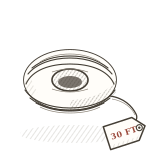
- The thirty-foot stringHippocrates magazine, WiltshireHer first feature: a British research unit where volunteers caught colds on purpose and hiked the countryside tethered at a distance so as not to infect one another. The blueprint was set: go to the odd place, bring back the detail nobody else would have noticed.[7]
- A feature becomes a formStiffWhen magazine travel budgets dried up, she didn't change the method, she enlarged it. A book became a dozen field trips held together by one question, with a pocket recorder as the main instrument.[2] [8] [10]

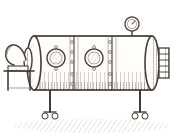
- Inside the machineReplaceable YouEight books on, the method is unchanged and the nerve has only grown: she spent a night in a 1950s iron lung to understand from the inside why its occupants described it as relief.[6]
What's striking, eight books in, is that she has never been tempted to change the shape of the thing. Same publisher, same form, same posture: the curious civilian, notebook out, standing where most of us would rather not. Writers are forever advised to reinvent themselves. Mary's career is a standing argument for the opposite: find the form that fits your curiosity exactly, and then keep finding new terrain to take it into. The world, as she has demonstrated for twenty-two years, is in no danger of running out.