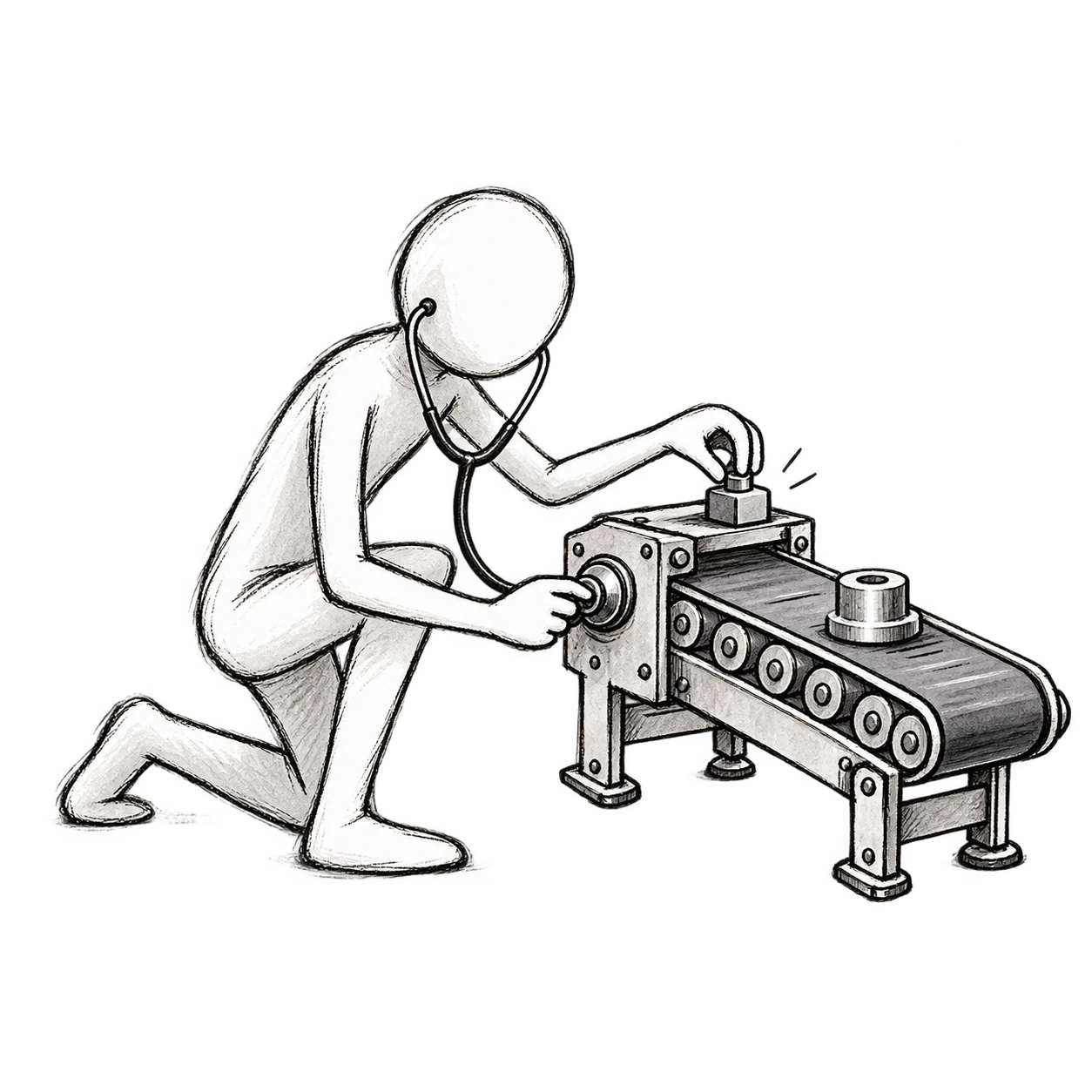
Mathieu Germain owns the manufacturing side of Odoo, the Belgian company that has spent two decades trying to make business software something people don't dread. He is a mechanical engineer by training, Imperial and Cambridge by education, half French and half German by family, and Brussels by choice. What made us look twice is the combination: an engineer who has spent nearly six years shaping how factories plan, build, check and fix things, and who arrived at that job from the shop-floor side of the table rather than the software side.
A product's whole life
Business software tends to be organised the way software companies are organised: by module, by team, by whatever got built first. Mathieu's remit reads differently. Manufacturing, quality, maintenance, repair and product lifecycle management are five applications on an org chart, but put them in order and they are simply the biography of a physical object. It gets designed. It gets made. It gets checked. The machines that made it need looking after. And one day it comes back broken and someone has to fix it.
That is how a mechanical engineer sees the world, and it turns out to be a useful lens for a product owner, because it keeps the question honest. Not "what does this module need" but "what happens to the thing next". The carousel below walks through that life, stage by stage.
The life of a thing
The life of a thing
Mathieu Germain's five apps at Odoo look like a list on an org chart. Put them in order and they are the biography of every physical product, from drawing board to repair bench. Swipe through it.
It gets designed
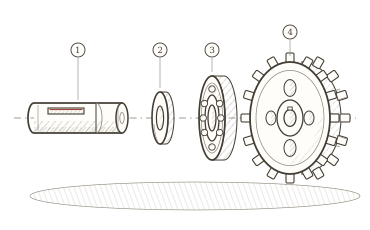
Every product starts as a recipe: a list of parts and the steps to put them together. Recipes change constantly, and a factory that builds yesterday's version wastes a day.
The product-lifecycle app Mathieu looks after exists to track those changes so the floor always has the current drawing. An engineer knows designs are never finished; the software has to forgive that.
It gets made, and checked
Making is the obvious part. The less obvious idea in Mathieu's work is where checking happens.
Instead of quality living in its own department with its own system, a check can be dropped in anywhere a product moves: at receiving, mid-build, before shipping. Quality becomes a checkpoint, not a building.
The machines get looked after
A factory's calendar is really its machines' calendar. The maintenance app schedules the recurring care that keeps equipment and workstations running, so production plans are built on machines that will actually be there.
It's the least glamorous of the five, and the one a mechanical engineer would never leave out.
It comes back
Products return broken. The repair app handles that humble end of the story, and one of its recent additions says something about how Mathieu thinks: parts from a repaired product can be reclaimed and put back into stock.
The loop closes. Nothing in a workshop is really waste until someone decides it is.
Listen first, then build
The path that led here has a pattern in it, and it is not the obvious one. The master's Mathieu took at Cambridge, in industrial systems, manufacture and management, is run by the university's Institute for Manufacturing and works less like a seminar than a tour of duty: students are sent into real factories around Britain for short, intense projects, expected to walk the line, find the bottleneck and present a fix to the people who actually run the place. It is a year of being the outsider in someone else's workshop and learning to earn trust quickly.
He then did something similar with his first years at Odoo. Before he was handed the manufacturing product, he spent more than two years as a business advisor for Europe, the Middle East and Africa, the role where you sit across from companies weighing up the software, hear how they really operate and show them whether it fits. It is easy to read that as a stepping stone. We read it as design research. By the time Mathieu became product owner in late 2020, he had absorbed hundreds of versions of the same conversation: a company explaining, in its own vocabulary, what was wrong with its production and what it wished the software understood. Few people building manufacturing tools have heard that chorus from the customer's chair first.
There is an even earlier glimpse of the same instinct. His first internship, as a London student, was at a small design-led startup making portable screens for hospitals, and the role covered engineering and marketing at once. Building the thing and explaining the thing, in a single summer. That is roughly the job description of a product owner, a decade before he had the title.
Simple is the hard part
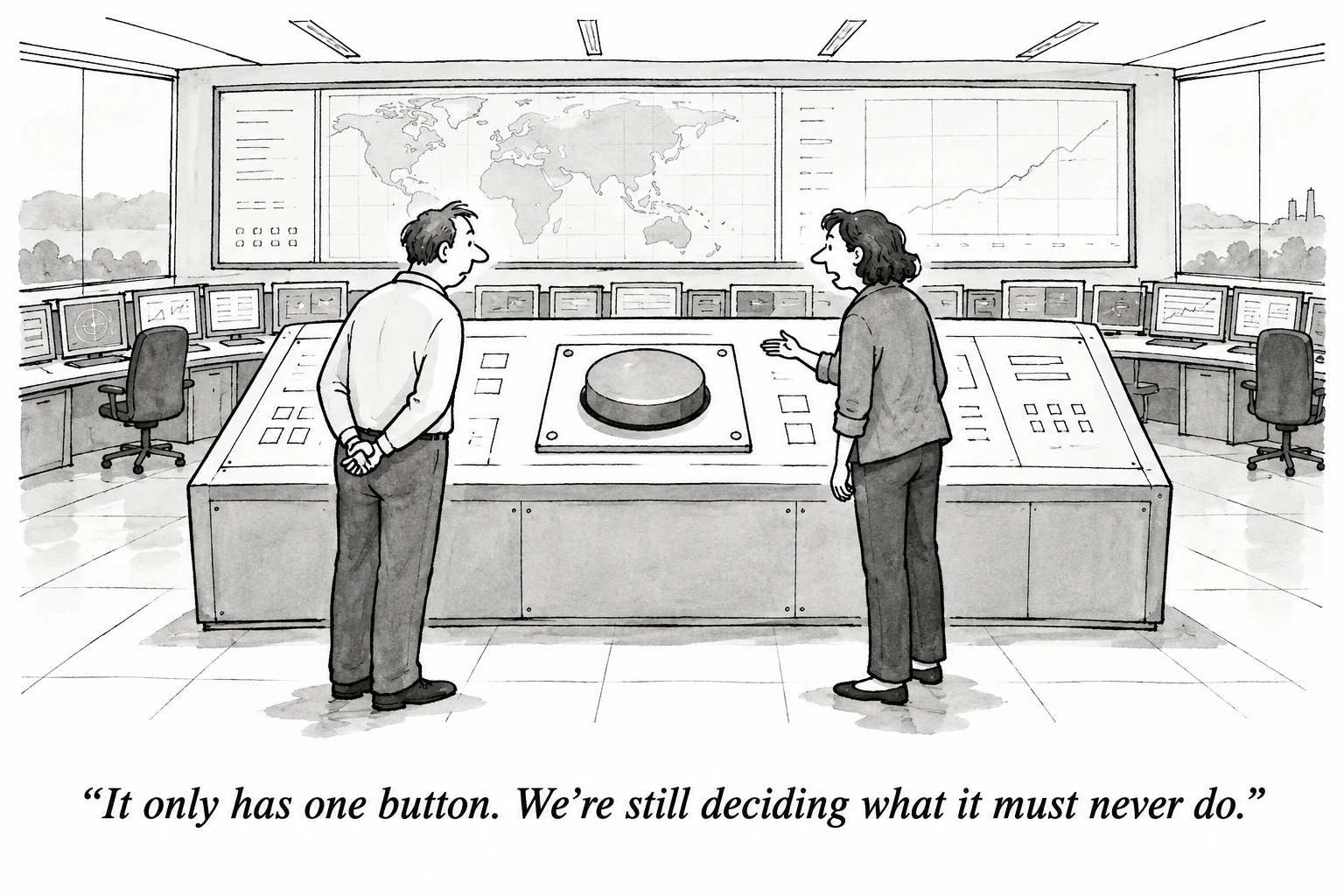
Some context for anyone outside this world: manufacturing software has a reputation. It is the part of a company's systems most likely to require a consultant, a training course and a certain resignation. The industry's default answer to complexity has long been more configuration. Odoo's bet, and Mathieu's job within it, is the opposite one: that a planner, a machine operator and a repair technician should each be able to open the thing and understand it.
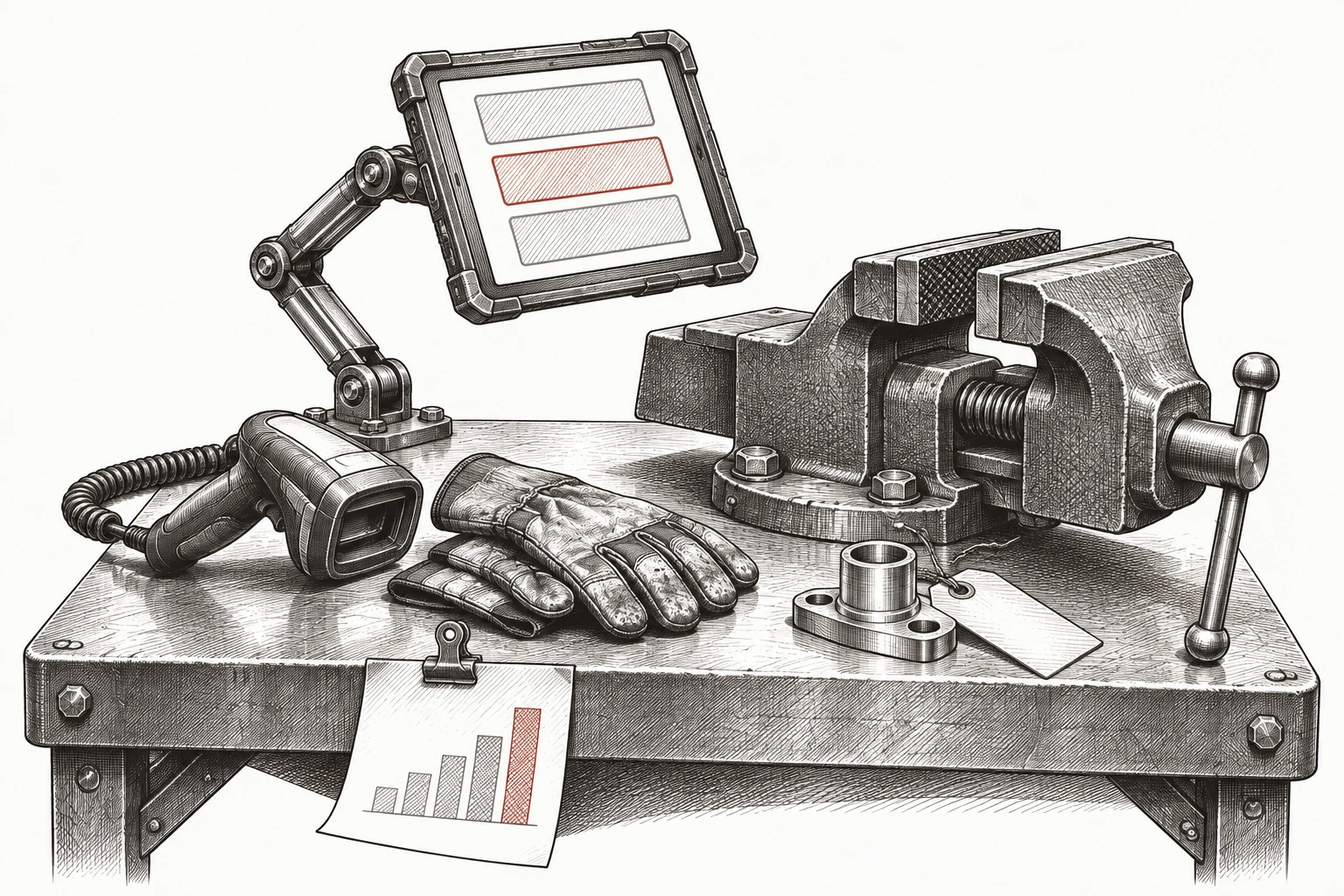
His public work over the last five autumns tells that story in instalments. A tablet view for the shop floor that grew into its own redesigned module. Barcode scanning folded into production, so a worker with a scanner can move an order along without walking back to a desk. Quality checks that can be dropped in wherever a product moves, rather than a separate system bolted on the side. A single overview that shows what is missing for a manufacturing order and lets you order it from the same screen. The consistent thought underneath all of it is respect for the person with gloves on, and it is an engineer's kind of respect: he has stood at that workstation, and he knows the software is not the point of the day.
The best analogy for the ambition is a box of building bricks, and it holds for a reason that goes deeper than the slogan. Bricks aren't simple because there are few of them; they're simple because every piece fits every other piece in a predictable way. That is a harder design discipline than minimalism, and it is a fair description of what holding five interlocking apps together for six years actually demands.
Six years is also a long time to keep one product in an industry where people change seats every eighteen months. Each new version of Odoo has arrived with Mathieu back on stage at the company's annual conference in Brussels with another chapter: product design changes one year, quality the next, then the new shop floor, then work in progress. Ownership, in his case, is a literal description rather than a job title.
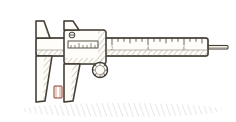
- An engineer's handsImperial College LondonMechanical engineering, with a student summer at a design-led startup where the internship covered engineering and marketing in one go: build it, then explain it.
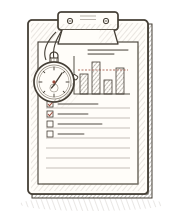
- A year inside other people's factoriesUniversity of CambridgeA master's at the Institute for Manufacturing built around short projects in real plants: walk the line, find the bottleneck, convince the people who run the place.
- Hearing the customer's versionOdoo, BrusselsTwo years as a business advisor for Europe, the Middle East and Africa: hundreds of companies describing their own production problems in their own words, before he was asked to build anything.

- Owning the floorOdooProduct owner for manufacturing, quality, maintenance, repair and product lifecycle, and on the conference stage every year since with the next chapter.[1] [2] [3]
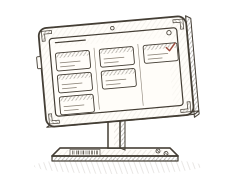
Built for Brussels
Some people fit their city. Half French, half German, educated in London and Cambridge, now working in the capital of Europe at one of its best-known software companies, Mathieu is the sort of European that Brussels was built for: someone used to living between systems. We would hedge any claim about how that shaped him, but it is hard not to notice how well the background suits the job. Manufacturing software for a whole continent has to serve a precision machine shop in Germany and a family food producer in the south of France with the same screens, and that needs a product owner who doesn't assume one country's way of running a factory is the way.
Where the specificity goes
The most recent chapter hints at what comes next. His 2025 conference talk moved from manufacturing in general to food production in particular: ingredient quantities, shelf life, deadlines that spoil if you miss them. After years of making the general case simple, the interesting work may be in making it specific, one industry at a time, without losing the simplicity on the way. That is a hard brief. It is also precisely the one that someone who has spent a year in other people's factories and two years in other people's sales conversations is well placed to take on, and we suspect the shop floors of Europe are better for having him on their side of it.