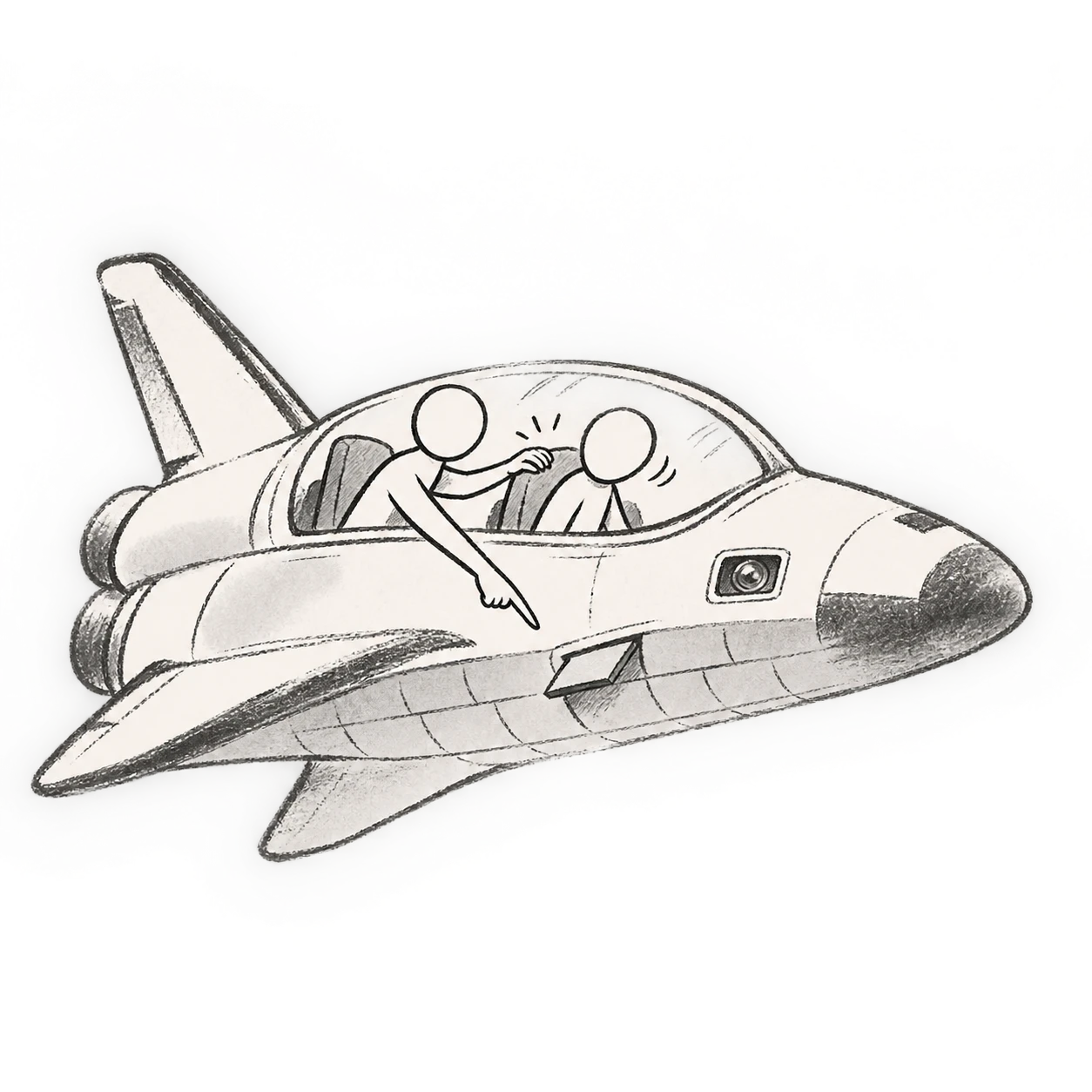
Mike Mullane flew 134 combat missions over Vietnam in the back seat of a reconnaissance Phantom, rode the Space Shuttle three times, and has spent the thirty-six years since explaining to firefighters, surgeons and plant managers how excellent teams drift toward disaster. What caught our attention is the seat he did nearly all of it from: the one behind the pilot, where you can see everything and are tempted to say nothing. He turned that vantage into a life's subject.
The seat behind the pilot
An eye exam at the end of West Point closed the front seat to him in 1967. What opened instead was the back one. The weapon systems officer in an RF-4C runs the radar, the navigation and the cameras; over Vietnam the aircraft carried no weapons, only film, flying low and fast so that other pilots would know where to strike. It is a job whose entire product is information for someone else, and whose discipline is noticing.
He kept qualifying for the next version of it: a master's in aeronautical engineering, then the flight test engineer course at Edwards (the backseater's test pilot school), then weapons testing at Eglin. None of it pointed at an astronaut selection, because astronauts were pilots. Then NASA announced a new job for the Shuttle, mission specialist, which did not require wings, and the same category that admitted scientists and the first six American women admitted a weapon systems officer with glasses. There is a plain lesson in that decade. He had spent ten years becoming qualified for a door that did not exist, and when someone finally cut it into the wall he was standing beside it. Prepare for the adjacent version of the dream; the exact one may arrive under a different name.
The desert he launched from, then flew over
The desert he launched from, then flew over
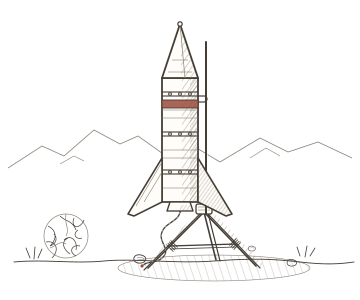
Mike Mullane grew up firing homemade rockets into the scrub outside Albuquerque. Three decades later he looked down on the same ground from Atlantis, and when the flying was over he moved back. One place frames the whole arc.
1957: a backyard that ran to the mountains
Sputnik crossed over Albuquerque when he was twelve, and the city was already a company town for the missile age: Kirtland Air Force Base and the Sandia laboratories on one side, open desert on the other. A boy mixing his own fuel and launching pipe rockets taller than himself was doing the local industry at hobby scale.
The seed was hardly exotic there. What was unusual was how long he kept watering it.
1963 to 1978: fifteen years of leaving
West Point, Vietnam, four years in England during the Cold War, graduate school in Ohio, test school in California, test work in Florida. Each move was a qualification for a job that did not yet exist.
When NASA created the mission specialist role for the Shuttle, the file he had built was ready to mail.
1988: the first pass over home
His first flight's orbit never crossed the continental United States; from the window you got a slice of Florida, a corner of Texas and a great deal of ocean. The steeper tilt of his second mission carried Atlantis over New Mexico, and the Rio Grande and the dark patch of Albuquerque slid past beneath him.
Two years later the family moved back into a house there for good.
Now: the launch site is the trailhead
He walks roughly 500 miles a year in the mountains of the West. After sixty came Kilimanjaro, Rainier and forty of Colorado's fourteeners.
The same country he once used as a range for rockets is now where he goes for the view.
Candour as a safety practice
The phrase Mike built his second career on, normalization of deviance, came from the sociologist Diane Vaughan's study of the Challenger launch decision: a shortcut that works once becomes a habit, the habit becomes the standard, and nobody remembers it was ever a shortcut. Four of his classmates died on Challenger, including Judy Resnik, who had flown his first mission. He has made the mechanics of that drift legible to audiences who will never see a booster but who run on the same fuel: production targets, schedules, the comfort of having got away with it last time.
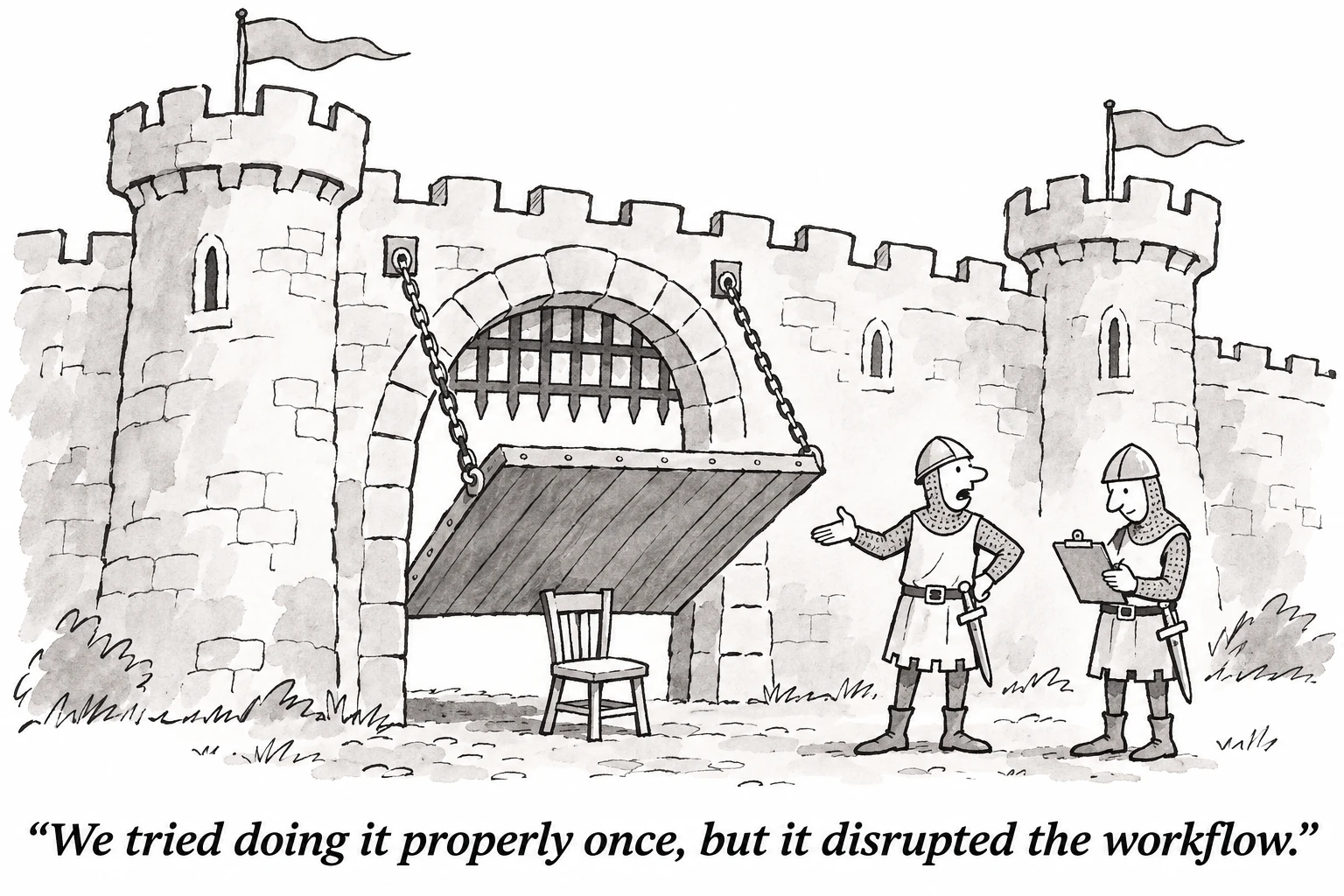
Here is the connection we think gets missed. His memoir, Riding Rockets, was received as the book that took the heroic veneer off the astronaut corps (one reviewer compared it to Kitchen Confidential). The bawdiness and the safety message look like two different men. They are the same instinct. An institution that can only describe itself in polished language cannot hear a bad O-ring, and a crew member who performs a calm he does not feel has already started lying in small ways. He never pretended that launch felt routine, and the refusal to pose is of a piece with everything he teaches.
The sharpest evidence is a story he told NASA's oral historians on 24 January 2003. On his second flight, the ground asked him to bend the robot arm under Atlantis to look at the heat shield, because something had broken off a booster at launch. The crew saw hundreds of gouged tiles; the ground, working from poor video, saw scrapes, and stayed calm. More than 700 tiles were replaced after landing. Eight days after he recorded that interview, Columbia was lost to damage of the same family. What he had been describing was a pattern, and patterns recur.
- The doubt he kept to himselfFlight test, Eglin Air Force BaseOn his first flight in a new aircraft, the pilot pressed on past the fuel point for turning home. He noticed and said nothing: thirty minutes in type against the commander's hundreds of hours. The landing was botched, the fuel was gone, and both men ejected at low altitude. It became the opening story of everything he teaches: whoever you are in the crew, you count.[4]
- The position he would not parrotHouston, after ChallengerAssigned to review the Shuttle's self-destruct system, he argued it had to stay, to protect the families on the roof and the towns under the flight path, and he declined to present his chain of command's opposing view at the meetings. He knew it might cost him a flight. The charges stayed on the boosters.[3]
- The veneer, removedRiding RocketsA memoir in which astronauts are frightened, funny, petty and brave, and in which NASA's management before Challenger is described plainly. Reviewers called it the opposite of the publicity-machine version. It is the same instinct as the safety talks: say what is actually happening, out loud.[6]

Instant feedback
Twelve years at NASA produced two weeks in orbit. The rest was training, support work and long-lead programmes; in 1988 he worked on a robot arm for the space station that did not fly until 2001. The shape of what he chose afterwards suggests a temperament that wants to pull a lever and watch the result, and it is tempting to read his life after 1990 as a search for exactly that.
He retired at forty-four, moved the family back to Albuquerque, and within thirteen years had published in four genres: a novel, a children's book that won a national science trade book award, a question-and-answer book about the oddities of spaceflight, and the memoir. Then the keynote became the main instrument: a room, an hour, a reaction you can read from the stage. The mountains fit the same shape. Since turning sixty he has stood on Kilimanjaro and Rainier and forty of Colorado's 14,000-foot peaks, and he still walks something like 500 miles a year in the ranges of the West. A summit is the most honest feedback there is.
The view from the roof
He married Donna a week after graduating from West Point. She stood on the roof of the Launch Control Center for his launches, a vantage he has always given more weight than his own. What strikes us is that the Mullanes have told the astronaut story from every seat. His daughter Laura wrote about the day Challenger was lost as a ninth-grader in the astronaut neighbourhood, a piece he republishes each anniversary. His son Patrick, now president and CEO of the Center for Creative Leadership, wrote a memoir about being an astronaut's kid in 1980s Houston. Candour turns out to be a household practice.
Even the small rules on his website carry the shape of his thinking. Autograph requests with a name dedication are free; blank ones carry a fee, because a dedicated item is worthless to a dealer and precious to the kid who asked. A reason for every line, designed for the person who actually shows up. That is a safety engineer's way of being kind, and at eighty-one, in the city whose desert he once launched pipe rockets from, he is still practising it.