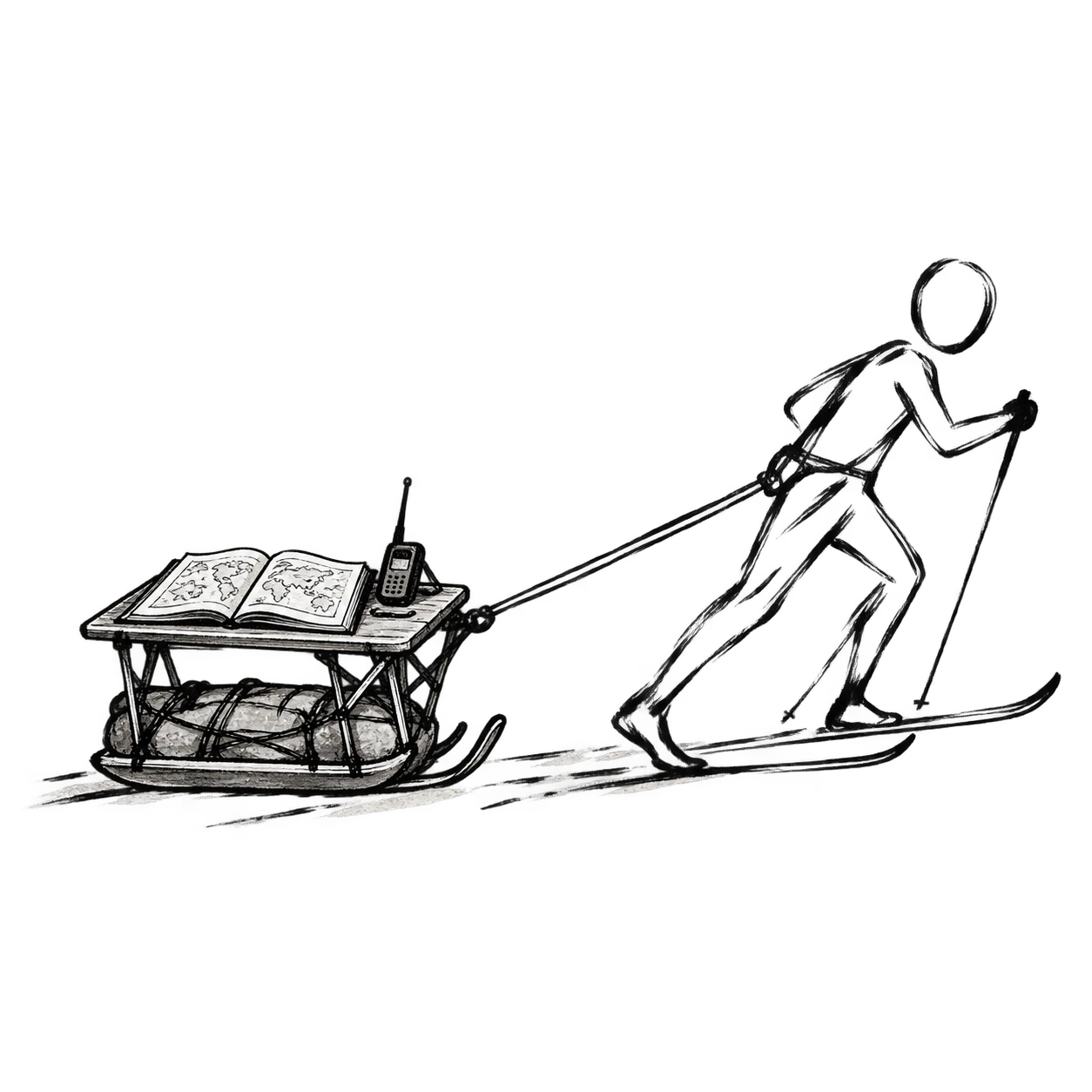
Ray Zahab has run across the Sahara, the Atacama, the Gobi and the Namib, skied to the South Pole faster than anyone had without resupply, and crossed Baffin and Ellesmere Islands in the depth of the Arctic winter. What drew us in was less the mileage than the shape of the life built around it: a working speaker from a village in the Gatineau Hills who turned his expeditions into a free classroom for teenagers, and who keeps the same teammates for twenty years at a stretch.
A late start, taken at full speed
Ray's athletic life began past thirty. He has been open about smoking a pack a day until then, and about the nudge that came from watching his younger brother run marathons and finish an Ironman. The last cigarette went out on New Year's Eve 1999. Within a few years he had won the first ultramarathon he entered, a winter race in the Yukon, and by November 2006 he was standing on the Atlantic coast of Senegal with two friends, about to run 7,500 kilometres to the Red Sea. It took 111 days with no rest days, and the film that came out of it, narrated by Matt Damon, put the crossing in front of a global audience.
The late start turned out to be his credential. Endurance greats usually arrive with a childhood talent story attached. Ray has none, and that is exactly why his central claim lands with a room of executives or a class of seventeen-year-olds: when he tells them that ordinary people carry more than they think, he is presenting himself as the evidence. Few motivational messages come with a 7,500-kilometre proof attached.
Both ends of the thermometer
Both ends of the thermometer
Extreme athletes tend to pick a climate and stay there. Ray Zahab has set records at fifty above and fifty below. The range says something about how he learns.
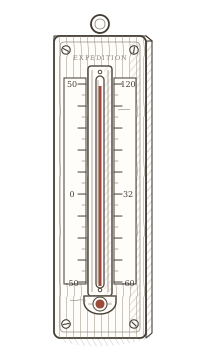
The hot end
The Sahara came first: 7,500 kilometres from Senegal to the Red Sea in 111 days, through peak summer, without a rest day. Deserts became his home ground. The Atacama, Gobi and Namib followed, and in July 2024 he ran Death Valley from its highest peak to the lowest point in North America during a record heatwave.
The cold end
Two years after the Sahara he was on skis in Antarctica, part of the team that reached the South Pole faster than anyone had without resupply. Siberia, Kamchatka and repeated winter crossings of Baffin Island followed.
Polar hauling is a different sport: sleds, skis, navigation across white nothing, a body fuelled on a different schedule. He arrived as the newcomer and learned it.
Why the ice was never foreign
By inclination he is a heat person, which makes the polar half of his record the more revealing one.
Our read: Ray was born and still lives in Chelsea, Quebec, on the edge of Gatineau Park, where minus thirty is an ordinary January and cross-country skiing is a civic habit. The deserts were the discovery. The ice was a return.
Why the cold came home
Chelsea, Quebec is a village of a few thousand people on the edge of Gatineau Park, a short drive north of Ottawa, with one of the largest cross-country ski networks on the continent and Januaries that settle at minus thirty. Ray was born there and lives there still. Read his expedition list with that in mind and the Sahara looks like the exotic choice; the ice looks like home ground. Which makes his polar record the more interesting half, because it is the half he admits to enjoying less.
Polar hauling is a different sport from desert running: skis, a loaded sled, navigation across white nothing, a body fuelled on a completely different schedule. He went to Antarctica in 2009 as the newcomer beside two seasoned polar travellers, and the team still set the record. Being the least experienced person on your own expedition takes a particular kind of confidence, and it has stayed with him: the Ellesmere crossing in 2025 was done on skis, hauling a sled for 28 days, at an age when many athletes stop taking up new disciplines.
The run is the lesson
The Sahara run followed a familiar model: an athlete does something enormous and attaches a cause, in this case the water crisis the team witnessed village by village. What Ray did a year later was less familiar. With Bob Cox, a Californian he met at a cancer charity event a few months after the crossing, he founded impossible2Possible, and the design choice at its heart is worth pausing on. Instead of running to raise money for a classroom, the expedition became the classroom. Teenagers selected from around the world go along, and they do the real work: logistics, running, producing the daily material that thousands of students follow live from their desks as official team members. Nobody pays a cent.
That last condition is the part most people would have compromised on. It is possible because of how Ray has arranged his working life. The keynote stages, from TED to corporate halls in Geneva and Hong Kong, are the paid half; the youth expeditions are the volunteer half; sponsors cover much of the rest and he covers what is left. It is a direct pipe from the commercial work to the generous work, with no foundation gala in between, and it has run for over fifteen years and fourteen expeditions, from Baffin Island to the Amazon to Death Valley.
- A run with a reasonSahara Desert, Senegal to the Red SeaThe 7,500 km crossing followed the familiar model of attaching a cause to a feat: the film it produced was built to raise awareness of Africa's water crisis.[2] [3]
- Inverting the modelimpossible2Possible, founded with Bob CoxRather than running to fund a classroom, the expedition itself became the lesson. Teenagers selected worldwide join at no cost and do the real work: logistics, running and producing the educational material.

- Classrooms become the teamFourteen youth expeditions, Baffin Island to Death ValleyThousands of students follow each expedition live from their desks as official team members, free to every school. Sponsors and Ray's own speaking income keep the price at zero.[5]
Teammates for twenty years
Endurance culture celebrates solos and firsts. Ray's record includes plenty of both, yet the more unusual statistic is relational. Kevin Lin, who ran the Sahara beside him in 2006, still coordinates impossible2Possible's work in Asia. Bob Cox has been his co-founder since 2007. Kevin Vallely, his partner on the South Pole record in 2009, was on the other end of the rope on Ellesmere sixteen years later. Stefano Gregoretti, who crossed the Namib with him, was his companion across the Atacama in February 2026.
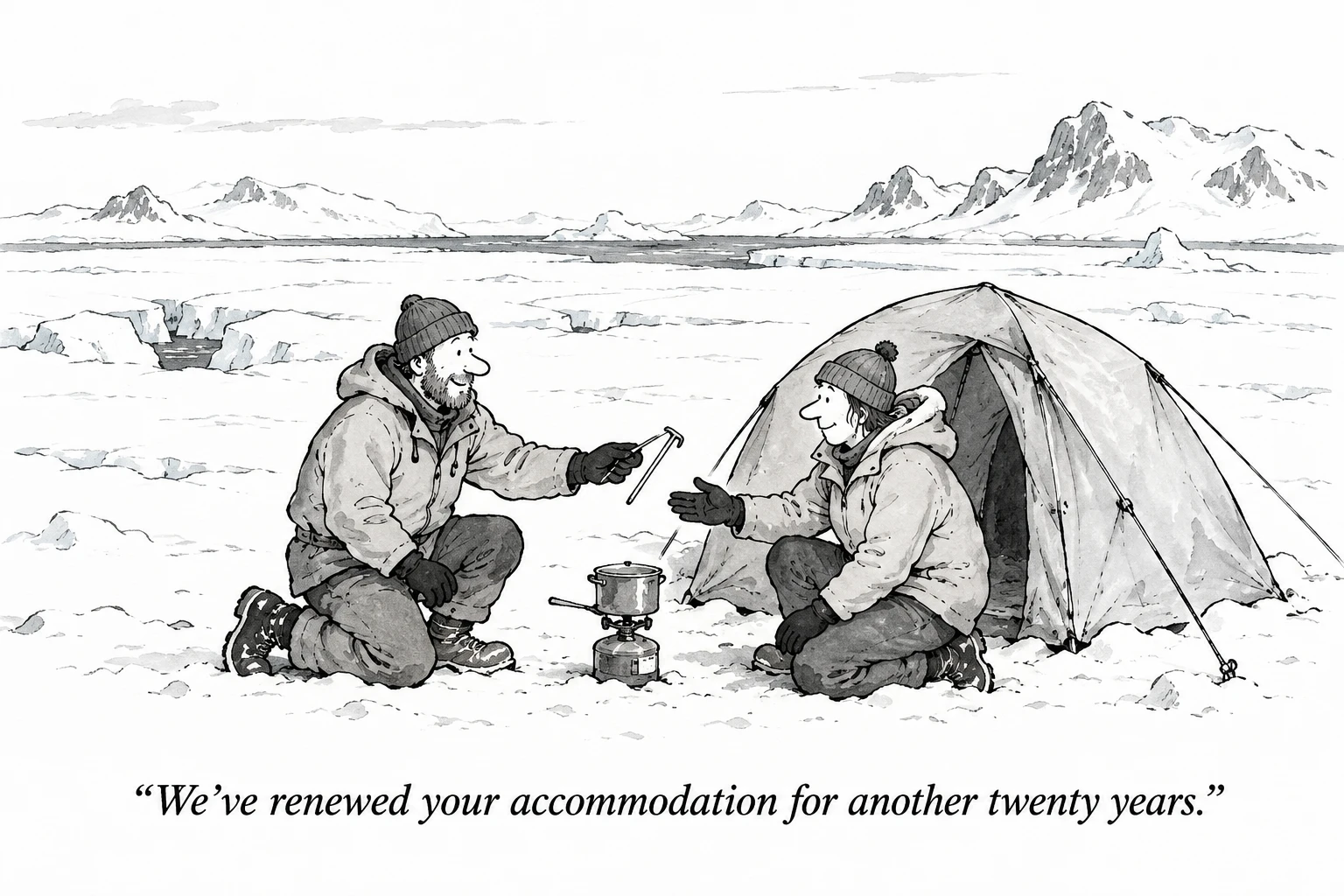
Keeping a tent-mate for a month is hard. Keeping one for two decades, through records and turnarounds, tells you something no race result can: that he is easy to trust when things go wrong, and that he shares credit the way he shares the sled load. The youth programme looks like the same instinct at a larger scale. He builds a team, and then he stays on it.
Unfinished business
For a man with a Guinness speed record, Ray is remarkably patient. In 2019 an unseasonably warm Kamchatka winter turned him back. Ellesmere Island took several attempts across more than three years before he and Vallely finally skied the 500 kilometres from Eureka to Grise Fiord in spring 2025. Death Valley, from Telescope Peak down to Badwater Basin in July heat above fifty degrees, had to wait a year after a first attempt was cut short; he completed it in 2024 during a record heatwave. He has spoken publicly about a lymphoma diagnosis in 2022 and about fitting a Baffin Island winter crossing between chemotherapy sessions, which tells you how he understands the word "pause".
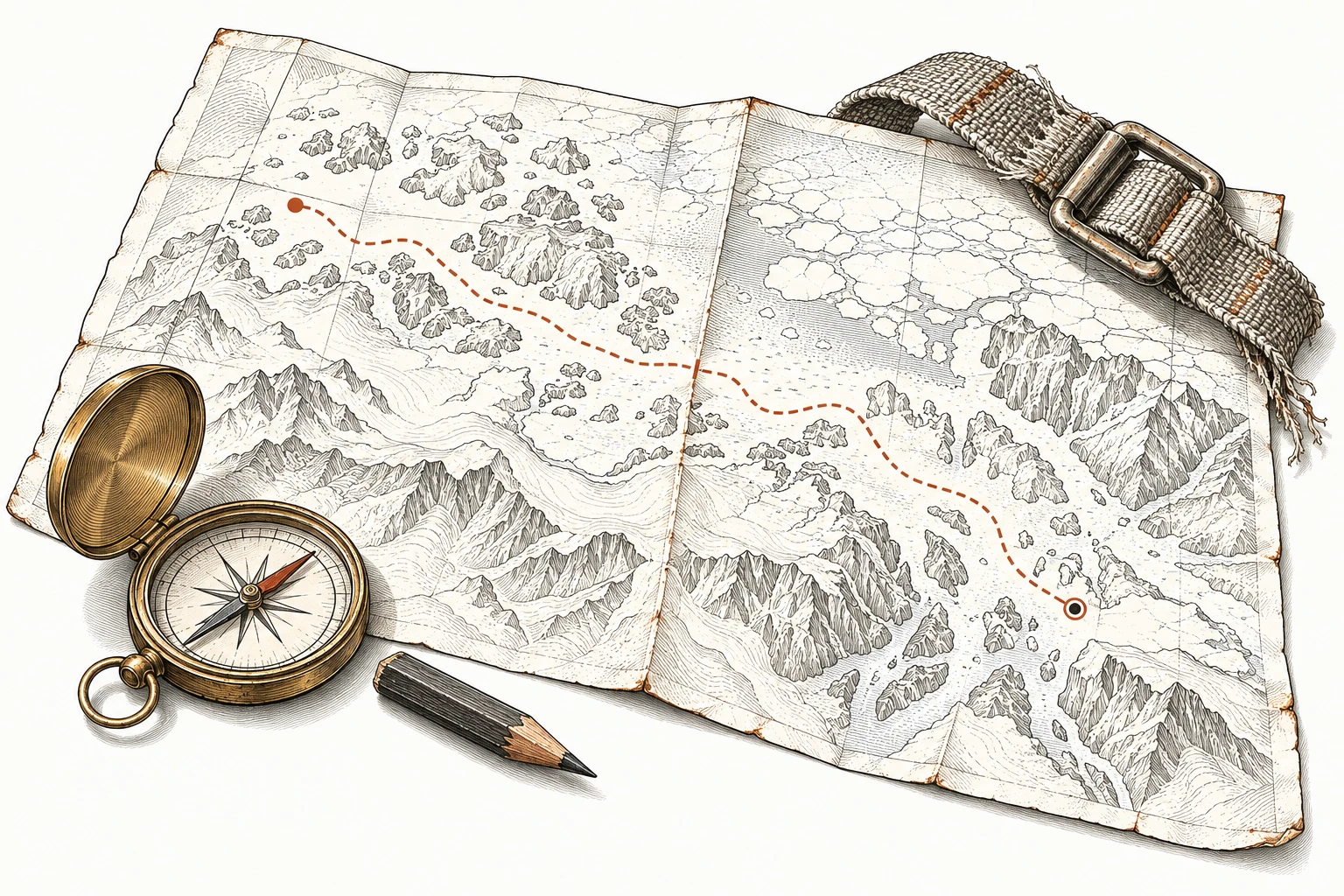
The pattern is a useful one for anyone with a goal that resists them. He treats a turnaround as scheduling. The objective stays fixed on the calendar; only the date moves. In polar circles, being turned back by conditions is ordinary and returning three times is not, and it is the returning that distinguishes him.
Home base
For someone who has worked in more than seventy countries, Ray's centre of gravity is unusually fixed. He raised his family in the village where he was born, with a wife who is an ultrarunner herself and daughters who now camp with him in the Atacama; one of them carries the desert's name. Chelsea put him on its Wall of Fame in 2024, and his guiding company, KapiK1, now takes paying travellers along routes he first ran alone, with a line of coffee for those who prefer the expedition in a cup.
The honours have accumulated: the Meritorious Service Cross, Explorer-in-Residence at the Royal Canadian Geographical Society, the Coronation Medal in 2025. He keeps adding to the list regardless, with Newfoundland's East Coast Trail last summer and the Atacama this past winter. The next line on the map will be somewhere hot or somewhere frozen, and a classroom somewhere will be following it.