Robert Gavrilescu is a London-based product designer who has spent most of the last six years designing software for people who are, in one way or another, on stage: festival crowds, meeting hosts, musicians running giveaways and, now, sellers auctioning clothes to a live audience from their phones. What caught our attention was Snap, a tool he designed at the live-shopping app Tilt, and the way he kept taking it apart until it stopped interrupting the show. Plenty of designers make beautiful screens. Robert makes screens that know when to get out of the way.
The person on camera can't look at the screen
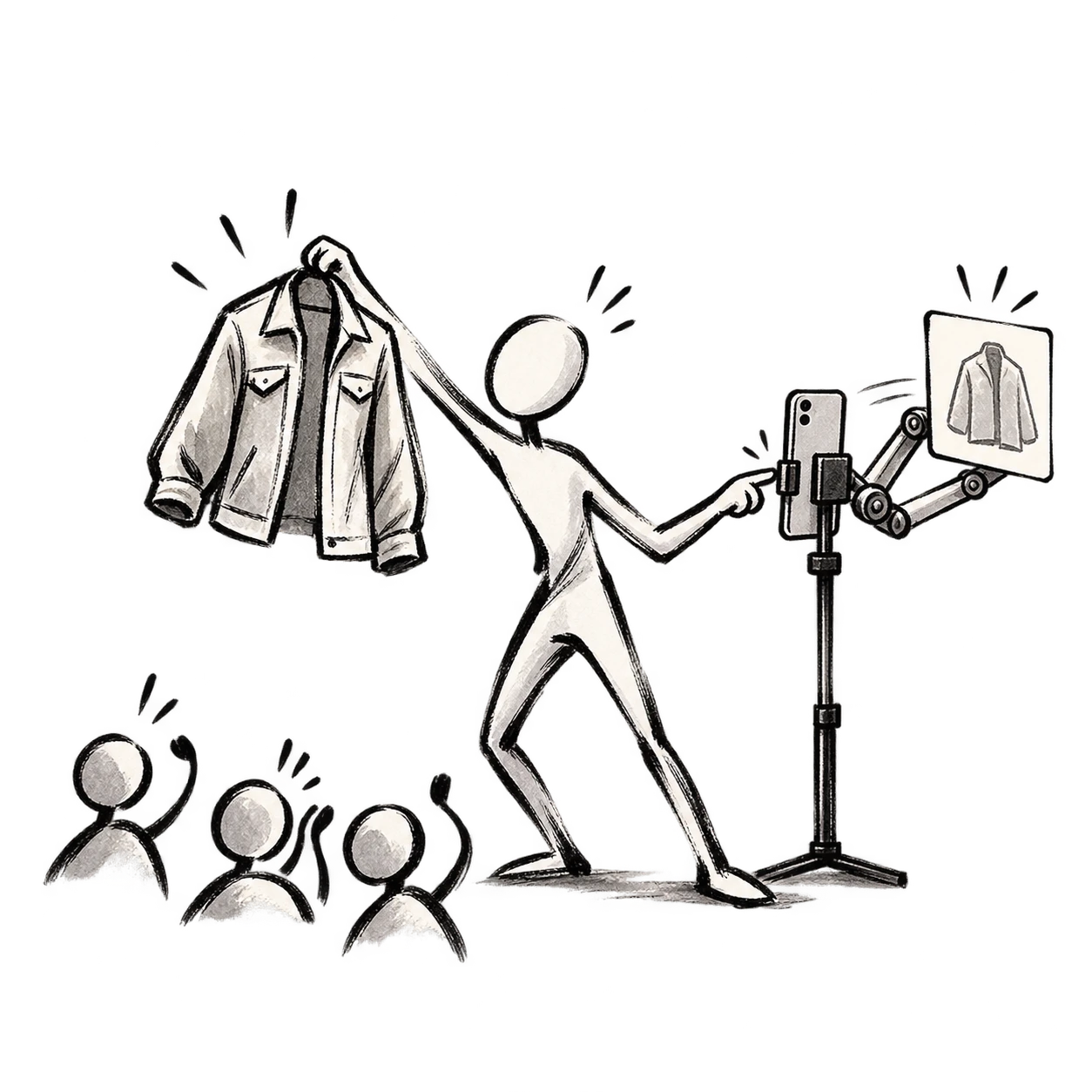
Some context for anyone who hasn't watched a live auction on their phone. Tilt is one of the largest live-commerce platforms in Europe, a kind of teleshopping channel run by thousands of young sellers from their bedrooms and stockrooms. A seller goes live, holds up a jacket or a pair of trainers, talks, reads the chat, and viewers bid in real time. The seller's whole job is to keep the room warm. Every second spent typing a product listing is a second of dead air.
Robert's answer, after two attempts that didn't survive contact with real sellers, was to stop asking the software to make decisions. The app listens to what the seller is already telling the audience, prepares the listing, and waits. The seller picks the moment with a single tap, and gets a short, pausable window to catch a wrong price before it becomes a live sale. By September 2026, roughly one in five pounds of merchandise paid for on Tilt had come through listings created that way.
The arrangement underneath it, in which the software does the preparation and the human keeps the timing, runs through almost everything he has built. At Sessions, the Bucharest meeting platform where he was the founding designer, the feature that mattered for hosts was a quick way to pull a document into the call when the conversation wandered off the agenda. At UNFINISHED, a Bucharest arts festival that moved online in 2020, he made the audience visible to itself, so that watching a talk felt like being in a room rather than staring at a stream. For FROW's live record giveaways, the phone screen shifts its focus from the artist to the record as the event changes gear.
A designer who learns this once might call it a principle. Robert has learned it across four products and four different kinds of performer, which is closer to a specialty. Live software is unforgiving: there is no "come back to this later", the user's attention is somewhere else, and the only honest test is whether the show kept moving.
Three ideas he let go of
Three ideas he let go of
A designer's taste shows in what gets built. Robert's shows just as clearly in what he was willing to drop, three times, across three different products.
The timeline that became a list
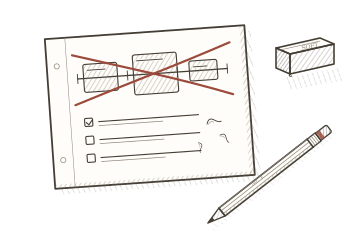
Sessions' first meeting planner laid the agenda out as a visual timeline. It looked good on a screen. Testing showed hosts think of a meeting as a list of things to get through, so he rebuilt the planner around the plainer shape.
The pretty version lost to the familiar one, and the product was better for it.
The record that was too real
For FROW's live giveaways he first drew a realistic vinyl record as the centrepiece. Then he dropped it: real records come in every colour, and the product might one day give away other things.
A more neutral shape served more futures. Specificity is lovely until it boxes the product in.
The voice that slowed the show
Snap's first version replaced typing with speech: describe the item, say "next". Sellers started talking like robots so the machine would understand, and the audience could hear it.
He kept the listening and dropped the deciding. The seller got one tap and their own voice back.
Evidence before taste
Here is something a casual look at his career would miss. For two and a half years in London, at a photo-book startup called Tremo Books, he held two full-time jobs at once: product designer and growth officer. He designed the web app and the printed books that arrived at the end of it, and he also ran the social channels, worked with hundreds of influencers and answered the support inbox. The product went from nothing to thirty thousand registered users with him on both sides of it.
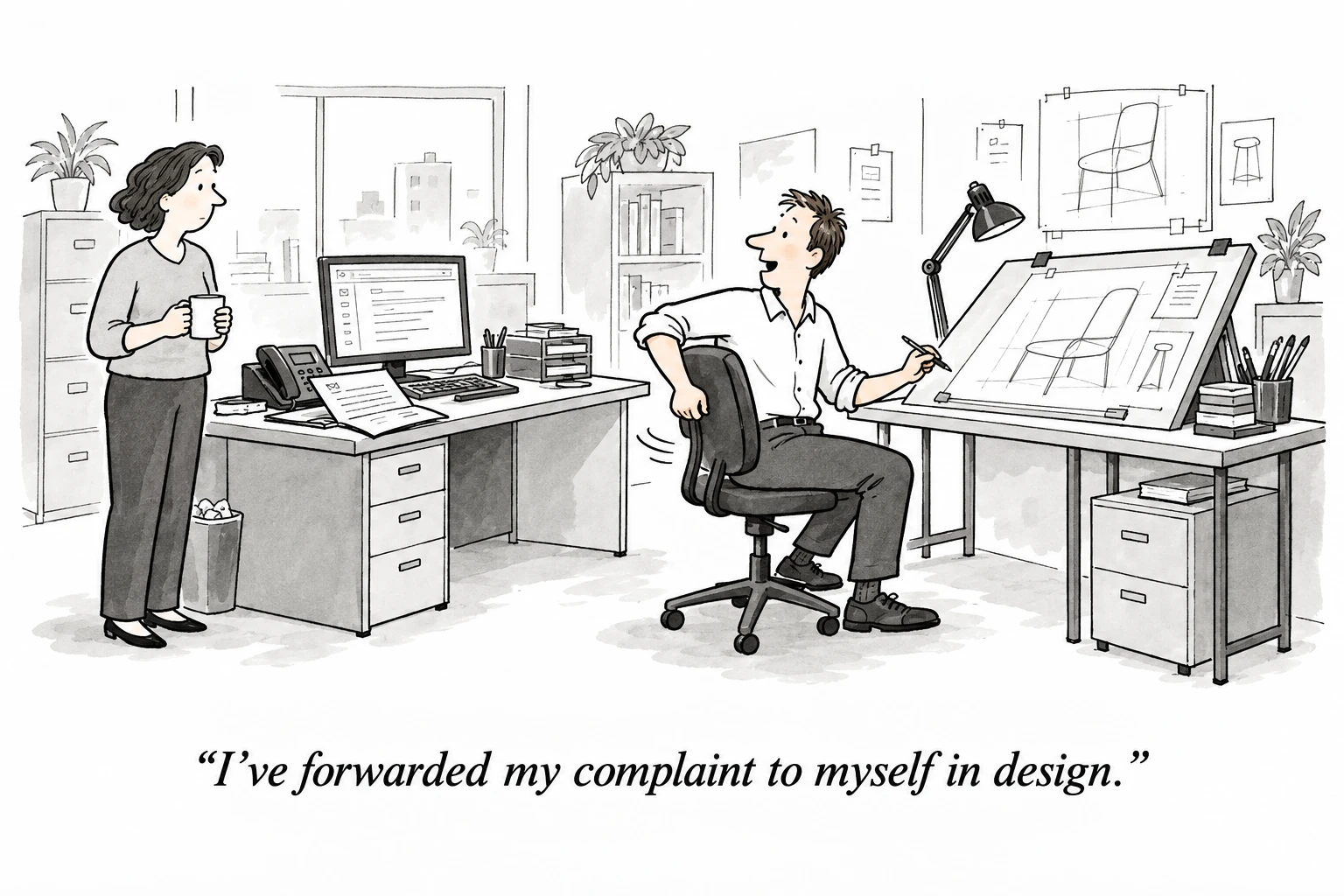
That is an unusual apprenticeship for a designer. Most learn about users through research sessions someone else arranged. Robert learned from the people who wrote in when something went wrong. Add a master's in business administration from Bucharest's Academy of Economic Studies, and you get a designer who doesn't need a translator for the languages a startup speaks.
The habit has stuck. At Tilt, when the record of completed listings told him too little, he pulled the database himself and built a dashboard to follow individual sellers through whole streams: where they gave up, where they switched to another method, what got listed but never sold. He also leans on the business-development team, who talk to sellers every day, as a second pair of ears. The lesson travels well beyond design: the person who goes and gets the evidence is usually the person who gets to make the call.
A ruler in the name
In 2019 he set up an independent practice and called it Rigla Studio. Riglă is the Romanian word for a ruler, the measuring kind. It is a modest name for a studio and a telling one: not a muse or a mountain but a tool for getting things straight. He has kept it running alongside every full-time role since, taking on product, brand and website projects, including growth work and a shared design system for Voxa, a Romanian audiobook app.
Bucharest deserves a word here. Over the past decade the city has produced a generation of product companies built from the start for a global audience, and Sessions was part of that wave: venture-backed, launched in 2021, and named Product Hunt's Work from Anywhere product of the year ahead of far larger rivals. Robert was its first designer. He drew the first version, then hired and led the team that grew around it, and became Head of Design. One detail from those years says a lot about how he leads. Twice, he opened the product to cohorts of trainee UX writers so they could rework its onboarding with real stakes, and the team hired one of them afterwards. He treated the thing he was building as a place where other people could learn.
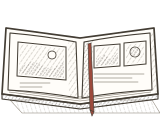
- A book you holdTremo Books, LondonThe product ended as a printed object. The screen was only the means; the thing that mattered sat in someone's lap.
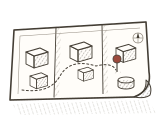
- A venue you wanderUNFINISHED festival, BucharestThe interface became a map of the real building. People navigated the festival by walking through it rather than reading a menu.[6]
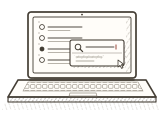
- A room you hostSessions, BucharestThe host is talking to people, not to the software. The screen became a side table of resources, reachable by a shortcut when the conversation needed one.[4]
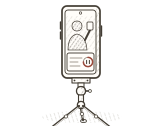
- A show you can't pauseTilt Snap, LondonThe seller's hands are full and their eyes are on the audience. The best interface listens, prepares, and waits for a single tap.[3]
What a stage teaches
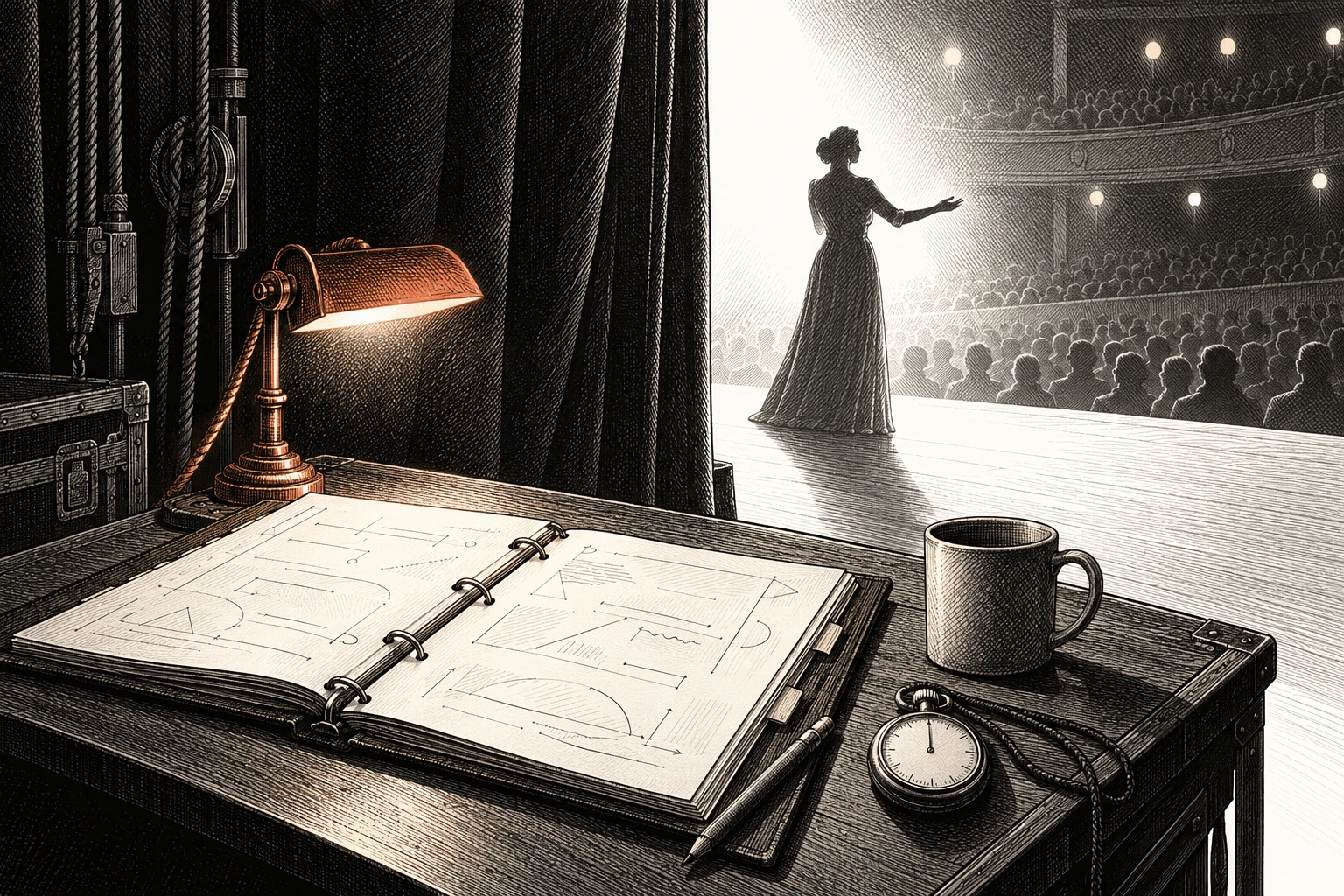
There is a pattern in where he has taken his skills. Each product has raised the price of a mistake. A clumsy festival page costs a few minutes of someone's evening. A confusing meeting tool costs a host some composure. A wrong listing on Tilt is a sale, with money and a stranger's trust attached. The small, almost fussy details in his recent work, such as a review countdown that pauses the moment the seller touches it, are what care looks like when the stakes are real and the user is too busy to be careful.
Tilt is now expanding across Europe and adding ways to sell without going live at all, so the seller's tools are about to be used by many more people in more languages. It is a good moment for a designer whose instinct is to prepare everything and then hand over the timing. If there is a single thing to borrow from Robert, it is that: do the work in the wings, and let the person on stage have the moment.