Rulon Gardner is the dairy farmer's son from Star Valley, Wyoming, who walked onto a mat in Sydney in September 2000 and beat Aleksandr Karelin, a Russian who had not lost a match in thirteen years and had not given up a single point in six. It is still the biggest upset in Olympic wrestling, and arguably in the Olympics. What kept us reading was everything around that night: a man who ranks a teaching degree above a gold medal, who keeps the evidence of his worst decision in a jar, and who now spends his days in a converted warehouse in southern Utah teaching kids that being willing is most of the job.
Lasting longer
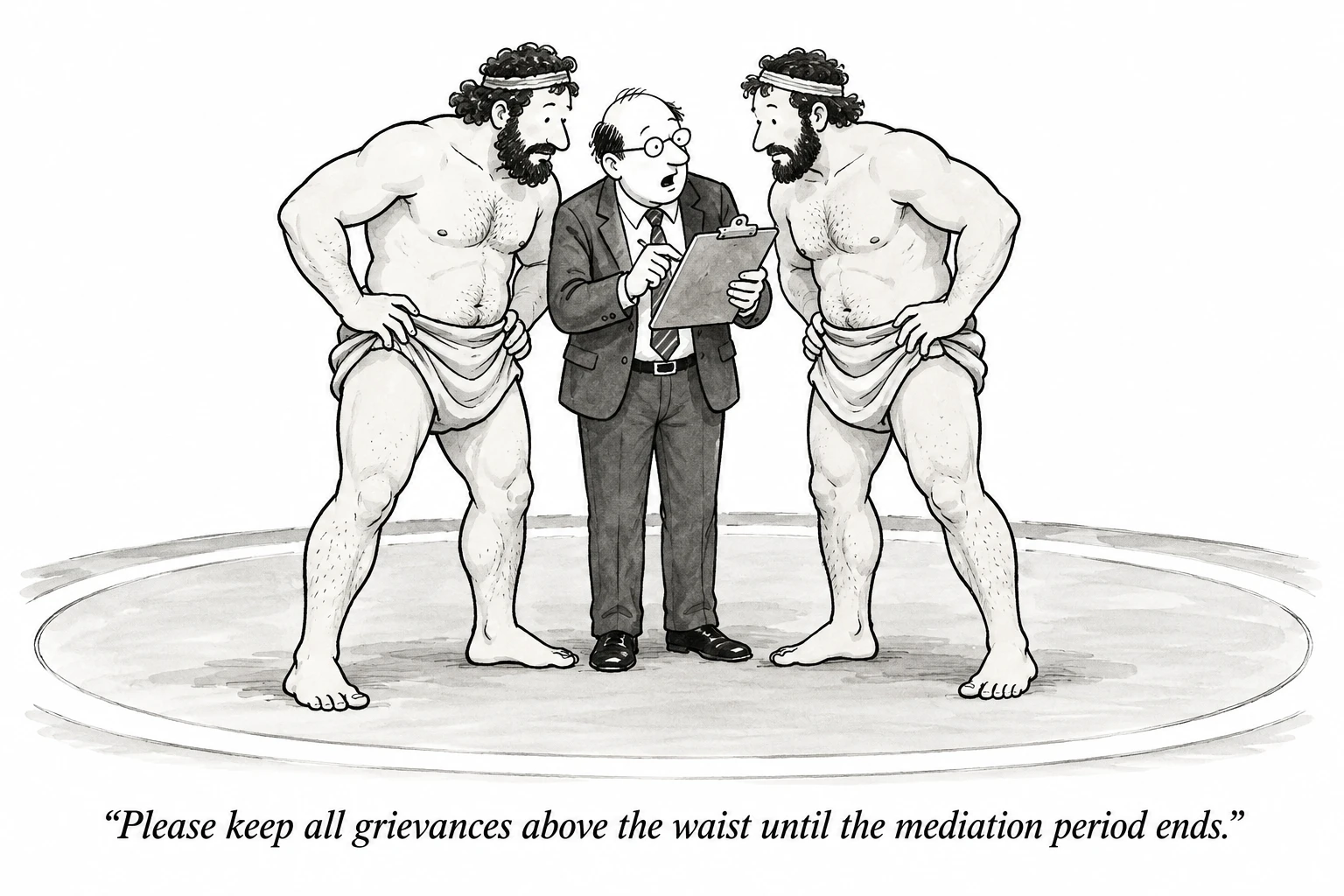
Greco-Roman wrestling forbids any hold below the waist, which makes it a sport of chests, locks and lifts. Karelin's lift was the most feared thing in it: he would wrap a grown heavyweight around the body, hoist him clear of the mat and throw him backwards over his own head. Opponents went in hoping to leave uninjured.
Rulon's answer was time. He stayed chest to chest, refused to be lifted, and made the match long. His point came when the two men were locked together and Karelin's grip broke; the win came in the minutes afterwards, when the most dominant athlete of his generation discovered there was still a Wyoming farm kid leaning on him and no end in sight. Karelin finally put his hands on his hips with eight seconds left and stopped.
It would be easy to attach that to the farm, so we will hedge: cows are milked twice a day whether or not anyone feels like it, and a childhood built on that rhythm might well produce a man whose signature gift is continuing. What the record shows for certain is that Rulon was never the most explosive heavyweight in any room, and that he turned this into a style. He made matches about the ninth minute, a place his opponents rarely visited and where he happened to live. There is a transferable idea in that for anyone facing a more gifted rival: find the dimension where you cannot be outworked, and drag the contest there.
How you beat a man nobody beats
How you beat a man nobody beats
Sydney, September 2000. Aleksandr Karelin had not lost in thirteen years or given up a point in six. The farm kid across from him had a plan that did not involve being spectacular.
The arithmetic
Three Olympic golds in a row. A career record somewhere near 887 wins and two losses. A signature move, the reverse lift, in which he picked up men his own size and threw them over his head.
Top heavyweights went into matches against Karelin with one goal: to walk out uninjured.
The plan
Greco-Roman wrestling allows no holds below the waist, so everything happens chest to chest. Rulon's job was to stay there: deny the lift, keep his weight on the Russian, and make every minute cost something.
The bet was that a long match favoured the man who had been milking cows at dawn his whole life.
The point, and the stop
Locked together in the second period, Karelin's grip came apart. The rules gave Rulon a point: the first anyone had scored on Karelin in six years.
The match ran into overtime. With eight seconds left, the most dominant wrestler alive put his hands on his hips, bowed his head, and conceded. Days later Rulon's teammates voted him to carry the American flag into the closing ceremony.
The diploma he ranks above the gold
School was the hard thing. Rulon was labelled with a learning disability as a boy, sat in special education classes, and got through homework with his mother reading beside him each night. When college came, every one of his seven surviving siblings had gone to the University of Wyoming. He went to Nebraska instead, because Nebraska promised the academic support he knew he would need.
That is a sophisticated decision for a teenager who had spent years being told he was slow: to choose a place for the scaffolding it offers rather than for familiarity. He left Lincoln with a degree in physical education, which is a teaching degree. Look at it that way and the shape of his life changes. He was training to be a coach before he was a champion, and the method he later took to a Russian (measure small daily improvement, give your best on the ordinary days, trust the accumulation) was worked out in classrooms first.
It also explains what he prizes in the kids he coaches now. Talent is nice. Willingness is what he lights up at, probably because willingness was his own gift long before there was a medal to show for it.
- One week a yearStar Valley, WyomingA once-a-year wrestling camp in a dairy-farming valley, ending with a weekend tournament. From the age of six it was the week he waited for.[1] [8]
- Shoes left in the centreAthensAfter winning bronze on a foot he had spent a year relearning to use, he unlaced his shoes and left them on the mat: wrestling's way of saying goodbye, done under the lights.[4] [5]
- A room to give awayUtahHead coach at Herriman High School, then working with young wrestlers in southern Utah. The medals come out of the box and go round the kids' necks.[6] [7] [8]
What he keeps
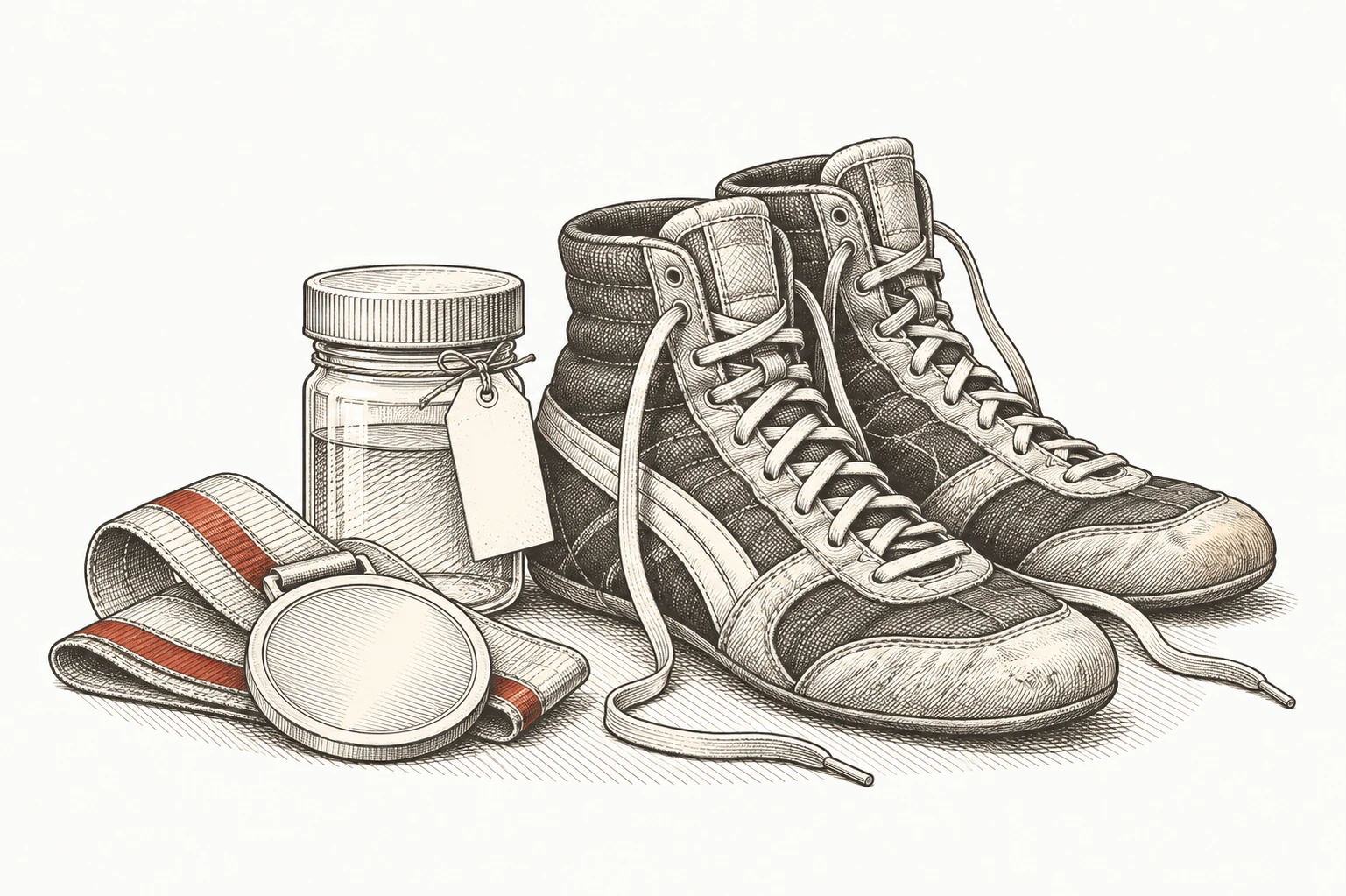
Three objects say a lot about how Rulon handles his own story.
The gold medal travels. At practices and school talks it comes out of its box and goes round the necks of teenagers who have never seen one, and occasionally round a small boy far too young to compete.
The toe sits in a jar of formaldehyde in his refrigerator. He lost it in 2002, after a snowmobile trip in his home valley went wrong: separated from his group, in and out of the Salt River, seventeen hours in the open at twenty-five below, visions, then rescue. He went on that trip without the right gear, and he keeps the toe as a plain reminder of the cost of being unprepared in the mountains.
The shoes are the only thing he has deliberately given away. After winning bronze in Athens in 2004, on a foot he had spent a year learning to walk and wrestle on again, he unlaced them and left them in the centre of the mat, which is how a wrestler says goodbye.
Put those together and you have a man who refuses to curate. The triumph and the error live in the same house and both get shown to visitors. There is a lesson in that for anyone building a career: keep your mistakes somewhere you can see them, because they teach at least as well as the trophies. The cold, incidentally, has tried for him twice; in 2007 a small plane he was in went into Lake Powell and he swam for an hour in 44-degree water, then spent a night on the shore without fire. He now lives in St George, the warmest corner of Utah. We will not pretend to know whether that is related.
Weighing in
A super heavyweight's life is governed by a number on a scale, and when Rulon retired in 2004 he put the scale away. The weight that followed is a matter of public record, largely because he made it one, going on The Biggest Loser in 2011 and losing 173 pounds in front of the country. Then he did something that reveals how the man thinks: he treated the mat as the way back to health. He trained for the 2012 Olympic trials at forty. In 2023, at fifty-one, he registered for the US Open in the heavyweight division and got within fifteen pounds of the limit.
He did not weigh in. His sister, a cardiologist, told him what that night could do to his heart, and he listened. For someone whose public identity is built on never quitting, that choice is the most grown-up thing in the file. Knowing which fights to walk out of is a harder discipline than staying in all of them, and he has learned both.
The gym in St George is where the two halves meet. It is a warehouse in red-rock country with mats on the floor and a former farm boy from a snow valley running practice, still working in insurance, still speaking to rooms about obstacles, and still, by the look of it, treating his own story as unfinished. The kids get to wear the medal. He gets to watch them try.