
Stefan Catalin Afrasinei runs two London marketplaces whose shared purpose is to make advertising look less like advertising. Social Cat pairs small brands with the kind of creators who have a few thousand loyal followers rather than a few million; Clip supplies the hand-held, talk-to-camera video that performance marketers now buy by the thousand. What drew us in isn't the category. It's that Stefan spent years as the person buying this stuff on almost no budget before he built the shops that sell it.
The buyer before the builder
His first marketing job, in 2019, was at a start-up that turned Instagram feeds into hardcover photo books and sold them largely through the very creators whose feeds it printed. Strip away the glamour and that is an apprenticeship in one specific, unfashionable craft: persuading people with audiences to make something for a brand that cannot pay them much. He then spent a year inside a streetwear app built for teenagers, a user base that can identify a marketing campaign from across the room and will punish you for it.
Within a year of leaving, he had co-founded Social Cat, a product that reads like a letter to the version of himself sat at that photo-book company with a spreadsheet of direct messages. Gifting instead of fees. Vetted creators instead of a search bar. The pattern is worth copying: the people who build the best tools for a workflow are often the ones who still carry the scar tissue from doing it by hand.
The ad that doesn't look like one
The ad that doesn't look like one
Stefan builds marketplaces for a strange kind of advertising: footage that is supposed to look as if nobody paid for it. Here is the machinery behind the unpolished.

First, the radar
Audiences, and younger ones in particular, have learned to spot a commercial in a fraction of a second and swipe. What slips through looks like a friend's phone video: a kitchen, a voice, a product in someone's hand.
So the most valuable raw material in advertising has become ordinary people talking into ordinary phones. That is the market both of Stefan's companies sit in.
The narrow door
Clip reports admitting only a small share of the creators who apply, screened for how they come across on camera and whether they can follow a brief.
The counterintuitive part: making something look spontaneous at scale takes more selection, not less. In a marketplace like this, curation is the product.
The polish moved
A vague brief yields generic video; a good one gives a creator a concept, a few angles and a reason to care, then gets out of the way.
The polish never left this kind of advertising. It moved from the footage into the instructions, and the operator who writes those instructions is the one who matters.
Four companies, one partner
Here is the detail a job history hides. The photo-book company was founded by Cezar Grigore, an Imperial-trained engineer with a Y Combinator company already behind him. Stefan was his marketing associate. Both then worked at the streetwear app. Then they founded Social Cat together, and a year later Clip, with Maria Topor joining as a third founder. Four companies, the same two names, and a shift from employee to equal director inside about three years.
London's start-up culture tends to celebrate speed: co-founder matching events, strangers pairing off over a weekend. Stefan's route is the older model, the one that compounds. Work beside someone through two companies that aren't yours, learn how they behave when a product stalls, and only then put both names on the paperwork. The founding teams themselves tell a small story too. The three directors of Clip are all Romanian and all born the same year, and the legal name of the Social Cat company, SC92, looks very much like initials stitched to a shared birth year. This is a team of peers who chose each other, not a network assembled for a pitch deck.
- Learning the trade from the buyer's sideTremo Books, LondonA start-up printing Instagram feeds into hardcover books, sold through the creators whose feeds it printed. Stefan's first marketing post was a crash course in getting content from creators on a shoestring.

- Building the tool he'd neededSocial Cat, co-founded with Cezar GrigoreA marketplace where small brands send products to vetted micro-influencers in exchange for posts. The founder of his first employer became his co-founder.[1]

- From posts to adsClip, with Cezar Grigore and Maria ToporLicensed talk-to-camera video for paid campaigns: the adjacent business discovered inside the first, now reaching clients like Amazon Photos and DeLonghi.[3]

Doing a lot with a little
Stefan is Romanian, part of a generation that grew up in a country rebuilding itself in the 1990s and 2000s, where resourcefulness was simply the weather, and from which a large share of young people went on to build careers in Western Europe. We don't know his hometown, and we won't pretend to. But the products carry a sensibility that anyone from that cohort would recognise. Campaigns designed around the money a shop owner can actually spare. Creators compensated in product because that is what a small brand has. Fifteen-second videos priced roughly like a train ticket, licence included.
That is not cheapness; it's a form of respect. Social Cat's customers are skincare makers, farm-food producers, craft kits for kids, the businesses that most London ad-tech was never built to answer the phone for. Building for people who are usually ignored is a sharp commercial insight as well as a decent instinct, and it gave him a customer base no enterprise-chasing competitor was fighting him for.

Industrialising sincerity
The whole thesis behind both companies is that audiences, especially young ones, have developed a reflex for detecting a commercial and swiping past it, so the ad that works is the one that looks like nobody paid for it. That creates a paradox Stefan seems to enjoy. An unpolished ad made once is a happy accident. An unpolished ad made twenty thousand times is a factory, and factories need operators.
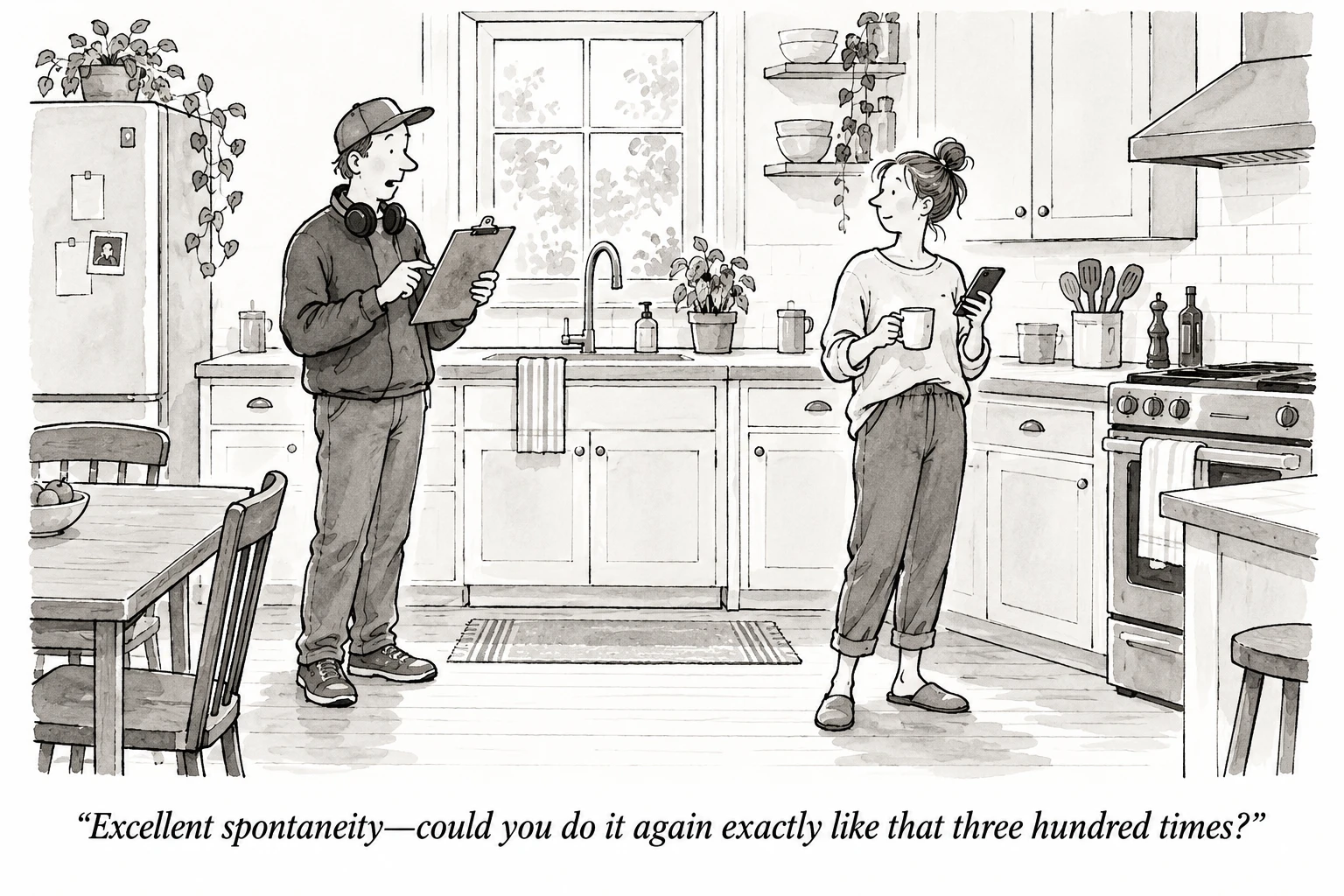
His title at Social Cat is the tell: Chief Operating Officer, not Chief Marketing Officer. Marketplaces live or die on the quality of their supply, and both of his are built on hand-vetting at scale. Clip reportedly admits only a small fraction of the creators who apply. The polish hasn't disappeared from this kind of advertising; it has migrated from the footage into the selection and the brief. Notice, too, who he writes for. His articles on both company blogs address creators as carefully as they address brands: how to film well at home with cheap kit, why a brand didn't hire you back. A marketplace founder who treats the supply side as a readership rather than inventory has understood that the creators are the product.
The second company came out of the first
Social Cat and Clip are not a pivot; they run side by side, and the second was almost certainly discovered inside the first. A gifting campaign produces a pile of real-looking content, brands start asking to license it for paid ads, and suddenly there is a video business sitting inside the posts business. Neither company appears to have raised a funding round, which means two products are being carried on revenue, by a small team, in a city where that is still slightly unfashionable.
The next chapter is already visible in how Clip describes itself. The language has shifted toward paid-media teams, and the client list now includes names like Amazon Photos and DeLonghi, while Social Cat keeps the high-street shops. One company for the brands nobody serves, one for the teams who need three hundred ad variations by Friday. It is easy to imagine Stefan becoming the person a performance marketer calls when volume, not polish, is the problem, and bringing to that call the same instincts he learned with a photo-book budget and a spreadsheet.